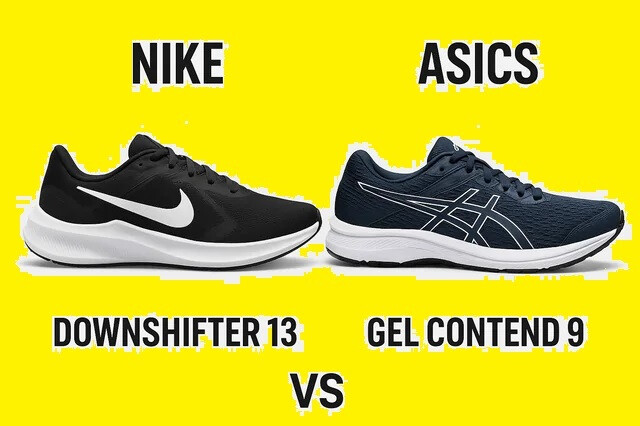
“Now, don’t you guys just hold me back.” In the famous Japanese basketball manga Slam Dunk, the protagonist Kang Baek-ho (Japanese name: Hanamichi Sakuragi) boasts to his Shohoku High teammates. As a beginner basketball player, he wore Nike basketball shoes, which dominated the basketball scene in the 1990s and 2000s. On the other hand, Jung Dae-man (Hisashi Mitsui)—who led his middle school basketball team to a regional championship and even won the Most Valuable Player (MVP) award—wore ASICS, a Japanese brand with relatively lesser global fame.
Takehiko Inoue, the author of Slam Dunk, mentioned in a 2015 interview, “Since Jung Dae-man was set up as a former middle school MVP, I thought ASICS would fit him best.” He explained that he wanted to capture the vibe of the 1990s, when traditional Japanese student basketball players insisted on domestic ASICS basketball shoes rather than Nike, which was enjoying global popularity.
The Nihon Keizai Shimbun (Nikkei) highlighted the competition between the two global sporting goods companies, which share a long history, on the 23rd. The outlet reported, “ASICS is making a revival after struggling in the US market,” adding, “A ‘reverse comeback’ by ASICS against the US-based Nike—which once started as an ASICS distributor before growing into a global enterprise—is now within sight.”
The leading sports brands of the United States and Japan share a relationship spanning over 60 years. Blue Ribbon Sports (BRS), the predecessor to Nike, was founded in 1964 and started out by importing and selling running shoes made by Onitsuka Tiger, the predecessor to ASICS, in North America. Nike’s official website currently introduces this history: “When Nike was founded in 1971, co-founders Phil Knight and Bill Bowerman were still operating Blue Ribbon Sports, distributing a small volume of Japanese running shoes.
They knew that their supply contract (with Onitsuka) was coming to an end, and that the company’s future should not rely solely on another company’s products.” Their cooperative relationship broke down in 1971, and the two companies later left lingering bitterness after engaging in trademark and design lawsuits over the co-developed running shoe, the “Cortez.”
Blue Ribbon Sports transformed into Nike and grew into a global brand within a decade. Driven especially by the success of the “Air Jordan” line featuring legendary NBA star Michael Jordan, Nike achieved explosive growth from the mid-1980s onward. In contrast, ASICS went through severe slumps, recording massive operating losses twice—in the late 1990s and around 2018.
However, ASICS is currently staging a turnaround race. As of late December last year, its annual net sales in the North American region hit an all-time high of 141.1 billion yen (approx. 1.2 trillion KRW). This is more than double the annual sales of 65.3 billion yen recorded in 2020, when the company was suffering from a severe sales slump. Company-wide sales reached 8.109 trillion yen (6.86 trillion KRW), with operating profit at 142.5 billion yen (1.206 trillion KRW). These figures represent a 19.5% and 42.4% increase, respectively, compared to the previous year.
Amid a global running boom, ASICS has achieved remarkable success in the high-performance running shoe market. Last year, the company claimed the top spot in major markets like the US, Europe, and Japan with a 17.4% market share in high-end running shoes priced at $90 or more. Furthermore, its “SportStyle” division—which reimagines athletic shoes sold for over 20 years since the 1990s into fashion footwear—has gained immense popularity among the general public. High-end fashion brand “Onitsuka Tiger” also continues to enjoy sustained popularity.
In its “Sustainability Transformation Leading Companies 2026 Report” released last May, Japan's Ministry of Economy, Trade and Industry evaluated that “ASICS has acquired touchpoints with about 18 million runners annually by acquiring running-event-related companies in the US, Japan, Europe, and Australia,” adding, “The company plans to drive sales growth and global business expansion by providing ‘one-stop’ product and service information to these connected runners.”
On the other hand, Nike is facing a crisis so severe that its decades-long reign as the “absolute powerhouse” is being shaken. Its sales last year dropped 9.8% year-on-year to $46.3 billion (61.366 trillion KRW). Its stock price has also plummeted nearly 80% compared to 2021, when it hit an all-time high. Analysts suggest that its strategy of strengthening online malls and direct-to-consumer retail stores during the COVID-19 pandemic strained relationships with existing large distributors and specialty athletic footwear retailers, leading to poor sales.
Coupled with the rapid rise of competitors like ASICS in the running shoe market, Nike is also experiencing declining sales in China, its core market, due to intensifying competition with local brands. Regarding the future of the sporting goods market, the Nihon Keizai Shimbun noted, “An era where market capitalizations of Nike (8.8 trillion yen) and ASICS (3.4 trillion yen) reverse is no longer just a dream,” pointing out that “the back of Nike, which has reigned as the ‘king’ of the market for a long time, is finally coming into view for its competitors.”
[Copyright (c) Global Economic Times. All Rights Reserved.]