


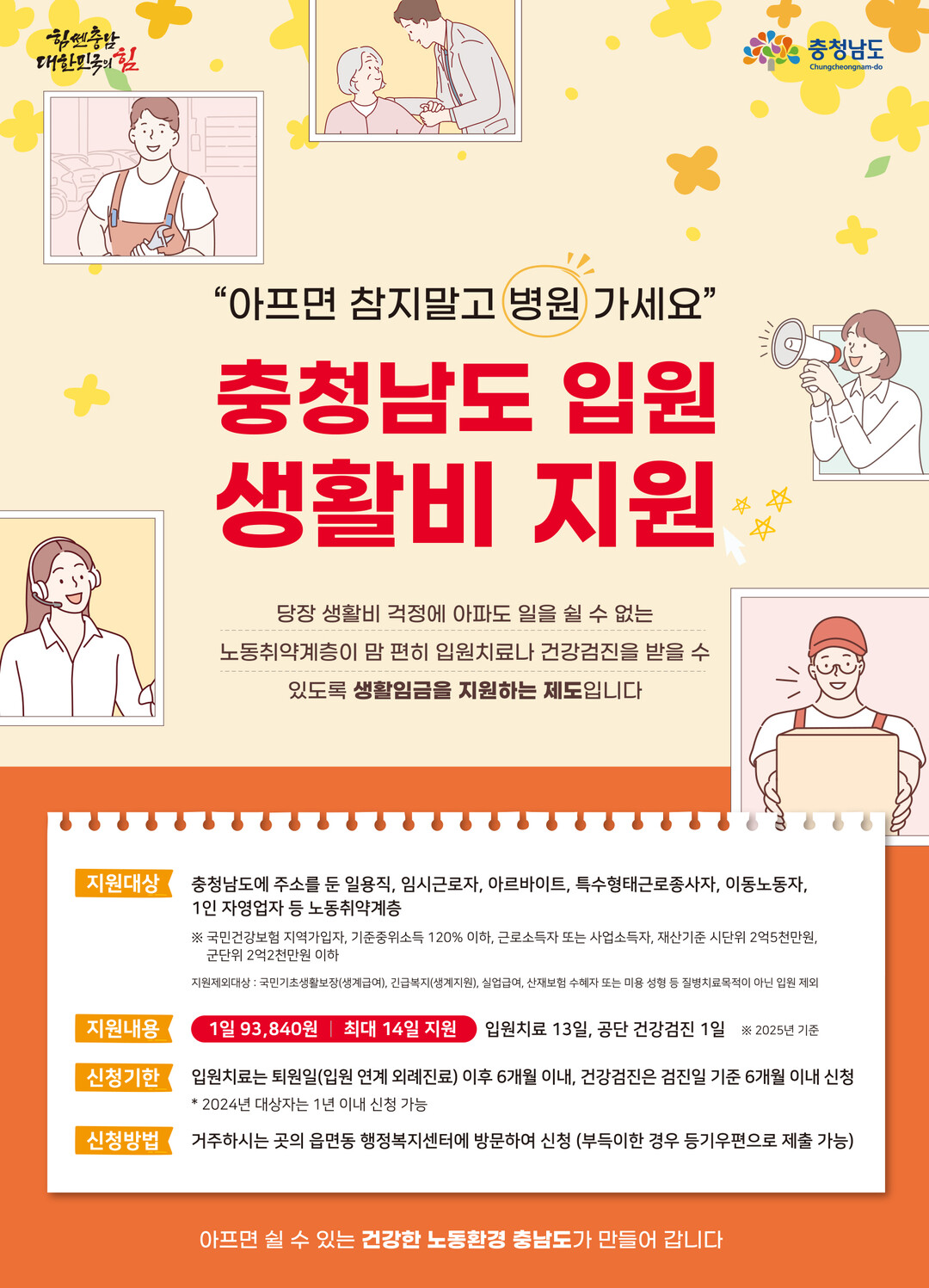
In a significant stride towards enhancing the well-being of its vulnerable working population, the provincial government of Chungcheongnam-do, South Korea, has launched the 'Chungnam-type Hospitalization Living Expense Support' program. Announced on April 21st, this initiative aims to alleviate the financial burden on low-income individuals who require inpatient medical treatment, ensuring they can prioritize recovery without the added stress of lost income.
The newly implemented system offers a daily stipend of 93,840 Korean Won (approximately $68 USD as of April 23, 2025) for eligible workers undergoing hospital care. This daily amount reflects the province's commitment to a fair living wage and underscores the government's dedication to supporting its working class. The support extends for a maximum of 13 days of inpatient treatment per year, with an additional day allocated for general health checkups covered by the National Health Insurance Corporation. Notably, the program also includes Saturdays and public holidays within the eligible hospitalization period, acknowledging the continuous nature of medical needs.
The eligibility criteria for this crucial support mechanism are clearly defined to target those most in need. Applicants must be regional subscribers of the National Health Insurance with an income not exceeding 120% of the median income as stipulated by the Ministry of Health and Welfare. Furthermore, to ensure the program benefits those with limited assets, a property standard has been set at 250 million KRW (approximately $182,000 USD) or less for residents of small to medium-sized cities, and 220 million KRW (approximately $160,000 USD) or less for those residing in rural areas within Chungcheongnam-do.
The application process has been designed to be accessible and straightforward. Eligible individuals, or their designated representatives, can apply for the support within six months from the date the need for hospitalization arose. Recognizing potential delays in awareness or application, the province has extended the application window to one year for individuals who experienced hospitalization and discharge in 2024. Applications can be submitted either in person at the local Eup, Myeon, or Dong community service center or via postal mail, providing flexibility for applicants.
This initiative by Chungcheongnam-do is particularly significant in the context of South Korea's ongoing efforts to strengthen its social safety net. While the country boasts a robust national health insurance system, the financial strain of lost wages during periods of illness can disproportionately affect low-income workers who often lack paid sick leave or substantial savings. The 'Chungnam-type Hospitalization Living Expense Support' directly addresses this vulnerability, ensuring that individuals can access necessary medical care without facing severe economic hardship.
Recent data from the Korea Labor Institute highlights the persistent gap in social safety net provisions for non-regular workers and the self-employed, who often constitute a significant portion of the low-income workforce. These individuals are less likely to have access to employer-provided sick leave and may face significant income loss when unable to work due to illness or injury. Programs like the one introduced by Chungcheongnam-do can play a vital role in mitigating these disparities and promoting health equity.
Furthermore, the emphasis on early detection through the inclusion of support for general health checkups aligns with a broader public health strategy focused on preventative care. By making routine checkups more accessible to low-income individuals, the province aims to facilitate the early diagnosis and treatment of potential health issues, ultimately reducing the likelihood of more severe and costly medical interventions down the line.
The proactive approach of Chungcheongnam-do has garnered positive attention from welfare advocates and labor organizations. Kim Min-ju, a representative from the Solidarity for Health Rights, commented, "This initiative sets a commendable precedent for other regions in South Korea. By directly addressing the income insecurity faced by low-income workers during medical leave, Chungcheongnam-do is demonstrating a genuine commitment to the well-being of its citizens."
The provincial government has emphasized its commitment to ensuring the smooth implementation and accessibility of the program. Detailed information and application guidelines are readily available on the administrative information sections of both the provincial and respective city/county websites, reflecting a commitment to transparency and ease of access for potential beneficiaries.
Looking ahead, it will be crucial to monitor the impact and effectiveness of the 'Chungnam-type Hospitalization Living Expense Support' program. Data on the number of beneficiaries, the types of medical conditions treated, and the overall economic impact on participating households will provide valuable insights for potential expansion or replication in other regions.
In conclusion, Chungcheongnam-do's innovative hospitalization living expense support program represents a significant step forward in providing crucial financial assistance to its low-income working population during times of medical need. By prioritizing both treatment and economic stability, the province is setting a positive example for inclusive and comprehensive welfare policies in South Korea.
[Copyright (c) Global Economic Times. All Rights Reserved.]