![[등록] 2026-09-01 15:48:31](/support/_updata/banner2/tl181982910_6749.png)


SEOUL — Household loan balances at major commercial banks continue to climb, pushing them past their annual aggregate targets once again, industry data showed.
Following the relaxation of aggregate regulations last month, newly allocated lending capacity has been depleted rapidly, prompting forecasts that strict household loan barriers will likely remain high through the end of the year.
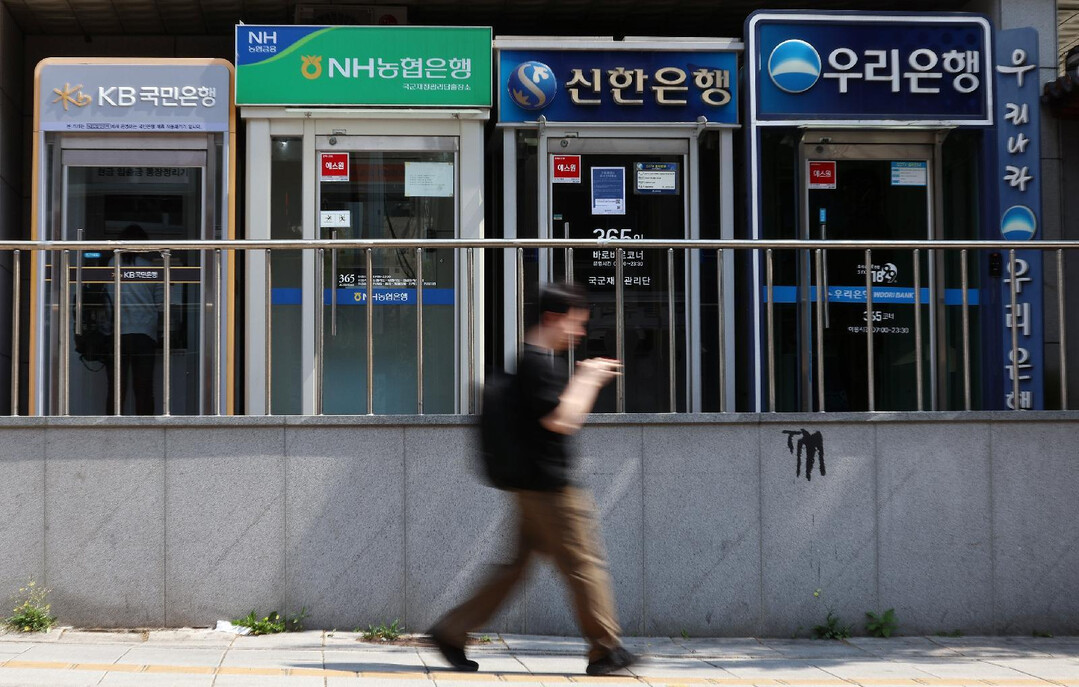
According to the financial sector on the 22nd, household loan balances (excluding policy loans) at the top five commercial banks—KB Kookmin, Shinhan, Hana, Woori, and NH Nonghyup—stood at KRW 652.26 trillion as of the 17th.
This represents an increase of KRW 7.29 trillion compared to the end of last year (KRW 644.97 trillion).
The figures show that the banks have already surpassed their newly revised annual growth target of approximately KRW 7.11 trillion—agreed upon with financial authorities at the end of last month—by nearly KRW 200 billion. In less than a month, the newly secured lending capacity of about KRW 2.78 trillion has been completely exhausted.
Breaking down the figures by bank, two of the top five commercial banks have substantially exceeded their annual targets, while two others are barely maintaining levels teetering on the brink of breach.
However, the total household loan balance for the five major banks, including policy loans, was recorded at KRW 781.51 trillion as of the 17th, decreasing by KRW 6.11 billion from the end of August (KRW 782.12 trillion).
This marks the first time in six months that the total household loan balance has turned downward since March (when it fell by KRW 1.36 billion).
Analysts suggest that while the overall balance decreased due to a decline in policy loans, banks' proprietary household loans—excluding policy loans—have maintained an upward trend.
"Asset securitization for Bogeumjari Loan, one of our policy loan programs, has continued consistently since the beginning of this month," an official from a commercial bank noted. "As a result, mortgage loans have decreased."
The official explained that when a certain volume of Bogeumjari Loans handled by the banking sector accumulates, they are transferred to the Korea Housing Finance Corporation's accounts, and this securitization process is reflected as a drop in policy loans.
"Given that financial authorities have already expanded the aggregate targets once, banks face heavy pressure to strictly comply with them through year-end," the official added. "It will not be easy for individual banks to ease their lending regulations."
On the other hand, some projections suggest that loan thresholds may not rise further, considering that financial authorities have decided to exclude collective loans—such as relocation, intermediate payment, and final balance loans—from individual banks' aggregate regulations, alongside seasonal factors involving a decline in new mortgage applications toward the end of the year.
Another banking insider stated, "The current loan balances exceeding the targets partly include collective loans. Therefore, there may be no major difficulties in supplying loans for actual housing demand."
[Copyright (c) Global Economic Times. All Rights Reserved.]