• 2026.06.05 (Fri)
  • All articles
  • LOGIN
  • JOIN
Global Economic Times
fashionrunwayshow2026
  • Synthesis
  • World
  • Business
  • Industry
  • ICT
  • Distribution Economy
  • Well+Being
  • Travel
  • Eco-News
  • Education
  • Korean Wave News
  • Opinion
  • Arts&Culture
  • Sports
  • People & Life
    • International Student Report
    • With Ambassador
  • Column
    • Cho Kijo Column
    • Cherry Garden Story
    • Ko Yong-chul Column
    • Kim Seul-Ong Column
    • Lee Yeon-sil Column
  • Photo News
  • New Book Guide
MENU
 
Home > Column > Ko Yong-chul Column

The Siege of Merit: MIT Stands as a Bulwark Against Federal Encroachment

Global Economic Times Reporter / Updated : 2025-12-23 07:06:28
  • -
  • +
  • Print


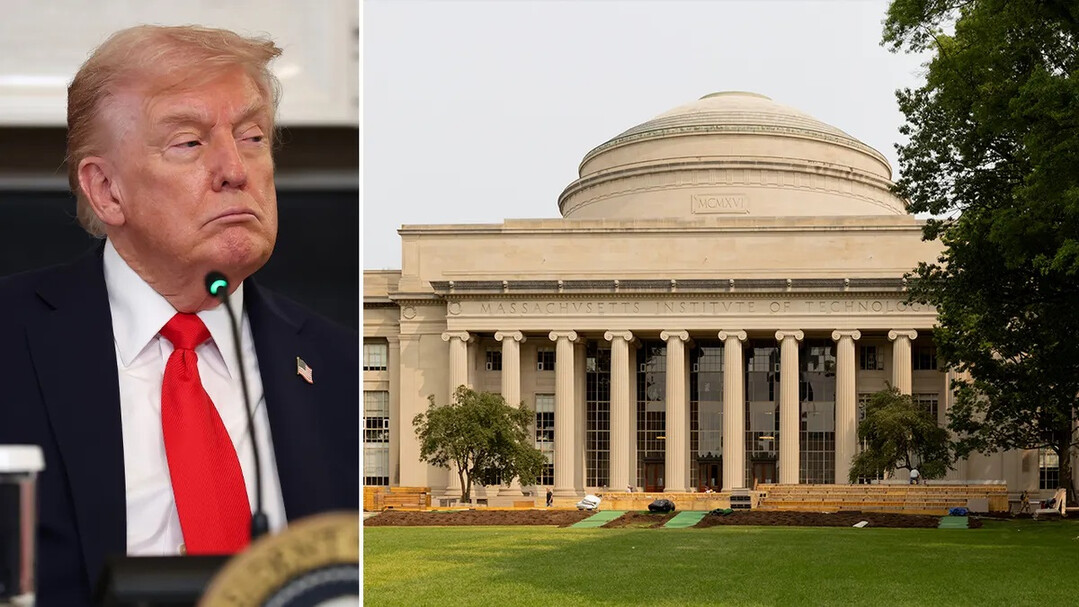
CAMBRIDGE, MA — The Massachusetts Institute of Technology (MIT) has long stood apart from the landscape of American higher education. Today, it finds itself at the center of a high-stakes ideological battle, serving as a rare example of meritocracy under fire from an increasingly interventionist federal administration.

Last October, MIT was among nine elite institutions that refused to sign the Trump administration’s “Accord for Academic Excellence in Higher Education.” President Sally Kornbluth was the first to decline, subsequently visiting Washington D.C. to argue that the administration’s hostility toward top-tier universities threatens the very meritocratic foundations of American prosperity.

The friction is paradoxical. The federal accord mandates standardized testing (SAT/ACT) to ensure fairness; yet, MIT had already unilaterally reinstated these requirements in 2022. While the administration rails against "elite entrenchment," MIT has never practiced legacy admissions. Furthermore, under Kornbluth’s leadership, the institute abolished the requirement for diversity, equity, and inclusion (DEI) statements in faculty hiring—a move often championed by conservatives.

Financially, MIT remains a model of accessibility. With a "need-blind" admissions policy and free tuition for families earning under $200,000, 88% of the Class of 2024 graduated debt-free. Despite this, the administration’s 8% tax on university endowments costs MIT $240 million annually—funds that could otherwise offset federal research cuts or bolster social mobility. Such taxation perversely undermines conservative values by weakening private-sector alternatives to state power.

The economic stakes are global. With 94% of its degrees in STEM fields, MIT’s "multiplier effect" is staggering: companies founded by its alumni generate $1.9 trillion in annual revenue—comparable to the GDP of Russia—and support 4.6 million jobs.

Historically, the bridge between MIT and Washington was one of strategic synergy. Eighty years ago, Vannevar Bush, an MIT dean, moved to the capital to lay the groundwork for modern national security, eventually igniting the Manhattan Project. Today, however, that relationship has soured into one of suspicion and regulatory overreach.

The administration’s latest mandate—prohibiting the "disregard of conservative ideas"—strikes many as a hollow irony. It remains unclear which conservative ideals the government seeks to protect: fiscal discipline, free trade, or the rule of law? By attempting to micromanage an institution as complex as MIT, the current administration displays a profound misunderstanding of the limits of state authority.

To watch modern politics trifle with an institution of such vital importance is akin to watching a toddler play with priceless Sèvres porcelain. MIT is not merely a school; it is a national asset whose autonomy is essential to the future of American innovation.

[Copyright (c) Global Economic Times. All Rights Reserved.]

  • #Globaleconomictimes
  • #Korea
  • #Seoul
  • #Samsung
  • #LG
  • #Bitcoin
  • #Meta
  • #Business
  • #Economic
  • #The Woori Bank
  • #Elon Musk
Global Economic Times Reporter
Reporter Page

Popular articles

  • Hyundai Motor Group Bets $700 Million on Mexico Amid Trade Policy Volatility

  • IRANIAN STATE MEDIA DEMONSTRATES ASSAULT RIFLES ON-AIR, TARGETING UAE FLAG AMID RISING REGIONAL PRESSURES

  • Tesla Model Y Becomes First to Pass Grueling New U.S. Autonomous Safety Tests

I like it
Share
  • Facebook
  • X
  • Kakaotalk
  • LINE
  • BAND
  • NAVER
  • https://globaleconomictimes.kr/article/1065564294169394 Copy URL copied.
Comments >

Comments 0

Weekly Hot Issue

  • Samsung Electronics Super-Enterprise Union Loses Majority Status Amid Backlash Over Bonus Disparities
  • Samsung to Embed Vital Signs and Heart Health Scores in Upcoming Galaxy Watch9 Lineup
  • Apple Honors Digital Excellence: 12 Exceptional Apps and Games Celebrated at the 2026 Design Awards
  • Nexon Revamps Signature Youth Coding Competition into AI-Driven 'Nexon Young Programmers Cup'
  • Tech University of Korea Gathers 200 Game and AI Researchers to Discuss Industrial Expansion
  • Major Korean Telcos Trim Online-Exclusive Plans by Up to 50% Amid Shift to Unified Mobile Tariffs

Most Viewed

1
From a moment of collective sacrifice to a moment of collective democracy: The Timing of the Election in Ethiopia and Korea
2
U.S. Holds Off on Immediate Comprehensive Semiconductor Tariffs, but Pressure Mounts for Samsung and SK Hynix to Accelerate Domestic Investments
3
[Interview] "Halal is Not a Religious Regulation, but a 'Trust Infrastructure'… Creating a Premium 'K-Halal' Centered on Data and Platforms"
4
‘600 Million Won Bonus’ at Samsung Electronics Triggers Deep Sense of Relative Deprivation Among Korean Workers
5
Musk’s SpaceX Secures Space Hegemony with Flawless Starship V3 Recovery Ahead of Historic IPO
광고문의
임시1
임시3
임시2

Hot Issue

Murata Unveils Next-Gen Resin Electrode MLCC for Automotive Applications

Samsung to Embed Vital Signs and Heart Health Scores in Upcoming Galaxy Watch9 Lineup

L&F Plus Secures KRW 220 Billion from National Growth Fund to Anchor South Korea’s First Mass LFP Cathode Production

Samsung Electronics Super-Enterprise Union Loses Majority Status Amid Backlash Over Bonus Disparities

Fashion Runway Show 2026

Global Economic Times
korocamia@naver.com
CEO : LEE YEON-SIL
Publisher : KO YONG-CHUL
Registration number : Seoul, A55681
Registration Date : 2024-10-24
Youth Protection Manager: KO YONG-CHUL
Singapore Headquarters
5A Woodlands Road #11-34 The Tennery. S'677728
Korean Branch
Phone : +82(0)10 4724 5264
#304, 6 Nonhyeon-ro 111-gil, Gangnam-gu, Seoul
Copyright © Global Economic Times All Rights Reserved
  • 에이펙2025
  • APEC2025가이드북TV
  • 반달곰 프로젝트
Search
Category
  • All articles
  • Synthesis
  • World
  • Business
  • Industry
  • ICT
  • Distribution Economy
  • Well+Being
  • Travel
  • Eco-News
  • Education
  • Korean Wave News
  • Opinion
  • Arts&Culture
  • Sports
  • People & Life 
    • 전체
    • International Student Report
    • With Ambassador
  • Column 
    • 전체
    • Cho Kijo Column
    • Cherry Garden Story
    • Ko Yong-chul Column
    • Kim Seul-Ong Column
    • Lee Yeon-sil Column
  • Photo News
  • New Book Guide
  • Multicultural News
  • Jobs & Workers