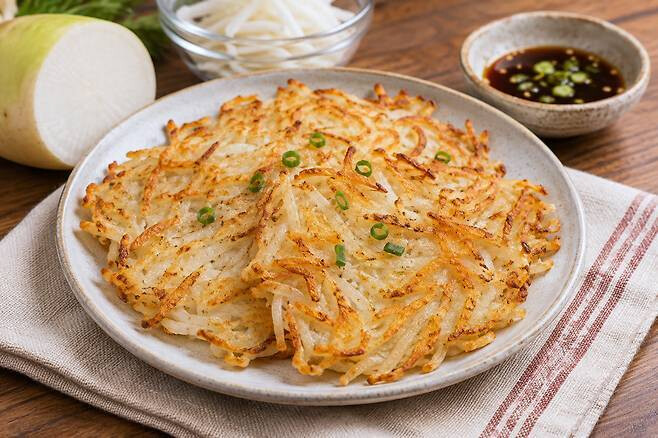
If you find yourself with extra Korean radishes (mu) after finishing your annual kimchi-making (gimjang), consider turning them into savory pan-fried pancakes. Known as mu-jeon, this dish transforms humble leftover vegetables into a crispy-on-the-outside, tender-on-the-inside seasonal treat that highlights the natural sweetness and crunch of winter radishes.
How to Make Crispy Radish Pancakes (Mu-jeon)
To prepare two servings, start with 300 grams of Korean radish. Wash it thoroughly, peel the skin, and julienne it into thin strips. Using a mandoline slicer helps ensure uniform thickness—if the strips are too thick, they take longer to cook and can turn tough, whereas thinner strands distribute heat evenly for maximum crispiness.
Next, pat the shredded radish dry with paper towels to remove excess moisture, which could otherwise make the batter soggy. Toss the dried radish strips with 3 tablespoons of Korean pancake mix (buchimgaru) and 2 tablespoons of potato starch. If the mixture feels too dry to bind together, gradually add a small splash of water until it holds its shape.
Heat a thin layer of cooking oil in a skillet over medium heat. Spread the batter thinly into the pan and cook until the bottom turns golden brown. Flip carefully and cook the other side until crisp and cooked through. Serve hot alongside a soy-based dipping sauce.
Nutritional Benefits of Winter Radish
Low in calories yet rich in dietary fiber, potassium, and vitamin C, Korean radish makes a nutritious addition to winter meals or snacks:
Digestive & Blood Sugar Support: Its high dietary fiber content adds bulk to stool to promote regular bowel movements, while also slowing down carbohydrate absorption to help prevent sharp blood sugar spikes.
Blood Pressure & Hydration: Potassium aids in flushing excess sodium from the body, supporting healthy blood pressure and maintaining proper fluid and electrolyte balance.
Anti-inflammatory Properties: Like other cruciferous vegetables, radishes contain glucosinolates—functional compounds activated when the vegetable is chopped or chewed that are known for their anti-inflammatory effects.
Cooking Tips for Healthier Enjoyment
To preserve as many nutrients as possible, slice the radish thinly to minimize cooking time. Both vitamin C and the enzymes that activate glucosinolates are sensitive to prolonged high heat, making medium heat the ideal cooking temperature.
Additionally, moderation is key when it comes to carbohydrates and sodium. Use just enough pancake mix and starch to bind the ingredients and create crispiness without adding unnecessary calories, and go light on the soy dipping sauce to keep sodium intake in check.
[Copyright (c) Global Economic Times. All Rights Reserved.]