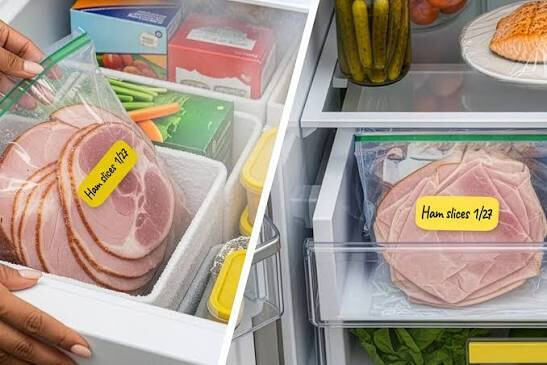
According to food handling data released by the Ministry of Food and Drug Safety, 83.3% of 1,293 surveyed consumers reported saving leftover ham for later consumption. While 53.1% transferred the remaining meat into separate airtight containers or sealed bags, roughly 30.2% admitted to leaving the ham inside its original, unsealed packaging.
A study published in the journal Frontiers in Microbiology highlights the rapid deterioration of sliced cooked ham once opened. Researchers observed samples stored in standard household refrigerators over a 12-day period and found that microbial contamination began climbing immediately after the seal was broken. Noticeable quality degradation occurred by day eight, and by day twelve, the meat had spoiled beyond safe consumption levels.
Commercially packaged ham typically relies on a modified atmosphere—consisting of 70% nitrogen and 30% carbon dioxide—to inhibit chemical and biological spoilage. Once opened, this protective gas mixture escapes, stripping the meat of its defense against bacteria. In spoiled samples, researchers primarily detected lactic acid bacteria. Although these microbes can suppress certain pathogens, their overgrowth causes discoloration, sour flavors, and foul odors.
Health experts also warn against the proliferation of Listeria monocytogenes. Unlike many common foodborne pathogens, Listeria can thrive even at typical refrigerator temperatures of around 4°C (39°F), continuing to grow in environments below 10°C (50°F). Storing exposed ham near raw meats, eggs, or unwashed produce significantly increases the likelihood of cross-contamination inside the fridge.
Consuming Listeria-contaminated food can trigger symptoms ranging from fever, muscle aches, and gastrointestinal distress to severe neurological signs like neck stiffness, loss of balance, and convulsions. Pregnant women face heightened risks, as infections presenting as mild flu-like symptoms can ultimately lead to miscarriage.
To ensure food safety, consumers should always verify storage temperatures and expiration dates upon purchase. After opening a package, any unused portions should be promptly transferred to an airtight container or a resealable zip-top bag before refrigeration or freezing. Because processed meats can still degrade even when properly stored, it is best to eat leftovers quickly and immediately discard any ham that shows signs of discoloration, an unusual odor, or a slimy texture.
[Copyright (c) Global Economic Times. All Rights Reserved.]