JERUSALEM — Caretaker Prime Minister Benjamin Netanyahu has sharply rebuked Israel’s political opposition, accusing rivals of minimizing national security risks for partisan gain as coalition negotiations remain deadlocked following last month’s general election.
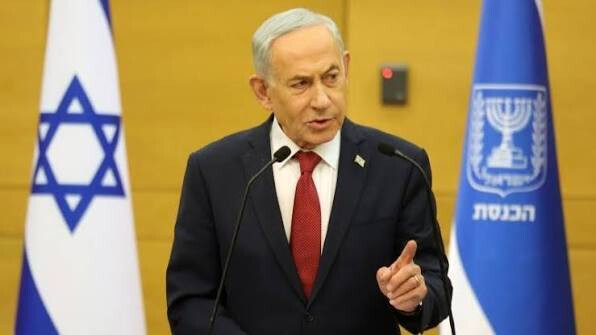
Speaking to the press at the Knesset prior to a Likud faction meeting on Monday, Netanyahu pushed back against recent comments by Yashar party leader Gadi Eisenkot. Eisenkot, who currently holds the mandate to assemble a new governing coalition, had suggested that Israel faces no imminent threat from Iran.
"Our ability to defend the existence of the nation against the immense threats surrounding us depends on our unity," Netanyahu stated, asserting that anyone mocking or downplaying "these immediate, severe, and grave threats" is acting out of political self-interest.
Coalition Stalemate and Conscription Hurdles
Following an election that stripped his previous coalition of its parliamentary majority, Netanyahu is advocating for a broad emergency government—one that preserves his role as prime minister and retains his outgoing right-wing and religious allies.
A major sticking point in talks between Likud and Eisenkot’s camp remains the mandatory military conscription of ultra-Orthodox (Haredi) men. Calling for compromise, Netanyahu insisted that Haredi parties must be included in any future unity cabinet. "All camps must demonstrate the flexibility necessary to reach an agreement, including on the issue of military conscription, where we must reach a consensus with our ultra-Orthodox brothers," he said.
Meanwhile, tensions have flared over reports that the Israel Defense Forces (IDF) recently pushed back against a proposal by Netanyahu to restart military strikes against Iran. Opposition figures have accused the prime minister of attempting to spark fresh hostilities in a bid to stall the formation of an alternative government.
Opposition to Arab-Backed Coalition
During his address, in which he declined to take questions from journalists, Netanyahu also sought to delegitimize potential coalition-building efforts involving Arab-majority parties. He argued that a government dependent on such factions would be incapable of confronting threats from Iran or Hamas.
Singling out Joint List lawmakers Ahmad Tibi and Ofer Cassif, Netanyahu declared that a Zionist administration cannot be beholden to them or their supporters. Framing his stance as ideological rather than discriminatory, he concluded that a government fighting for Israel's survival cannot rely on "those who seek to destroy it."
[Copyright (c) Global Economic Times. All Rights Reserved.]