![[등록] 2026-09-01 15:48:31](/support/_updata/banner2/tl181982910_6749.png)


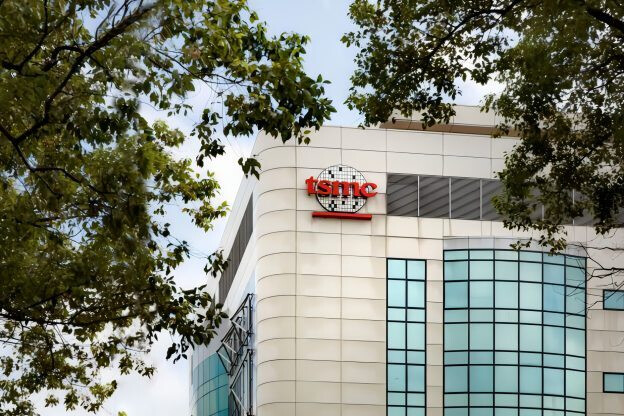
TAIPEI / SEOUL — Taiwan Semiconductor Manufacturing Company (TSMC), the world’s leading semiconductor foundry, is accelerating the expansion of its 3-nanometer (3nm) production capacity to keep pace with soaring global demand for artificial intelligence (AI) chips. According to industry sources, TSMC’s monthly 3nm wafer output is on track to reach 180,000 units by the end of this year—achieving its target two to three months ahead of original projections.
Local Taiwanese news outlets, including the China Times, reported on August 6 that TSMC is actively converting a portion of its existing 5-nanometer (5nm) lines into 3nm production lines. The move comes as order volumes continue to swell from key fabless clients, including NVIDIA, AMD, and Broadcom.
Global Expansion to Push 3nm Capacity Beyond 220,000 Wafers
The capacity surge will gain further momentum as TSMC’s overseas manufacturing facilities come online. As new 3nm-capable fabs in the Southern Taiwan Science Park, Arizona (U.S.), and Kumamoto (Japan) sequentially enter commercial production, total monthly 3nm capacity is expected to reach 220,000 to 250,000 wafers.
Concurrently, TSMC is accelerating the rollout of its next-generation 2-nanometer (2nm) node:
H1 2026: 50,000 – 60,000 wafers/month
Early Q4 2026: 80,000 wafers/month
End of 2026: 100,000 wafers/month
By 2028: Projected at 180,000 wafers/month
By late 2026, TSMC's combined monthly output for 2nm and 3nm advanced processes will reach 250,000 wafers, surpassing 400,000 wafers per month by 2028.
Expanding AI Demand Across Mobile, Automotive, and Robotics
The surge in AI chip demand is expanding rapidly beyond data center servers into mobile devices, humanoid robotics, and automotive systems.
Qualcomm’s upcoming mobile application processor (AP) for the Samsung Galaxy S26 series—the Snapdragon 8 Elite Gen 5—utilizes TSMC’s advanced 3nm-class N3P process node.
In the automotive AI domain, TSMC is securing major design wins. Industry sources report that TSMC, alongside Taiwanese design house Global Unichip Corporation (GUC), completed the tape-out for Tesla’s next-generation A15 AI processor a quarter ahead of rival Samsung Electronics. Furthermore, Tesla’s upcoming AI6.5 chip is slated for mass production using TSMC’s 2nm process at its Arizona fab.
CapEx Raised to $60B–$64B on Multi-Year Order Visibility
During its Q2 earnings call, TSMC reaffirmed that demand for leading-edge AI chips remains significantly stronger than expected. Management revealed that order visibility from key customers and major Cloud Service Providers (CSPs) now extends through 2029 and 2030.
In response, TSMC officially raised its full-year capital expenditure (CapEx) budget from its previous target of around $50 billion to a new range of $60 billion to $64 billion.
[Copyright (c) Global Economic Times. All Rights Reserved.]