![[등록] 2026-09-01 15:48:31](/support/_updata/banner2/tl181982910_6749.png)


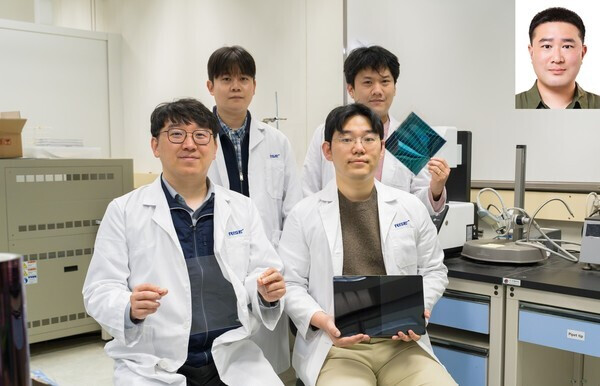
GWANGJU, South Korea – A research team at the Gwangju Institute of Science and Technology (GIST) has announced the development of a next-generation, highly durable, and flexible transparent protective film. This breakthrough technology, capable of withstanding scratches and high-impact physical stress, is expected to be a game-changer for the durability of Organic Photovoltaics (OPVs) and flexible display panels.
Solving the Dilemma of Surface Hardness and Impact Resistance
The research team, led by Professor Hong-Gyu Kang, Deputy Director of the Next-Generation Energy Research Institute at GIST, focused on "interface engineering." Traditionally, improving surface hardness often came at the cost of flexibility or impact resistance, a classic trade-off in materials science.
Polycarbonate, a common material used for cover windows, is lightweight but prone to micro-cracks and scratches when exposed to UV light, moisture, or physical friction over long periods. To address this, the GIST team designed a precision-controlled interface between different material layers, effectively eliminating stress concentration and adhesion imbalances.
By creating an intermediate adhesive layer that combines highly durable siloxane with adhesive epoxy, the researchers ensured that the film remains reactive even after the initial curing process. This allows for additional chemical bonding with the top coating layer, significantly enhancing overall interfacial adhesion.
Proven Performance in Rigorous Testing
The team conducted a series of demanding tests to validate the performance of the new protective material:
Scratch Resistance: The film showed almost no damage even under friction levels equivalent to the hardness of a pencil lead.
Impact Resistance: It successfully maintained its structural integrity under an impact force of 40 Joules—a level simulating small, high-velocity falling objects.
Flexibility & Transparency: The film maintained its mechanical stability and optical clarity even through repeated bending tests, proving its suitability for large-area panels and curved displays.
Broad Industrial Applications
The implications of this technology extend far beyond OPVs. As modern electronics move toward wearable devices, foldable smartphones, and integrated solar power solutions for buildings (BIPV), the demand for robust, transparent protection has skyrocketed. This "platform technology" allows for a single manufacturing process to achieve surface hardness, impact resistance, and optical clarity simultaneously.
"Our research effectively resolves the trade-off between surface hardness and impact resistance through interface engineering," said Professor Kang. "This technology is highly versatile and can be applied to a wide range of industries, including mobility, advanced displays, and solar energy."
Recognition and Future Outlook
The research has received strong academic and industrial backing. It was supported by the Ministry of Science and ICT and the National Research Foundation of Korea through the Nano and Materials Technology Development Program, as well as the Ministry of SMEs and Startups’ "Deep-Tech TIPS" program. Furthermore, the technology was awarded an 'AA' grade by the Korea Invention Promotion Association’s (KIPA) Patent Analysis and Evaluation System (SMART5), highlighting its technological superiority.
The research findings are scheduled to be published in the June issue of Progress in Organic Coatings, a prestigious international journal in the field of materials and coatings. Looking ahead, GIST’s Technology Commercialization Office is preparing to initiate discussions regarding technology transfer to accelerate the commercialization of this high-potential material.
[Copyright (c) Global Economic Times. All Rights Reserved.]