![[등록] 2026-09-01 15:48:31](/support/_updata/banner2/tl181982910_6749.png)


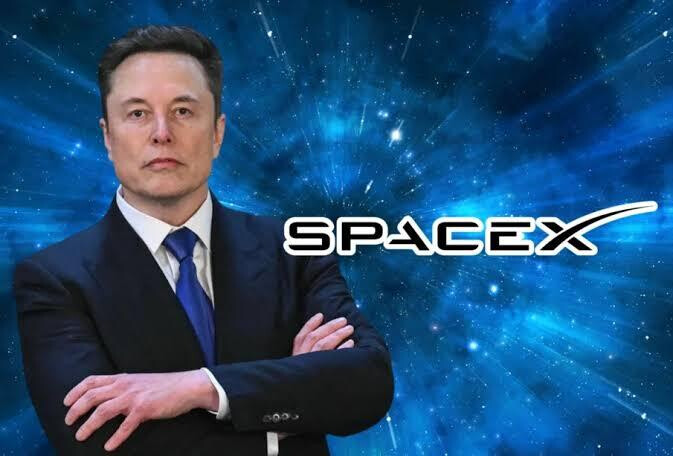
In a bold redefinition of the company’s future, Elon Musk, CEO of SpaceX, has declared that artificial intelligence (AI) will soon eclipse the company’s traditional aerospace and connectivity businesses as its primary revenue driver. Addressing employees during an internal "All Hands" meeting on August 12, Musk projected that AI-related income would surpass the combined revenue of SpaceX’s rocket launch and Starlink communications segments as early as September.
A Pivot to Compute Infrastructure
SpaceX, which recently went public and has faced a turbulent journey in the stock market, is aggressively pivoting its business model. While Starlink remains a dominant force in satellite internet, the company’s financial trajectory is increasingly tied to its massive investment in AI computing power.
According to SpaceX’s Q2 2026 earnings report, the company generated $7.81 billion in quarterly revenue. Of this, $4.29 billion originated from connectivity products, while the nascent AI division already contributed $2.56 billion. Musk’s confidence stems from an aggressive scaling of "Colossus" and "Colossus II" data clusters. SpaceX currently operates 1.4 gigawatts (GW) of AI compute capacity and aims to reach 10 GW by the end of 2027. Musk estimates that at this scale, the AI infrastructure business could generate between $300 billion and $500 billion in annual revenue.
"Rocket science is literally our daily business," Musk remarked, downplaying the difficulty of building data centers compared to the challenges of space exploration. By applying the same engineering rigor used for the Starship program to terrestrial infrastructure, SpaceX believes it has a significant competitive advantage over traditional cloud providers.
Learning from the "Parents"
A cornerstone of this strategy is the integration of the generative AI model "Grok" with the collective expertise of SpaceX’s workforce. Musk has called on employees to view themselves as the "parents" of the AI, proposing that the model be trained on the company’s proprietary data, internal workflows, and technical problem-solving methods. While specific details on data governance and privacy remain under wraps, the vision is clear: to create an AI that doesn't just process information, but mimics the unique innovative spirit of SpaceX engineers.
The Market Responds
The market reaction to Musk’s vision has been swift. Following the announcement, SpaceX’s stock surged 11% during intraday trading, reaching $148.44—well above its $135 IPO price. This rebound marks a significant recovery from the volatility seen earlier this month, when heavy capital expenditures—nearly $16 billion in Q2 alone—rattled investors concerned about near-term cash flow.
However, the road ahead is not without obstacles. While Grok has seen impressive growth, reaching approximately 117 million monthly active users by March 2026, it remains a challenger in a market dominated by OpenAI’s ChatGPT and Google’s Gemini. Analysts note that while Grok’s user base has tripled in recent quarters, much of its utility is currently tied to its integration with the X platform.
Future-Proofing the Enterprise
Musk’s long-term forecast is even more ambitious: he believes that within four to five years, AI will account for 99% of SpaceX’s total value. Analysts from Mach33 Financial Group have even speculated that such a pivot could propel SpaceX toward a multi-trillion-dollar valuation by the 2030s, positioning the company not merely as a space-faring enterprise, but as the physical backbone of the global AI economy.
As SpaceX transitions from a satellite operator to an AI computing powerhouse, the industry is watching closely. If Musk’s September revenue targets materialize, SpaceX will officially cement its status as a pivotal AI entity, proving that the company's most important "rocket" might be the intelligence running on its servers.
[Copyright (c) Global Economic Times. All Rights Reserved.]