![[등록] 2026-09-01 15:48:31](/support/_updata/banner2/tl181982910_6749.png)


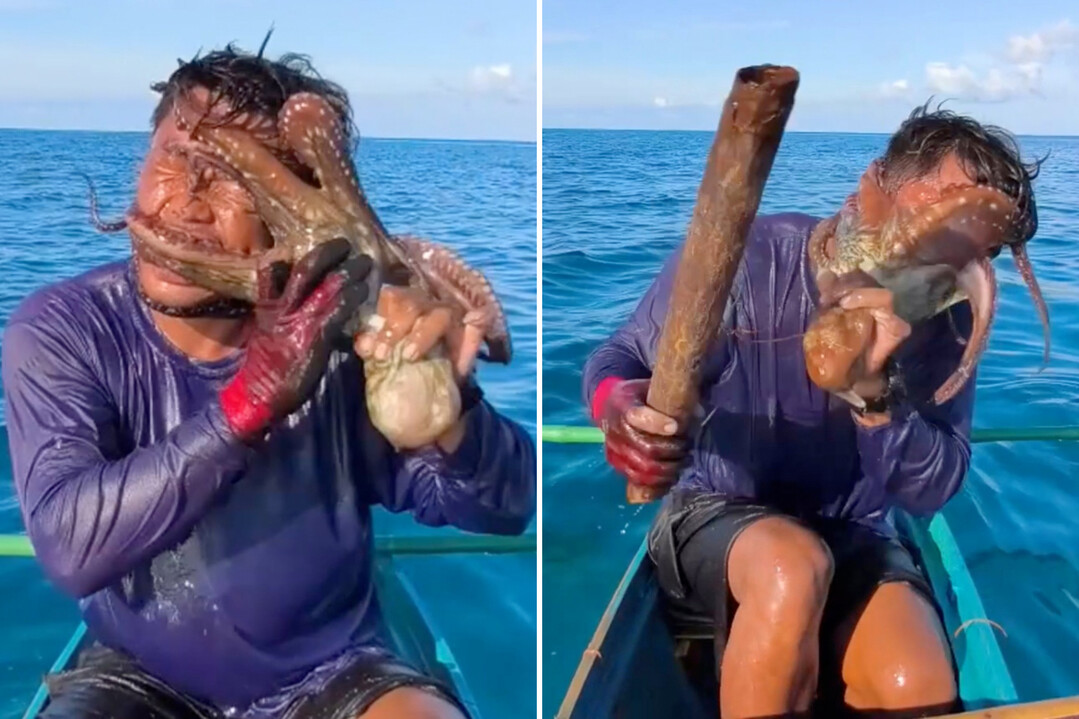
PUERTO PRINCESA, Philippines – A routine fishing trip turned into a harrowing ordeal for a Filipino fisherman last month, when a freshly caught octopus unexpectedly latched onto his face, sparking a desperate, high-stakes battle that has since captivated social media audiences worldwide.
The incident occurred on July 10, 2026, in the waters off Puerto Princesa, Palawan. The fisherman, identified as Jesser Cervantes, was on a small wooden boat when he hauled in an octopus. Moments after being pulled from the water, the cephalopod lunged toward Cervantes, wrapping its powerful, suction-cup-lined tentacles firmly around his nose, mouth, and eyes.
A Brutal Tug-of-War
Video footage of the encounter shows Cervantes in a state of visible panic, his breathing obstructed by the creature’s tight grip. The octopus, utilizing the vacuum-like force of its suckers, effectively "glued" itself to the fisherman’s face. Despite his frantic attempts to peel the tentacles away using his bare hands, the creature refused to release its hold.
"It almost ripped my face off," Cervantes recounted, describing the sheer strength of the animal. Fearing for his safety as the octopus continued to suffocate him, Cervantes was forced to reach for a nearby wooden stick. He struck the animal repeatedly until it finally lost its grip and fell back into the sea. Cervantes was left exhausted and gasping for air, though he emerged from the ordeal physically unharmed.
Why Do Octopuses Do This?
While the scene may seem like a nightmare for many, marine experts note that such behavior is not an act of "predatory aggression" against humans. Octopuses are highly intelligent, curious creatures that use their arms and suckers to explore their environment through touch and taste.
"An octopus’s suckers are strong, and they use them to investigate everything they come into contact with," explains a marine biologist. "When a fisherman pulls one out of the water, the creature is often disoriented and in a defensive state. It isn't trying to eat the human; it’s simply trying to find a solid surface to latch onto for stability."
Octopuses possess thousands of sensitive chemoreceptors in their suckers, allowing them to "taste" whatever they touch. When an octopus finds itself in a struggle with a human, it often clings tightly as a defensive mechanism, and its grip can be surprisingly powerful—enough to leave red marks or, in extreme cases, cause minor tissue damage.
Understanding the Risks
While most octopus species are not lethal to humans, all octopuses are venomous, possessing a sharp beak and salivary glands that contain toxins used to paralyze their prey, such as crabs and lobsters. However, bites on humans are exceptionally rare and typically only occur if the animal is handled improperly or feels threatened.
"It is a misconception that octopuses are aggressive toward humans," the expert added. "They are solitary animals that prefer to hide. The vast majority of 'attacks' are simply incidents of mishandling or accidental encounters."
The incident in Palawan serves as a reminder of the respect due to marine life. While Cervantes escaped without injury, the viral video has reignited discussions about safe fishing practices. Experienced fishers often suggest humane handling techniques—such as placing the animal in a container quickly or avoiding direct contact with the face—to prevent such "face-to-face" encounters.
As for Cervantes, he noted that while his experience was terrifying, it is an occupational hazard he has seen others endure. The video, which has been shared across various social media platforms, continues to draw millions of views, serving as a visceral lesson on the unpredictable nature of the ocean’s most intelligent inhabitants.
[Copyright (c) Global Economic Times. All Rights Reserved.]