SEOUL — For many imported car owners in South Korea, even a minor fender-bender can lead to a staggering repair bill. Recently, a driver in his 40s living in Incheon grazed a wall while parking his foreign sedan. Despite the minor impact, the total repair cost exceeded 12 million KRW ($8,700), including 6 million KRW for a single headlight and 1.28 million KRW for the bumper. While his insurance covered the immediate expense, he now faces the anxiety of a steep hike in his annual premium.
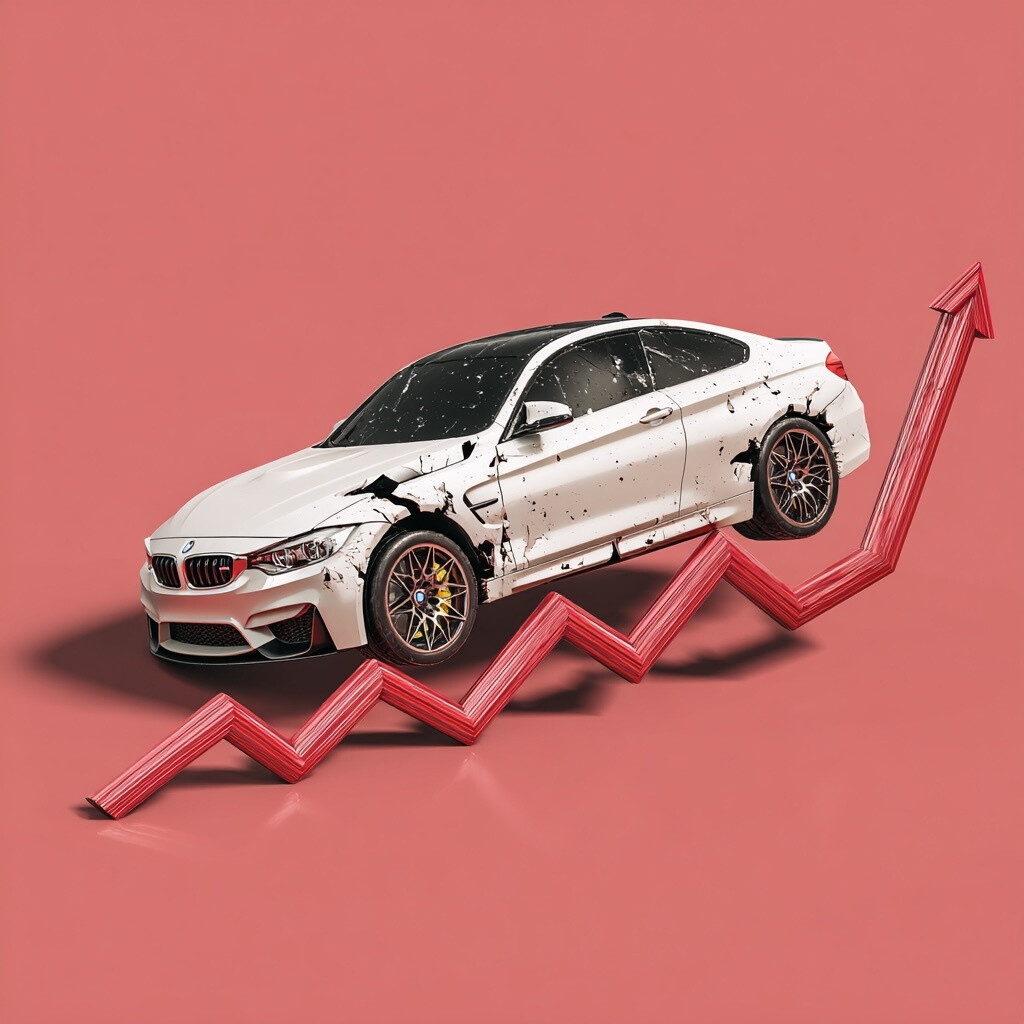
According to data released by the non-life insurance industry on the 23rd, the combined cost of all replacement parts for certain imported vehicles is more than seven times the retail price of the brand-new car itself.
An analysis comparing total part prices against vehicle sticker prices—conducted using international accident repair estimation systems and data from the Korea Insurance Development Institute—revealed stark disparities between foreign and domestic brands:
Audi A6 (2025 model): Total parts cost 548.3 million KRW, or 7.6 times its retail price of 72.44 million KRW.
Mercedes-Benz E-Class: Total parts cost 7.2 times the vehicle's price.
BMW 5 Series: Total parts cost 6.3 times the vehicle's price.
Domestic Counterparts: In contrast, the total parts cost for comparable domestic sedans like the Hyundai Grandeur and Kia K8 stood at just 1.6 times and 1.8 times their respective retail prices.
Individual component prices show a similar gap. Bumpers for imported models range from 1 million to 1.25 million KRW—up to 10 times the cost of a Kia K8 bumper (120,000 KRW). Headlamps for foreign cars run between 2.13 million and 4.59 million KRW, roughly five to ten times more expensive than those for a Hyundai Grandeur (440,000 KRW).
Because South Korean law does not cap auto part prices, manufacturers and importers set their own supply rates. Critics argue that foreign automakers rely heavily on parts sales for profit margins. However, an imported auto industry representative pushed back, noting that "overseas shipping logistics, customs duties, and local distribution fees inevitably drive up the base cost compared to domestically produced parts."
Replacing Instead of Repairing
Exorbitant part prices are compounded by industry practices that favor full replacements over simple repairs. Even when a bumper sustains only minor surface scratches that could easily be buffed and repainted, many repair shops insist on installing a brand-new unit.
A 39-year-old resident of Gyeonggi Province experienced this firsthand after backing into a parking lot pillar, cracking a taillight and lightly scuffing the rear bumper. When he requested only a taillight replacement, an official imported car service center demanded 7 million KRW, insisting the entire bumper had to be replaced as well. "It was absurd that they forced a replacement on a perfectly functional bumper, leaving the car owner with no say in the scope of repairs," he said.
While standard auto insurance policies stipulate that lightly scratched bumpers should be repaired—and replaced only if torn or punctured—these terms bind only the insurer and the policyholder, leaving insurance companies with little leverage to police third-party repair shops. Furthermore, although South Korea’s Motor Vehicle Management Act permits the use of certified alternative parts—which cost 35% to 40% less than Original Equipment Manufacturer (OEM) parts—low consumer awareness keeps most drivers locked into paying for expensive genuine components.
A Burden Shared by Every Driver
The fallout from inflated foreign car repair bills extends far beyond luxury vehicle owners. Under South Korea's auto insurance system, drivers carry property damage liability coverage to pay for damages inflicted on other vehicles. Consequently, a domestic car owner involved in a collision with an imported vehicle can be hit with millions of won in repair liabilities, even if their degree of fault is minimal.
This trend is visibly straining insurance payouts. Between 2020 and 2024, insurance payouts for imported car parts surged by 44.7%, jumping from 1.237 trillion KRW to 1.79 trillion KRW. During the same period, payouts for domestic car parts rose by a modest 19.2% (from 1.827 trillion KRW to 2.177 trillion KRW). As of June, imported vehicles accounted for just 14% of all registered cars in South Korea, yet they consumed over 45% of total auto insurance part payouts.
Experts warn that these rising claim costs will inevitably trigger across-the-board premium hikes for all motorists.
"Vehicles with disproportionately high repair costs should be subject to higher insurance premiums," said Kim Dae-hwan, a professor at Dong-A University. "Only then will foreign automakers feel the market pressure to lower part prices and reform their repair practices in order to stay competitive."
[Copyright (c) Global Economic Times. All Rights Reserved.]