• 2026.11.24 (Tue)
  • All articles
  • LOGIN
  • JOIN
Global Economic Times
한인동포뉴스(상단)
  • Synthesis
  • World
  • Business
  • Industry
  • ICT
  • Distribution Economy
  • Well+Being
    • Pet Life
    • Halal Horizon
  • Travel
  • Eco-News
  • Education
  • Korean Wave News
  • Opinion
  • Arts&Culture
  • Sports
  • People & Life
    • International Student Report
    • With Ambassador
  • Column
    • Cho Kijo Column
    • Cherry Garden Story
    • Ko Yong-chul Column
    • Kim Bong-seon's Photo Column
    • Kim Seul-Ong Column
    • Lee Yeon-sil Column
    • Professor Lee Soo-young’s Life Essays
  • Photo News
  • New Book Guide
MENU
 
Home > Distribution Economy

South Korea Commits Over 1,000 Trillion Won to Industrial Decarbonization, Banking on Transition Finance and Public Procurement

KO YONG-CHUL Reporter / Updated : 2026-11-24 04:59:50
  • -
  • +
  • Print

SEOUL — South Korea is moving to back its heavy industries with more than 1,000 trillion won in funding through 2035 to accelerate the shift toward low-carbon manufacturing, though policymakers face pressing questions over how to allocate the capital and guarantee commercial demand for greener products.

Speaking at the Korea Carbon Forum 2026 on Monday, Oh Il-young, Director General of Climate and Energy Policy at the Ministry of Climate, Energy and Environment, outlined the execution roadmap for the Korean Green Transformation (K-GX) strategy, first unveiled on October 7. Oh stressed that technological breakthroughs alone will not decarbonize the economy unless paired with accessible financing and viable markets.

The industrial sector accounted for roughly 250 million tons of South Korea’s greenhouse gas emissions in 2024. Under the K-GX blueprint, Seoul aims to cut industrial emissions by 41 million to 60 million tons below 2018 levels by 2035. The initiative targets five energy-intensive sectors: steel, petrochemicals, cement, oil refining, and semiconductors/displays.

Sector-Specific Overhauls and Market Hurdles

Because transitioning away from fossil fuels inflates production costs, companies often hesitate to adopt clean technologies at scale. To bridge this gap, the government is tailoring both technological roadmaps and market incentives across key industries:

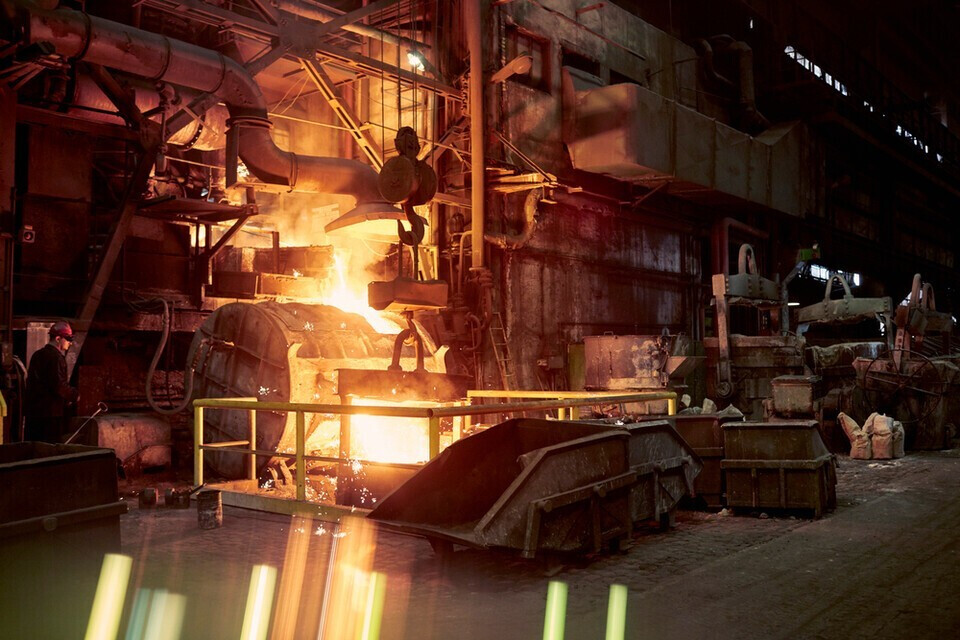
Steel: Seoul targets a 2030 pilot and 2037 commercialization for hydrogen-based steelmaking, which replaces coal with hydrogen to strip oxygen from iron ore. To offset steep facility costs, the government will introduce a low-carbon steel certification program tied directly to public procurement, guaranteeing early buyers.
Petrochemicals & Cement: Chemical producers will focus on electrifying feedstock processes and scaling up recycled inputs, while cement makers will expand the use of low-emission blended materials.
Semiconductors & Displays: Chip and panel manufacturers will adopt low-global-warming-potential process gases alongside upgraded emission-abatement systems.

Expanding the Green Taxonomy via Transition

Finance To bankroll these capital-intensive upgrades, the 1,000-trillion-won package combines 200 trillion won in direct fiscal spending with 790 trillion won in private and institutional climate finance.

Crucially, the government will roll out "transition finance" mechanisms to ensure high-emitting manufacturers are not locked out of green capital. By revising the Korean Green Taxonomy (K-Taxonomy) starting in 2027, regulators plan to extend financial eligibility to legacy manufacturers investing in measurable emission-reduction upgrades, rather than restricting funds solely to pure-play green businesses.

Execution Remains the Missing Piece

Despite the headline-grabbing 1,000-trillion-won figure, industry observers note that the current framework lacks project-level budget breakdowns and quantified emission-reduction targets for specific initiatives.

To translate broad pledges into verified carbon cuts, a newly formed public-private K-GX consultative body will be tasked with defining funding priority criteria, locking in off-take demand for higher-cost green materials, and building a tracking system to audit actual emission reductions against capital deployed.

[Copyright (c) Global Economic Times. All Rights Reserved.]

  • #Cherry Garden
  • #HalalFood
  • #Halal
  • #Petlife
  • #Cats
  • #Dogs
  • #Halalhorizone
  • #Hormuz Impasse
  • #Joseon
  • #globaleconomicti
KO YONG-CHUL Reporter
Reporter Page

Popular articles

  • Culinary Mashups and Nostalgia with a Twist: South Korea’s F&B Giants Vie for Consumer Attention

  • Japanese Hotel Prices Surge Nearly 9% Amid Booming Korean Tourism

  • AI Health and Wellness: How Generations Differ in Their Use of Artificial Intelligence

I like it
Share
  • Facebook
  • X
  • Kakaotalk
  • LINE
  • BAND
  • NAVER
  • https://globaleconomictimes.kr/article/1065556635892424 Copy URL copied.
Comments >

Comments 0

Weekly Hot Issue

  • China’s Tech Surge Challenges South Korea’s Export Dominance Across Key Industries
  • South Korean Golfers Pay Nearly Four Times More Per Round Than Japanese Peers, Study Finds
  • Imported Car Parts Cost Up to 7x the Vehicle’s Price, Driving Up Insurance Premiums for All
  • Strait of Hormuz Crisis Accelerates Global Shift Toward Electrification, IEA Finds
  • South Korea Faces a "Summer of Death" as Global Climate Talks Collapse
  • Demanding "72 Trillion Won More" on Top of an 820 Trillion Won Super Budget... Ruling and Opposition Parties Compete for Budget Increases

Most Viewed

1
South Korea and Ethiopia Sign Trilateral MOU to Introduce Liquid-Based Cytology (LBC) Technology for Cervical Cancer Diagnosis
2
South Korean Burger Chain Lotteria Expands Singapore Footprint with Halal Certification and New Teriyaki Lineup
3
AI Semiconductor Stocks Plummet: Philadelphia Index Drops 5.28% and Micron Plunges 7.59% Amid Executive Shakeup and Export Restrictions
4
"Stay Out, Get Paid, or Have Police Stay With You": Shenzhen Imposes Strict Security Ahead of APEC Summit
5
Taiwan Bans Short-Selling Below Previous Close Starting Nov. 23, Raises Margin Ratio to 150%
체리가든 스토리
nutri huevos
로타리
동포저널

Hot Issue

Wall Street Rallies Sharply as Nvidia Reinstates CEO Jensen Huang

The Immigration Paradox: Boon for Growth or Threat to Local Jobs?

Vietnam and Indonesia Deepen Ties with Push for Halal Pact as Investment Surges

Fashion Runway Show 2026

Let’s recycle the old blankets in Jeju Island’s closet instead of incinerating them.

Global Economic Times
korocamia@naver.com
CEO : LEE YEON-SIL
Publisher & Editor : KO YONG-CHUL
Registration number : Seoul, A55681
Registration Date : 2024-10-24
Youth Protection Manager: KO YONG-CHUL
Singapore Headquarters
5A Woodlands Road #11-34 The Tennery. S'677728
Korean Branch
Phone : +82(0)10 4724 5264
#304, 6 Nonhyeon-ro 111-gil, Gangnam-gu, Seoul
Copyright © Global Economic Times All Rights Reserved
  • News K
  • 반달곰 프로젝트
  • 광고문의
Search
Category
  • All articles
  • Synthesis
  • World
  • Business
  • Industry
  • ICT
  • Distribution Economy
  • Well+Being 
    • 전체
    • Pet Life
    • Halal Horizon
  • Travel
  • Eco-News
  • Education
  • Korean Wave News
  • Opinion
  • Arts&Culture
  • Sports
  • People & Life 
    • 전체
    • International Student Report
    • With Ambassador
  • Column 
    • 전체
    • Cho Kijo Column
    • Cherry Garden Story
    • Ko Yong-chul Column
    • Kim Bong-seon's Photo Column
    • Kim Seul-Ong Column
    • Lee Yeon-sil Column
    • Professor Lee Soo-young’s Life Essays
  • Photo News
  • New Book Guide
  • Overseas Koreans
  • Multicultural News