![[등록] 2026-09-01 15:48:31](/support/_updata/banner2/tl181982910_6749.png)


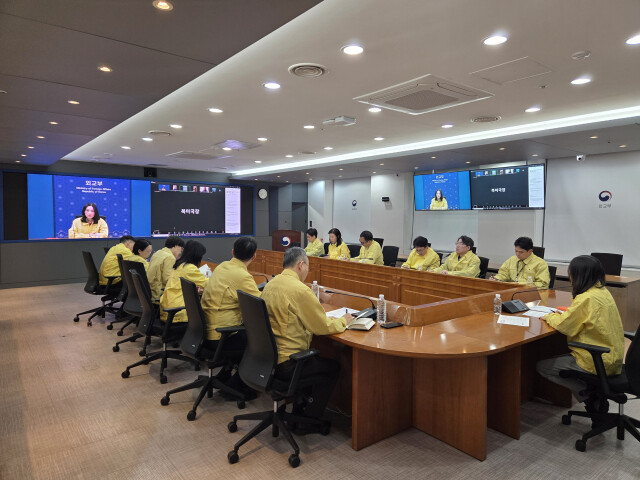
(C) Ministry of Foreign Affairs
SEOUL — The South Korean government has placed its diplomatic mission in Venezuela on high alert and is finalizing emergency evacuation plans following a weekend of unprecedented military action by the United States.
On Monday, Second Vice Foreign Minister Kim Jin-a presided over the second high-level emergency headquarters-mission meeting to review the safety of approximately 70 South Korean nationals currently residing in Venezuela. The meeting follows the sudden escalation of conflict on January 3, when the U.S. launched "Operation Absolute Resolve," a large-scale military strike that reportedly led to the capture of Venezuelan President Nicolás Maduro.
Current Status of Korean Nationals
According to the Ministry of Foreign Affairs (MOFA), there have been no reports of casualties among South Korean citizens as of 9:00 PM on Monday. Of the 70 nationals remaining in the country, approximately 50 are located in the capital, Caracas, which bore the brunt of the initial airstrikes.
"While our citizens are currently safe, the high level of political uncertainty necessitates immediate readiness for all possible scenarios," Vice Minister Kim stated during the briefing.
Strategic Readiness and Shelters
The government has confirmed the readiness of four designated evacuation shelters established last year. These hubs are equipped with:
- Emergency food and medical supplies
- Satellite communication devices to bypass potential local network failures
- Direct communication lines with the South Korean Embassy
Acting Ambassador to Venezuela Chung Han-uk reported that the embassy is maintaining "round-the-clock" contact with the local Korean community. "We are prepared to operate these shelters without disruption and will execute withdrawal plans swiftly if the security situation deteriorates further," Chung added.
Heightened Travel Advisories
South Korea currently maintains a Level 4 (Travel Ban) advisory—the highest in its four-tier system—for areas along the Colombia-Venezuela border. A Level 3 (Departure Recommended) alert remains in effect for the rest of the country.
Vice Minister Kim urged all citizens to leave the country as soon as commercial flights resume and strongly advised those planning travel to Venezuela to cancel or postpone their trips indefinitely.
International Context
The crisis began in the early hours of January 2, 2026, when U.S. forces targeted military infrastructure and antennas across northern Venezuela. The White House confirmed that President Maduro and his wife, Cilia Flores, were taken into custody and transported to New York to face narco-terrorism charges. The operation has left a power vacuum in Caracas, with Vice President Delcy Rodríguez denouncing the move as a kidnapping and calling for national resistance.
The South Korean Ministry of Foreign Affairs issued a formal statement urging "all relevant parties to exert their utmost efforts to ease tensions" and expressed hope for a democratic and stable resolution.
[Copyright (c) Global Economic Times. All Rights Reserved.]