• 2026.06.05 (Fri)
  • All articles
  • LOGIN
  • JOIN
Global Economic Times
fashionrunwayshow2026
  • Synthesis
  • World
  • Business
  • Industry
  • ICT
  • Distribution Economy
  • Well+Being
  • Travel
  • Eco-News
  • Education
  • Korean Wave News
  • Opinion
  • Arts&Culture
  • Sports
  • People & Life
    • International Student Report
    • With Ambassador
  • Column
    • Cho Kijo Column
    • Cherry Garden Story
    • Ko Yong-chul Column
    • Kim Seul-Ong Column
    • Lee Yeon-sil Column
  • Photo News
  • New Book Guide
MENU
 
Home > Industry

Zero-Tariff Import Surge Threatens South Korea’s Struggling Dairy Industry

Hwang Sujin Reporter / Updated : 2026-01-06 03:11:08
  • -
  • +
  • Print

(C) ET Edge Insights

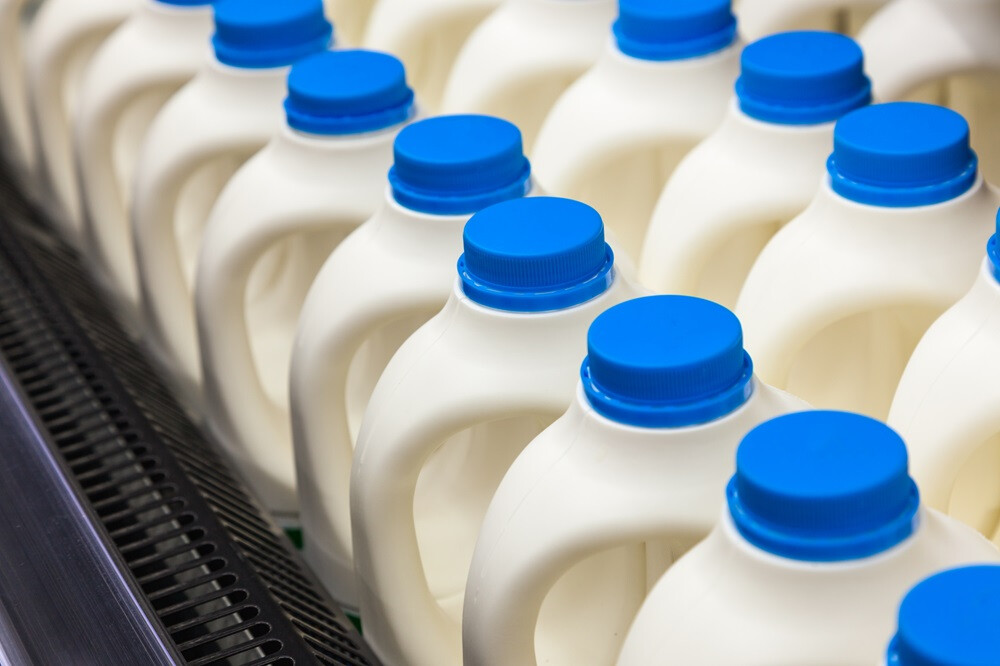
SEOUL — South Korea’s dairy industry is bracing for a "perfect storm" as zero-tariff benefits for imported milk take effect this year, coinciding with a steady decline in domestic milk consumption fueled by the nation’s record-low birth rate.

According to the Korea Customs Service, as of January 1, 2026, the 2.4% import tariff on American dairy products has been completely eliminated. European milk is set to follow suit, with its 2.2% tariff scheduled for removal in July. This marks the culmination of Free Trade Agreements (FTAs) signed over a decade ago with the EU and the U.S., which have gradually phased out duties that once averaged 36%.

The Price War: Imports Lead the Way The immediate impact is expected to be felt in consumer pricing. Imported sterilized (UHT) milk, primarily from Poland, Germany, and Australia, is already retailing at approximately 1,900 to 1,950 KRW per liter—roughly 35% cheaper than domestic fresh milk, such as Seoul Milk’s “Na 100%,” which sells for nearly 3,000 KRW. Industry experts predict that the removal of tariffs could further lower the price of imported milk by about 40 KRW per liter.

The popularity of imported UHT milk has skyrocketed. Import volumes surged nearly 40-fold from 1,214 tons in 2016 to over 48,000 tons in 2024. Consumers and small business owners are the primary drivers of this trend. For independent café owners and bakers facing rising costs for flour and coffee beans, the long shelf life (up to one year) and low price of imported milk offer a vital lifeline.

Domestic Industry in Crisis In contrast, South Korean dairy farmers are struggling with rising production costs. Unlike many countries where milk prices are determined by market demand, Korea’s "Production Cost-Based Pricing System" has kept domestic prices high, making it difficult for local brands to compete with cheap imports.

Furthermore, the demographic crisis is shrinking the consumer base. As the number of school-aged children—the primary consumers of white milk—decreases, per capita consumption of white milk has dropped from 26.6kg in 2021 to 25.3kg last year.

A Pivot Toward Value-Added Products To survive the "Milk Cold War," domestic dairy giants like Seoul Milk, Maeil Dairies, and Namyang Dairy are shifting their focus. Rather than competing solely on white milk, they are expanding into premium functional products, such as protein-enriched drinks, lactose-free options, and high-end desserts.

"The influx of zero-tariff imports is inevitable," said an industry analyst. "For the domestic dairy sector to survive, it must accelerate its transition from a volume-based market to a value-based one, focusing on freshness and specialized nutritional benefits that long-haul imports cannot provide."

As the "tariff wall" disappears, 2026 is expected to be a watershed year that will permanently reshape the landscape of South Korea’s dairy market.

[Copyright (c) Global Economic Times. All Rights Reserved.]

  • #Globaleconomictimes
  • #Korea
  • #Seoul
  • #Samsung
  • #LG
  • #Bitcoin
  • #Meta
  • #Business
  • #Economic
  • #The Woori Bank
  • #Elon Musk
  • #C
Hwang Sujin Reporter

Popular articles

  • SK hynix CEO Kwak Noh-jung Meets Bill Gates and Satya Nadella to Solidify AI Memory Alliance

  • Hyundai Mobis Completes Independent EV 'Heart' Lineup: A Major Leap Toward Global Leadership in Power Electric Systems

  • "Singer of Filial Piety" Hyun Sook: "I Visit the Marginalized to Honor My Mother’s Memory"

I like it
Share
  • Facebook
  • X
  • Kakaotalk
  • LINE
  • BAND
  • NAVER
  • https://globaleconomictimes.kr/article/1065550168820245 Copy URL copied.
Comments >

Comments 0

Weekly Hot Issue

  • Samsung Electronics Super-Enterprise Union Loses Majority Status Amid Backlash Over Bonus Disparities
  • Samsung to Embed Vital Signs and Heart Health Scores in Upcoming Galaxy Watch9 Lineup
  • Apple Honors Digital Excellence: 12 Exceptional Apps and Games Celebrated at the 2026 Design Awards
  • Nexon Revamps Signature Youth Coding Competition into AI-Driven 'Nexon Young Programmers Cup'
  • Tech University of Korea Gathers 200 Game and AI Researchers to Discuss Industrial Expansion
  • Major Korean Telcos Trim Online-Exclusive Plans by Up to 50% Amid Shift to Unified Mobile Tariffs

Most Viewed

1
From a moment of collective sacrifice to a moment of collective democracy: The Timing of the Election in Ethiopia and Korea
2
U.S. Holds Off on Immediate Comprehensive Semiconductor Tariffs, but Pressure Mounts for Samsung and SK Hynix to Accelerate Domestic Investments
3
[Interview] "Halal is Not a Religious Regulation, but a 'Trust Infrastructure'… Creating a Premium 'K-Halal' Centered on Data and Platforms"
4
‘600 Million Won Bonus’ at Samsung Electronics Triggers Deep Sense of Relative Deprivation Among Korean Workers
5
Bomb Attack Targets Moving Train in Pakistan: At Least 29 Dead, 102 Injured
광고문의
임시1
임시3
임시2

Hot Issue

Murata Unveils Next-Gen Resin Electrode MLCC for Automotive Applications

Samsung to Embed Vital Signs and Heart Health Scores in Upcoming Galaxy Watch9 Lineup

L&F Plus Secures KRW 220 Billion from National Growth Fund to Anchor South Korea’s First Mass LFP Cathode Production

Samsung Electronics Super-Enterprise Union Loses Majority Status Amid Backlash Over Bonus Disparities

Fashion Runway Show 2026

Global Economic Times
korocamia@naver.com
CEO : LEE YEON-SIL
Publisher : KO YONG-CHUL
Registration number : Seoul, A55681
Registration Date : 2024-10-24
Youth Protection Manager: KO YONG-CHUL
Singapore Headquarters
5A Woodlands Road #11-34 The Tennery. S'677728
Korean Branch
Phone : +82(0)10 4724 5264
#304, 6 Nonhyeon-ro 111-gil, Gangnam-gu, Seoul
Copyright © Global Economic Times All Rights Reserved
  • 에이펙2025
  • APEC2025가이드북TV
  • 반달곰 프로젝트
Search
Category
  • All articles
  • Synthesis
  • World
  • Business
  • Industry
  • ICT
  • Distribution Economy
  • Well+Being
  • Travel
  • Eco-News
  • Education
  • Korean Wave News
  • Opinion
  • Arts&Culture
  • Sports
  • People & Life 
    • 전체
    • International Student Report
    • With Ambassador
  • Column 
    • 전체
    • Cho Kijo Column
    • Cherry Garden Story
    • Ko Yong-chul Column
    • Kim Seul-Ong Column
    • Lee Yeon-sil Column
  • Photo News
  • New Book Guide
  • Multicultural News
  • Jobs & Workers