![[등록] 2026-09-01 15:48:31](/support/_updata/banner2/tl181982910_6749.png)


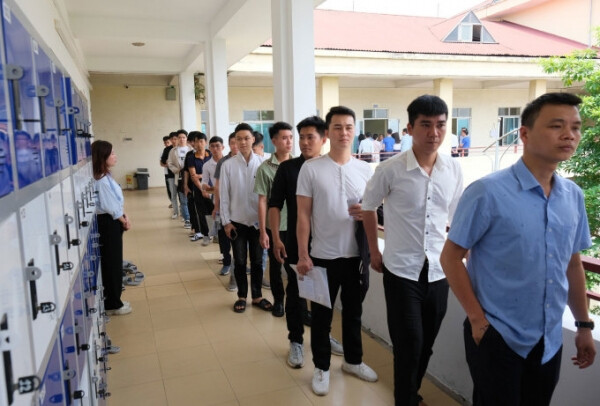
HANOI – The intense desire among Vietnamese workers for employment opportunities in South Korea has been starkly illustrated by the recent surge in applications for the South Korean Employment Permit System (EPS). A staggering 22,800 Vietnamese individuals have applied for the chance to secure one of the approximately 8,000 positions available this year, a testament to the significant wage gap and the allure of economic advancement offered by the East Asian nation.
The sheer volume of applicants underscores the profound impact that overseas employment, particularly in higher-paying countries like South Korea, has on the livelihoods of many Vietnamese families. On a single day, at a testing center in Hanoi, over 7,900 hopefuls congregated to undertake the crucial Korean language proficiency test, a primary hurdle in the EPS selection process. The personal stories of these applicants paint a vivid picture of the motivations driving this migration.
One such applicant, Ms. Tran Thi Hang, who currently earns around 12 million VND (approximately $470 USD) a month through arduous manual labor, embarked on a pre-dawn journey from Bac Giang province, enduring hours on her motorbike to reach the examination venue. Her aspiration is clear: employment in rural South Korea promises to quadruple her current income. "Passing the test is like getting one foot in the door," she expressed, highlighting the perceived gateway to a significantly improved financial future.
The scenes in Hanoi were mirrored in other major Vietnamese cities. An additional 11,700 individuals in Da Nang and 3,200 in Ho Chi Minh City were also scheduled to take the same language test, collectively demonstrating the nationwide fervor for these coveted overseas positions.
The data from Vietnam's Overseas Labor Center further contextualizes this phenomenon. As of last October, over 650,000 Vietnamese laborers were working in more than 40 countries, contributing an impressive $4 billion annually in remittances to their homeland. South Korea has emerged as a particularly attractive destination due to the comparatively high earnings. A Vietnamese Ministry of Foreign Affairs report indicated that Vietnamese workers in South Korea earn between $1,600 and $2,000 per month, surpassing the earnings of those in Japan, the second-highest paying destination, where wages range from $1,200 to $1,500.
The experiences of individuals like Mr. Nguyen Duc Tam further illuminate the tangible benefits of working in South Korea. Introduced to the foreign seasonal worker program by his sister, who is married to a Korean, Mr. Tam worked in a rural area of South Chungcheong Province in mid-2023. His earnings in South Korea stood in stark contrast to his previous wage of 7.5 million VND (approximately $295 USD) per month at a Vietnamese convenience store. In South Korea, he earned 90,000 KRW (approximately $66 USD) per day. Even after accounting for living expenses, he managed to save between 20 million and 25 million VND (approximately $785 to $980 USD) each month.
"I came to South Korea because the pay is good, even though the labor contract is only for six months," Mr. Tam stated. His six-month stint allowed him to return to Vietnam with over 130 million VND (approximately $5,100 USD) in savings, and he is now actively seeking another opportunity to work in South Korea.
The popularity of the foreign seasonal worker program is also on the rise, as evidenced by the significant increase in Vietnamese participants, from 433 in 2022 to 2,157 in 2023. Vietnamese authorities attribute this growing interest to the program's relatively low cost for workers, who are only responsible for passport, visa, health check-up, and airfare expenses, without the burden of intermediary fees.
The overwhelming response to South Korea's Employment Permit System underscores the significant economic disparities that exist between Vietnam and more developed Asian economies. For many Vietnamese, the prospect of earning several times their current income offers a pathway to alleviating poverty, improving their living standards, and securing a better future for their families. The remittances sent back by these overseas workers play a crucial role in the Vietnamese economy, contributing significantly to household incomes and national economic growth.
However, the reliance on overseas labor also presents challenges for Vietnam, including potential labor shortages in certain sectors and the social costs associated with migration. For South Korea, the EPS program helps to address labor shortages in sectors often shunned by its own citizens, such as agriculture, fisheries, and manufacturing.
The intense competition for these South Korean jobs highlights the aspirations and economic realities faced by many Vietnamese. While the opportunities offered are undeniably attractive, the selection process is rigorous, and only a small fraction of the applicants will ultimately realize their dream of working in South Korea. The dedication and perseverance of individuals like Ms. Hang and Mr. Tam underscore the lengths to which many are willing to go in pursuit of a more prosperous future. The continued demand for these opportunities suggests that labor migration between Vietnam and South Korea will remain a significant socio-economic phenomenon for the foreseeable future.
[Copyright (c) Global Economic Times. All Rights Reserved.]