• 2026.07.24 (Fri)
  • All articles
  • LOGIN
  • JOIN
Global Economic Times
fashionrunwayshow2026
  • Synthesis
  • World
  • Business
  • Industry
  • ICT
  • Distribution Economy
  • Well+Being
  • Travel
  • Eco-News
  • Education
  • Korean Wave News
  • Opinion
  • Arts&Culture
  • Sports
  • People & Life
    • International Student Report
    • With Ambassador
  • Column
    • Cho Kijo Column
    • Cherry Garden Story
    • Ko Yong-chul Column
    • Kim Seul-Ong Column
    • Lee Yeon-sil Column
  • Photo News
  • New Book Guide
MENU
 
Home > World

Iran Begins Collecting Transit Fees in Strait of Hormuz, Sparking Global Energy Concerns

Global Economic Times Reporter / Updated : 2026-04-23 22:14:39
  • -
  • +
  • Print


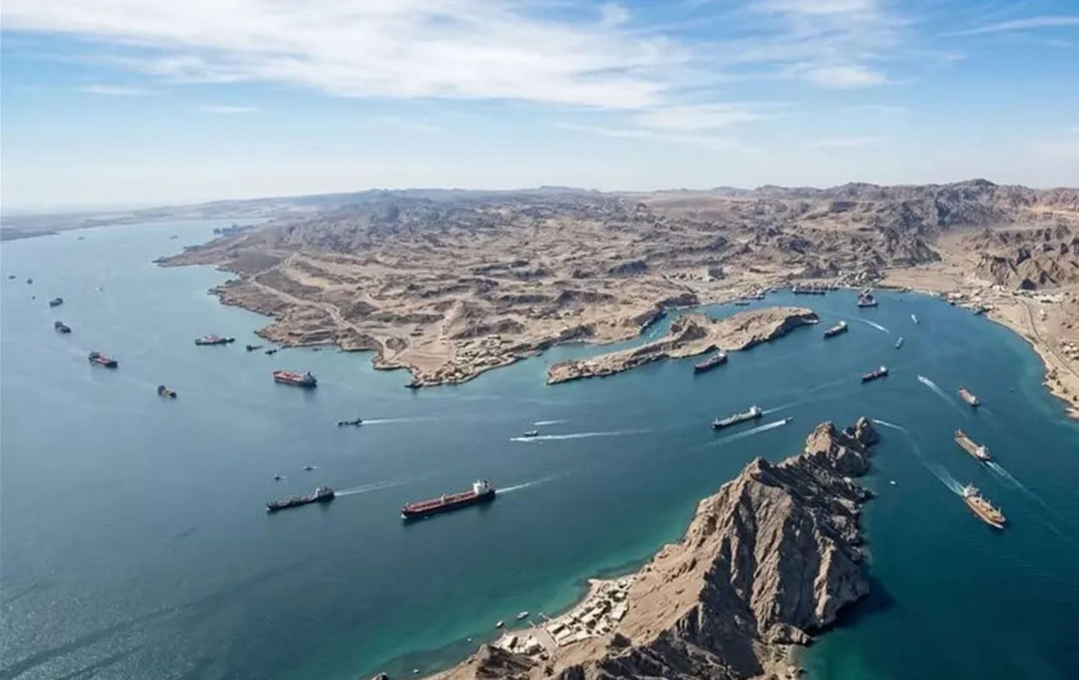
Iran has officially moved to monetize its control over the Strait of Hormuz, the world’s most critical oil transit chokepoint. According to state-run Press TV, Hamid-Reza Haji-Babaei, Vice Speaker of the Iranian Parliament, confirmed today that the first batch of "transit fees" collected from vessels passing through the strait has been deposited into the Central Bank of Iran.

Strategic Leverage and New Legislation
This development follows Iran’s military blockade of the strait in late February, an action taken in response to attacks by the U.S. and Israel. Iran has since allowed limited passage to non-hostile vessels under the condition of paying for "security services."

To solidify this practice, the Iranian Parliament’s National Security and Foreign Policy Committee recently passed the "Law on Establishing Iranian Sovereignty over the Strait of Hormuz." The legislation mandates that all passing vessels obtain prior authorization and pay fees exclusively in Iranian Rials. Furthermore, the law grants authorities the power to seize non-compliant vessels and confiscate approximately 20% of their cargo value.

Market Impact: A $2 Million Toll for Supertankers
While official rates remain undisclosed, industry analysts estimate the toll at approximately $1 per barrel for tankers. For a Very Large Crude Carrier (VLCC), this translates to a staggering $2 million (approx. 3 billion KRW) per transit.

The international community is watching with growing concern. With nearly a fifth of the world’s oil consumption passing through this narrow waterway, Iran’s move to demand "passage money" under the threat of seizure is expected to disrupt global maritime order and send shockwaves through the energy and logistics sectors. Experts warn that these costs will inevitably be passed down to consumers, fueling global inflationary pressures.

[Copyright (c) Global Economic Times. All Rights Reserved.]

  • #Hormuz Impasse
  • #globaleconomictimes
  • #micorea
  • #mykorea
  • #nammidonganews
  • #singaporenewsk
  • #Samsung
  • #Daewoo
  • #Hyos
Global Economic Times Reporter
Reporter Page

Popular articles

  • Experiencing Eight Islands with Your Entire Body: A Preview of the 2026 Yeosu World Island Exhibition

  • Interview with Kim Jong-gi, Secretary-General of the 2026 Yeosu World Island Exhibition Organizing Committee

  • Samsung Electronics Surpasses NVIDIA to Become Global Leader in Quarterly Operating Profit

I like it
Share
  • Facebook
  • X
  • Kakaotalk
  • LINE
  • BAND
  • NAVER
  • https://globaleconomictimes.kr/article/1065618828274436 Copy URL copied.
Comments >

Comments 0

Weekly Hot Issue

  • KCCI Jeju Forum Opens: Chairman Chey Tae-won Urges Businesses to Catch the AI Wave Before It Becomes an Insurmountable Wall
  • AI Drones Take to the Skies in Revolutionary Hunt for Mosquitoes
  • The Gopher Miracle: How a 24-Hour Experiment Transformed a Volcanic Wasteland into a Lush Forest
  • Hyundai Motor Group to Acquire 100% Stake in Boston Dynamics, Accelerating Humanoid and Physical AI Commercialization
  • South Korea to Tighten Rules on Single-Stock Leveraged Products; Minimum Deposit Raised to 30 Million Won
  • TSMC Hits Record $40 Billion in Q2 Revenue Amid AI Boom, Pledges Additional $100 Billion for US Expansion

Most Viewed

1
[Special Feature] Laying the Foundation for Korea's Informatization: Looking Back at the 1st Administrative Computer Network Project - Part 1
2
Baek Geum-ja Wooriot to Host 'Musical Costume Fashion Gala Show' at DDP
3
South Korea to Tighten Rules on Single-Stock Leveraged Products; Minimum Deposit Raised to 30 Million Won
4
Google Cloud Deploys ‘Gemini Enterprise’ to Samsung Electronics DX Division
5
[Special Feature] The Foundation of Korea’s Informatization: Looking Back at the 1st Administrative Computer Network Project - Part 2
광고문의
임시1
임시3
임시2

Hot Issue

OpenAI Rebounds in Secondary Market as Valuation Surges 20% in Three Months

South Korea to Tighten Rules on Single-Stock Leveraged Products; Minimum Deposit Raised to 30 Million Won

KCCI Jeju Forum Opens: Chairman Chey Tae-won Urges Businesses to Catch the AI Wave Before It Becomes an Insurmountable Wall

Hyundai Motor Group to Acquire 100% Stake in Boston Dynamics, Accelerating Humanoid and Physical AI Commercialization

Fashion Runway Show 2026

Global Economic Times
korocamia@naver.com
CEO : LEE YEON-SIL
Publisher : KO YONG-CHUL
Registration number : Seoul, A55681
Registration Date : 2024-10-24
Youth Protection Manager: KO YONG-CHUL
Singapore Headquarters
5A Woodlands Road #11-34 The Tennery. S'677728
Korean Branch
Phone : +82(0)10 4724 5264
#304, 6 Nonhyeon-ro 111-gil, Gangnam-gu, Seoul
Copyright © Global Economic Times All Rights Reserved
  • 향기네무료급식
  • BCB부천방송
  • 반달곰 프로젝트
Search
Category
  • All articles
  • Synthesis
  • World
  • Business
  • Industry
  • ICT
  • Distribution Economy
  • Well+Being
  • Travel
  • Eco-News
  • Education
  • Korean Wave News
  • Opinion
  • Arts&Culture
  • Sports
  • People & Life 
    • 전체
    • International Student Report
    • With Ambassador
  • Column 
    • 전체
    • Cho Kijo Column
    • Cherry Garden Story
    • Ko Yong-chul Column
    • Kim Seul-Ong Column
    • Lee Yeon-sil Column
  • Photo News
  • New Book Guide
  • Multicultural News
  • Jobs & Workers