South Korean game companies are establishing bases in Europe one after another and increasing investments in local developers. Going a step beyond simply exporting games made in Korea, their strategy is to directly secure local development capabilities and intellectual property (IP), and release titles targeted at the local market from the planning stage. As the domestic market reaches saturation, overseas expansion has become a matter of survival for game companies.
According to the gaming industry on the 26th, Nexon established its European business subsidiary, 'Nexon HQ Europe,' in Stockholm, Sweden, in March this year. Gregory Daniel Grigorov, former Chief Growth Officer (CGO) of Paradox Interactive, took the helm as CEO. CEO Grigorov was in charge of business development and collaboration with external developers at Paradox Interactive, a major Swedish game company. Nexon HQ Europe is currently gearing up for business by recruiting experienced personnel in development and publishing.
After transitioning to a system led by Chairman Patrick Söderlund, Nexon has been increasing the proportion of its North American and European businesses. Chairman Söderlund has emphasized to employees that the success formula of 'Embark Studios,' a Swedish subsidiary he founded, should be applied across Nexon. The industry expects Nexon HQ Europe to serve as a hub for strengthening cooperation with local developers and expanding its publishing business.
Neowiz, which wrote a new history for Korean console games in the North American market with 'Lies of P,' also established a new subsidiary, 'PWE Holdings,' in Vienna, Austria, last August. A Neowiz official explained, "It is a corporation established to explore and pursue business opportunities in the European region."
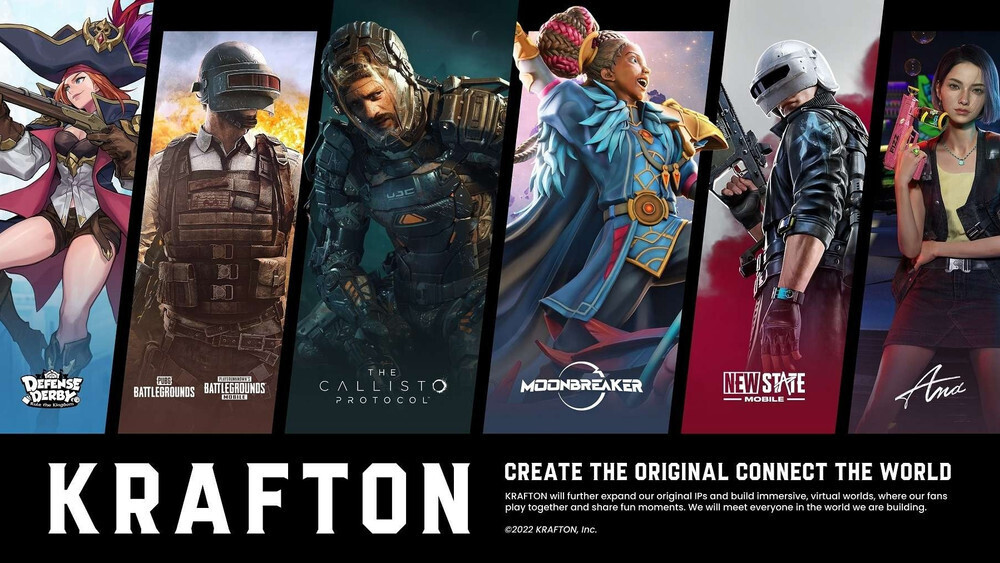
Krafton is the most aggressive in entering Europe. It already has three European subsidiaries: Krafton Europe (Netherlands), Neon Giant (Sweden), and Striking Distance Studios (Spain). In March, it acquired a 17.22% stake in the Finnish startup developer 'Cosmic Division' and joined its board of directors. In April, NCSoft acquired a 70% stake in JustPlay, a German mobile casual game platform company, for approximately 300 billion won. DoubleU Games also solidified its European business foundation by acquiring Germany's Whow Games last year.
The reason game companies are heading to Europe is that their business arena is changing. Domestic game companies, which had previously targeted the Asian market with massively multiplayer online role-playing games (MMORPGs), are expanding their territory into PC and console games. An official from a game company said, "In the past, we focused on the Asian market centered on MMORPGs, but now, as we expand into Steam, PC, and consoles, the European market has become important." The market is also growing. According to the European Audiovisual Observatory (EAO), the size of the European game market nearly doubled from 14.5 billion euros (approx. 21 trillion won) in 2016 to 27.9 billion euros (approx. 41 trillion won) last year.
The production capabilities of European developers are also cited as an attraction. The box office success of 'ARC Raiders,' developed by Embark Studios, is a prime example. Labor costs are also lower than in the United States. According to the Korea Creative Content Agency (KOCCA), the median annual salary of developers in Poland, a European gaming powerhouse, is about $31,000, which is a quarter of that in the US. For Korean game companies, this means they can secure a market foothold while acquiring talented development personnel at a relatively low cost.
There are also analyses that Europe can serve as a strategic hub for targeting next-generation markets such as the Middle East and Africa. Kim Jung-tae, a professor of game studies at Dongyang University, said, "Even when targeting the Middle East and North Africa (MENA) market, having a bridgehead in France or Germany is much more advantageous," adding, "Targeting Europe is beneficial even for pioneering next-generation markets."
[Copyright (c) Global Economic Times. All Rights Reserved.]