![[등록] 2026-09-01 15:48:31](/support/_updata/banner2/tl181982910_6749.png)


(C) Ukrinform
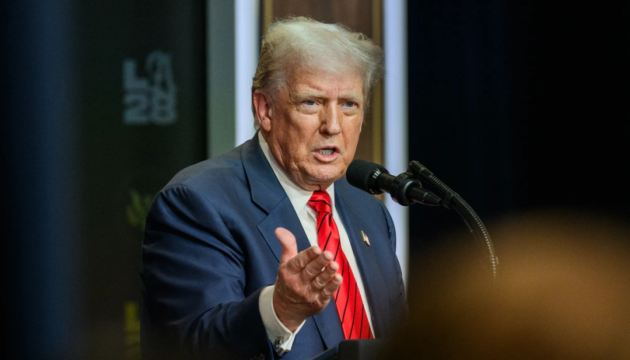
The South Korean government and major chipmakers have entered a state of emergency following President Donald Trump’s surprise proclamation on Thursday, which signaled the commencement of semiconductor tariff negotiations.
The directive, issued on January 15, instructs the Secretary of Commerce and the U.S. Trade Representative (USTR) to initiate negotiations with foreign nations regarding semiconductor duties, with a requirement to report progress within 90 days.
Emergency Meetings in Seoul In response, South Korea’s Ministry of Trade, Industry and Energy (MOTIE) convened an urgent strategy meeting Friday morning. Minister Kim Jung-kwan met with top executives from industry giants including Samsung Electronics and SK Hynix to analyze the potential fallout. Meanwhile, Yeo Han-koo, South Korea’s Minister for Trade, who is currently in the U.S., reportedly delayed his return to Seoul to gather further intelligence on the ground.
The "America First" Supply Chain Push Analysts suggest this move is a calculated pressure tactic to force global chipmakers to relocate production to American soil. A U.S. Commerce Department report highlighted that while the U.S. accounts for 25% of global chip consumption, it produces only 10%, leaving it "dangerously dependent" on foreign supply chains.
The report proposed a "tariff offset program," which would grant preferential tariff treatment to companies that invest heavily in specific segments of the U.S. semiconductor ecosystem.
The Taiwan Factor The eyes of the Korean industry are now fixed on Taipei. Under previous agreements, Seoul was promised treatment "no less favorable than that of Taiwan." Reports from the New York Times suggest that Taiwan is considering a massive deal in which TSMC would build five additional factories in Arizona in exchange for tariff exemptions.
"This proclamation is essentially a demand for faster and larger-scale investment in U.S. production facilities," said Kim Heung-chong, former president of the Korea Institute for International Economic Policy (KIEP). "Korean firms may find themselves with little choice but to expand their U.S. footprint to mitigate the tariff risks."
With the 90-day clock ticking, the South Korean semiconductor industry—the backbone of the nation's economy—faces a critical crossroads between maintaining domestic manufacturing efficiency and satisfying Washington's aggressive "onshoring" demands.
[Copyright (c) Global Economic Times. All Rights Reserved.]