![[등록] 2026-09-01 15:48:31](/support/_updata/banner2/tl181982910_6749.png)


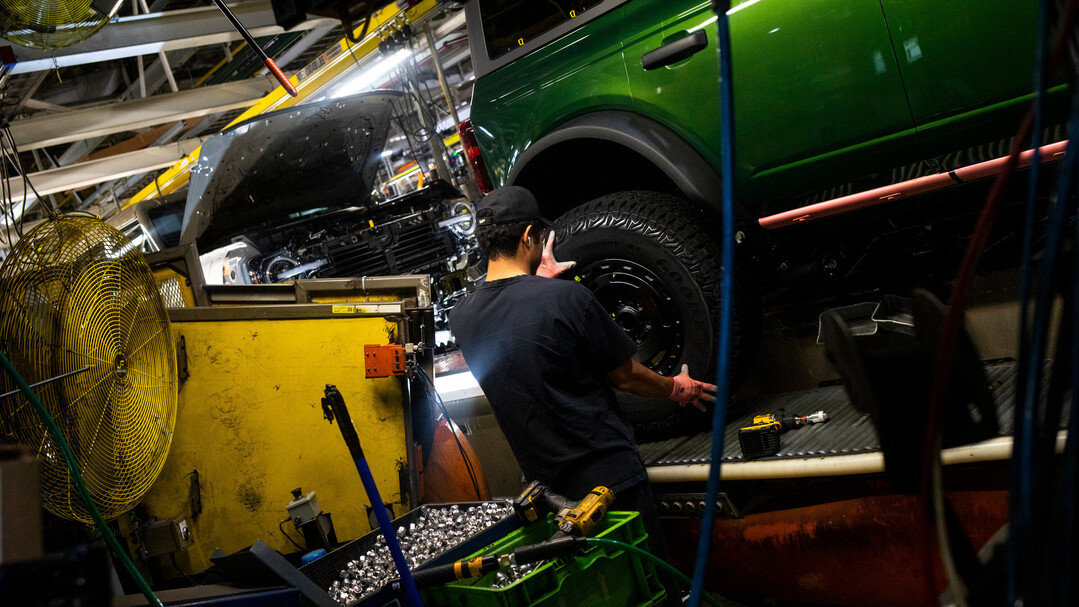
Despite advocating for strict barriers against Chinese automakers in the United States, legacy giant Ford Motor Company finds itself entangled in a deep industrial paradox. Ford's partnership with CATL (Contemporary Amperex Technology Co. Limited)—the world's leading Chinese battery manufacturer—has drawn heavy criticism from the U.S. government. Washington argues that such collaborations undermine American supply chain independence and national security. However, Ford maintains that leveraging Chinese technical expertise is a non-negotiable step to stay globally competitive. This dynamic highlights a broader challenge across the U.S. automotive industry: balancing national protectionism with the urgent need for cost-efficient electrification.
1. The Financial Pressure and the Shift to LFP Batteries
Between 2023 and 2024, Ford's electric vehicle division accumulated massive operating losses totaling nearly $9.8 billion. To survive and chart a path toward profitability, Ford overhauled its EV roadmap, pivoting away from expensive, large-scale models toward high-volume, affordable mainstream electric vehicles.
Because batteries account for roughly 40% of an EV's total production cost, reducing cell expenses became the ultimate priority:
The Cost Advantage of LFP: Traditional Nickel Cobalt Manganese (NCM) batteries are expensive. Lithium Iron Phosphate (LFP) chemistry is over 40% cheaper, eliminating costly elements like nickel and cobalt entirely.
The Supply Chain Barrier: Because LFP production is heavily dominated by Chinese firms, importing cells directly exposes automakers to steep tariffs and regulatory roadblocks.
2. The CATL Partnership and the Michigan Plant Model
To bypass import restrictions while harnessing advanced chemistry, Ford chose a unique licensing approach. Rather than forming a standard joint venture, Ford owns and operates the Michigan LFP battery facility 100%, while licensing manufacturing technology and services from CATL.
Bridging the Technological Gap: Ford executives noted that developing competitive LFP technology entirely in-house would have delayed their roadmap by a decade.
Commercialization: This collaboration enabled the development of Ford's advanced U.S. production lines, slated to supply economical models, including upcoming affordable EV platforms and utility vehicles.
3. The Broader Industry Dilemma: Protect or Partner?
Ford is not alone in facing this strategic crossroads. The entire U.S. and Western automotive landscape is grappling with a profound structural dilemma: insulating domestic markets from Chinese competition versus leveraging unmatched Chinese production efficiency to avoid falling behind.
Different automakers are navigating this tension through varied geographic strategies:
Stellantis: Partnered with China's Leapmotor to leverage its low-cost EV architecture and battery technology for European markets, while strictly keeping development localized in the U.S.
General Motors (GM): Despite facing declining sales volume inside China compared to past decades, GM extended its joint venture with SAIC Motor to harness low-cost Chinese manufacturing capabilities—channeling those affordable vehicles strictly to third-party markets like the Middle East and Asia rather than importing them directly into the U.S.
Conclusion
The American automotive sector faces a definitive fork in the road. Completely decoupling from China risks rendering legacy automakers uncompetitive against rapidly advancing global rivals. Conversely, integrating Chinese technology invites intense political scrutiny and regulatory friction. Ultimately, companies like Ford are forced to walk a tightrope—embracing Chinese technological prowess to survive financially while attempting to satisfy domestic security demands.
[Copyright (c) Global Economic Times. All Rights Reserved.]