![[등록] 2026-09-01 15:48:31](/support/_updata/banner2/tl181982910_6749.png)


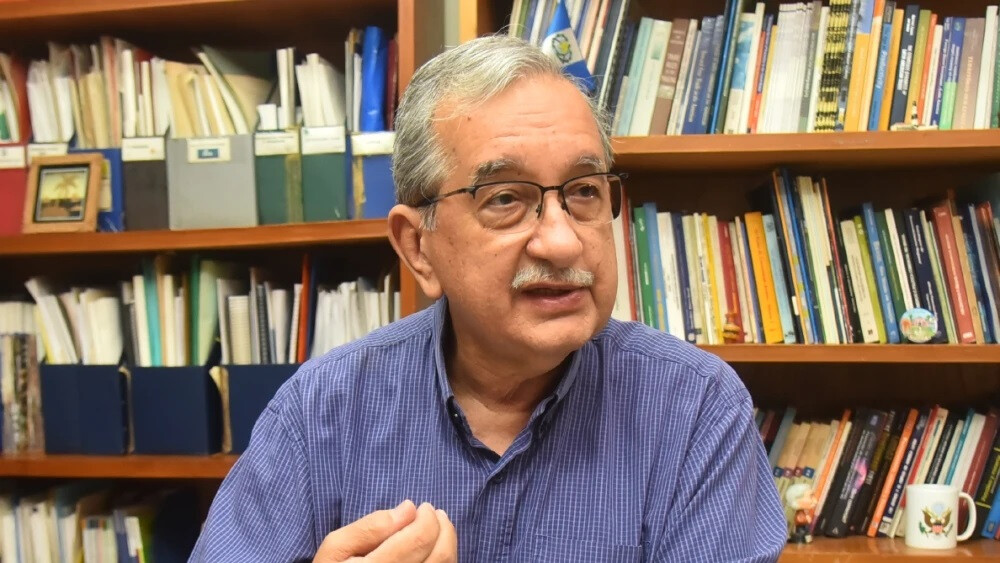
Regarding the potential impact of US President Donald Trump's tariff policies on the Paraguayan economy, Fernando Masi, Director of the Center for Analysis and Dissemination of the Paraguayan Economy (Cadep), analyzed that "only 4% of Paraguayan exports go to the United States, and since these are mainly agricultural products, the short-term impact may be limited." However, he added that in the case of meat, there might be new opportunities for Paraguay if tariffs lead to a decrease in exports from other major exporting countries to the US, but this remains uncertain.
Background of Trump's Tariffs and Ripple Effects on International Trade
Masi explained the background of President Trump's tariffs as "the fulfillment of an election promise under the 'Make America Great Again (MAGA)' slogan, based on the idea that chronic trade deficits hinder economic growth and negatively impact domestic industries." President Trump had already increased tariffs, mainly targeting trade with China, during his first term, but this new measure is far broader and more powerful. He noted that while Trump advocates for the protectionist era of the late 19th and early 20th centuries in the US, the current global economic environment is very different.
Regarding the impact of this new protectionism on international trade, Masi stated that "the US and developed country markets have reacted negatively to the tariff increase decision." He argued that today's global economy operates through production chains where parts and intermediate goods cross multiple countries, so a sharp increase in tariffs could have a greater impact on both developed and developing countries.
He criticized the Trump administration's belief that high tariffs will promote US industrialization and revive uncompetitive industrial sectors, arguing that this overlooks the high production costs in the US, the increased costs due to tariffs, and the reality of a US economy that has shifted towards services. Currently, the US has the same proportion of industrial product and service exports, and service exports are expected to become the main export item soon.
The Status of Latin America Under the New US Trade Policy
Masi pointed out that while 10% of total US imports come from Latin America and the Caribbean, this proportion decreases to 3.7% excluding Mexico. The main countries from which the US imports are the European Union (19%), Mexico (16%), China (15%), and Canada (14%). In terms of exports, the US exports mainly to Canada (17%), Mexico (16%), the European Union (11%), and China (7%), with only 2% going to the rest of Latin America.
Excluding Mexico, Latin America is not a significant trading partner for the US, but for Central American, Caribbean, and some Andean countries, the US market is crucial for their exports. Mexico, in particular, relies on the US market for 80% of its total exports and is expected to be most affected by the US tariff increases.
Scenarios for the Reorganization of International Trade and Paraguay's Response
Masi predicted that a short-term recession could occur if the current tariff policies are maintained. The market showed a downward trend following the announcement of sharp tariff increases, but immediately rebounded when President Trump announced a 90-day suspension of tariffs for countries that are uncooperative or request negotiations. This demonstrates the direct link between tariff policy decisions and market reactions.
Regarding the impact on Paraguay, Masi explained that "Paraguay's exports to the US account for only 4%, and its main export items, such as soybeans, corn, rice, and wheat, are not targeted at the US market, which is a global breadbasket." While there might be some impact on meat, which recently gained access to the US market, export volumes are still minimal.
Paraguay's main export market is Mercosur (Southern Common Market), which accounts for about 55% of its total exports, followed by Chile and other South American countries, as well as the European Union, Turkey, the Middle East, and Southeast Asian countries. However, he reiterated that in the case of meat, there might be new opportunities for Paraguay if tariffs lead to a decrease in exports from other major exporting countries to the US, but this remains uncertain.
Expectations for a Future Agreement with the EU and the Prospects for Mercosur
Regarding a future agreement with the European Union (EU), Masi mentioned that "for Mercosur and especially Paraguay's competitive exports, the EU is offering limited quantity allocations and greater consideration for Paraguay as a developing country for items like sugar and rice." However, he projected that Paraguay could gain greater benefits from this agreement in terms of diversifying its production and exports in the non-agricultural manufacturing sector.
Significant investment inflows from Europe could promote this diversification and help find new export items in external markets like the European market, as well as within Mercosur. This would contribute to reducing dependence on the agricultural sector, which is highly reliant on uncontrollable factors such as international price fluctuations and climate conditions.
Regarding the future of Mercosur and Paraguay's role amidst the tense relationship between Brazilian President Luiz Inácio Lula da Silva and Argentine President Javier Milei, Masi noted that "Argentine President Milei, like the previous Jair Bolsonaro government in Brazil, does not favor Mercosur." However, unlike Milei, the Bolsonaro government never agreed to bilateral negotiations with third countries within Mercosur.
He added that this is Brazil's historical position, not just President Lula's personal stance, and Paraguay has also historically supported bloc-level negotiations, a position reaffirmed by the current government at the Mercosur summits. While President Milei strongly advocates for bilateral agreements, especially a Free Trade Agreement (FTA) with the US, it remains questionable whether bloc-level or bilateral negotiations with the US, which currently holds a completely opposite stance on free trade, are feasible.
[Copyright (c) Global Economic Times. All Rights Reserved.]