![[등록] 2026-09-01 15:48:31](/support/_updata/banner2/tl181982910_6749.png)


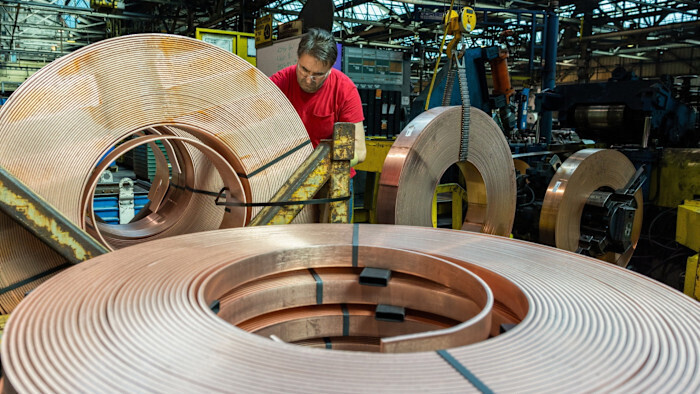
(C) Financial Times
WASHINGTON D.C. — In a strategic move to safeguard American manufacturing from global supply chain disruptions and reduce reliance on Chinese resources, President Donald Trump has officially unveiled a landmark $12 billion (approx. 17.4 trillion KRW) critical mineral stockpiling initiative.
The program, dubbed "Project Vault," marks a historic shift in U.S. industrial policy. It aims to secure essential metals and rare earth elements—such as gallium, cobalt, and other materials vital for batteries, jet engines, and smartphones—ensuring that American factories remain operational even amidst escalating trade tensions with Beijing.
A Shield Against Supply Shocks
Speaking from the White House, President Trump emphasized that the initiative is designed to protect U.S. companies and workers from resource shortages. "We never want to see a repeat of what happened last year," Trump stated, referring to previous disruptions where China’s dominance over rare earth supply chains restricted access for U.S. industries. "Just as we have long maintained the Strategic Petroleum Reserve (SPR) for oil, we are now creating a strategic reserve for American industry."
While the U.S. has historically maintained stockpiles for national defense, Project Vault represents the first-ever national reserve dedicated specifically to private-sector industrial demand.
Public-Private Partnership and Funding
The project operates through a sophisticated financial structure, combining $10 billion in loans from the Export-Import Bank of the United States (EXIM) with $1.67 billion in private capital from institutional investors.
More than a dozen corporate giants have already signed on to the project, including General Motors (GM), Stellantis, Boeing, Corning, GE Vernova, and Alphabet. To manage the procurement of these raw materials, the government has contracted three major commodity trading firms: Hartree Partners, Traxis North America, and Mercuria Energy Group.
Strategic Cooperation and Market Stability
Under the terms of the agreement, participating manufacturers submit a list of preferred materials and pay an upfront fee to secure materials at designated prices. This structure allows companies to hedge against extreme price volatility without the burden of maintaining their own massive inventories.
The U.S. government believes this model will effectively suppress the volatility of raw material prices. In the event of a major supply chain crisis, participating firms will have full access to the stockpiled materials, provided they agree to replenish the stocks at the same price points in the future.
Global Alliances
The initiative extends beyond domestic borders. The U.S. administration has already secured cooperation agreements with key allies, including Japan, Australia, and Malaysia. Further expansion of these partnerships is expected to be a primary focus at an upcoming summit in Washington involving dozens of world leaders.
Senior administration officials noted that the "Project Vault" funding round was oversubscribed, citing the high creditworthiness of the participating manufacturers and the long-term stability offered by federal credit backing as major draws for private investors.
As "Project Vault" begins its rollout, it stands as a cornerstone of the U.S. strategy to decouple critical industrial sectors from Chinese influence and fortify the nation's economic sovereignty in the 21st century.
[Copyright (c) Global Economic Times. All Rights Reserved.]