![[등록] 2026-09-01 15:48:31](/support/_updata/banner2/tl181982910_6749.png)


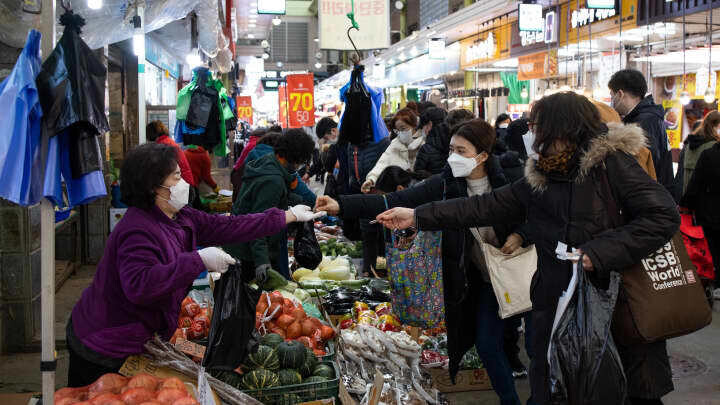
(C) CNBC
SEJONG — South Korea’s consumer price inflation slowed to its lowest level in five months this January, driven by a significant drop in international oil prices and a stabilization of agricultural supplies. However, despite the cooling headline figure, households continue to face mounting pressure from the rising costs of processed foods and essential livestock products.
According to data released by the National Data Agency on Tuesday, the Consumer Price Index (CPI) rose 2.0% in January compared to the same month last year. This marks a 0.3 percentage point decrease from December’s 2.3%, representing the second consecutive month of slowing growth.
Energy and Agriculture Drive the Slowdown
The primary engine behind January’s cooling inflation was the petroleum sector. After rising 6.1% in December, petroleum prices reached a 0.0% growth rate (flat) in January. This shift was largely due to the fall in global crude oil prices, which averaged $61.7 per barrel this January compared to $80.4 a year ago.
The agricultural sector also saw relief, with price growth slowing from 4.1% in December to 2.6% in January. Increased imports and expanded cultivation areas for winter vegetables led to price drops in staples like cabbage and radish. Notably, tangerine prices fell 5.3% as supply increased.
The "Dining Table" Crisis: Processed Foods and Meat
While the macro numbers look promising, the "felt" inflation for consumers remains high. Processed food prices rose 2.8% year-over-year. While the rate of increase has slowed from previous 4% levels, specific items showed alarming spikes:
Chocolate: 16.6%
Ramen: 8.2%
Bread: 3.3%
The case of chocolate is particularly severe, having seen double-digit increases for several years due to rising raw material and labor costs. Similarly, livestock and fishery products outperformed the general inflation rate, rising 4.1% and 5.9% respectively. Egg prices, in particular, jumped 6.8% due to supply shortages caused by Avian Influenza (AI) outbreaks.
Seasonal Volatility and Government Response
Despite the annual downward trend, short-term volatility remains a concern due to recent cold snaps. Prices for weather-sensitive vegetables like lettuce (26.9%), cucumbers (21.8%), and zucchini (39.8%) soared compared to the previous month.
As the Lunar New Year (Seollal) holiday approaches, the South Korean government is moving into high gear to stabilize the market. First Vice Finance Minister Lee Hyeong-il stated during an emergency market monitoring meeting that while the 2.0% target has been reached, the burden on the working class remains heavy.
"We will implement the Lunar New Year Livelihood Stability Measures without a hitch," Lee said. "Our priority is to manage the supply and demand of agricultural, livestock, and fishery products to ensure that holiday costs do not overwhelm citizens."
Economic Outlook
Economists suggest that while the 2.0% figure aligns with the central bank’s long-term stability goals, the "stickiness" of processed food prices and service costs (which rose 2.3%) means a high-interest-rate environment may persist until food supply chains fully stabilize.
[Copyright (c) Global Economic Times. All Rights Reserved.]