![[등록] 2026-09-01 15:48:31](/support/_updata/banner2/tl181982910_6749.png)


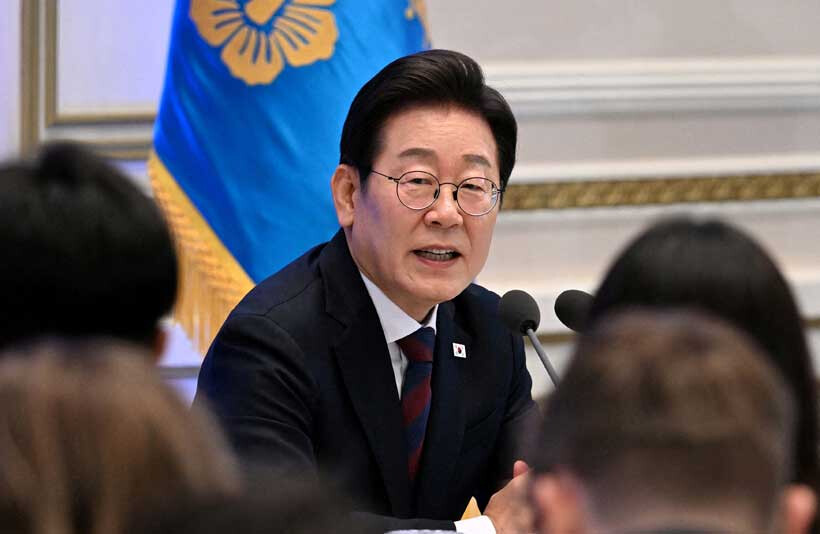
(C) Modern Diplomacy
President Lee Jae-myung on Friday called for significantly stricter penalties against companies responsible for repeated personal data breaches, stating the sanctions must be severe enough to make businesses feel they are on the brink of bankruptcy. This push for heightened accountability was made during a joint policy briefing with the Ministry of Science and ICT and the Personal Information Protection Commission (PIPC) held at the Government Sejong Convention Center.
Heavier Fines and Increased Enforcement Power
"The economic sanctions are too weak, which makes violating regulations a common occurrence," President Lee asserted. "From now on, companies that violate regulations and cause harm to the public must face enormous economic sanctions—so much so that they feel their 'company will go bankrupt.'"
The President criticized the current regulatory environment, noting that companies often show an attitude of "So what are you going to do?" even after a violation.
The current Personal Information Protection Act allows for a maximum fine of up to 3% of a company's total sales for data breaches, calculated based on the average revenue of the preceding three years. President Lee ordered the enforcement regulations to be strengthened, proposing to amend the calculation standard. He suggested using the highest annual sales figure from the preceding three years as the basis for the 3% fine, rather than the average.
In response, Song Kyung-hee, Chairperson of the PIPC, reported that the commission is already pursuing measures to impose fines of up to 10% of total sales for cases of repeated and major violations.
Call for Class Action Lawsuits and Special Judicial Police
President Lee also stressed the "absolute necessity" of introducing a class action lawsuit system for personal data leaks. He pointed to recent incidents, such as the data breach involving Coupang, arguing that requiring all affected citizens to file individual lawsuits would incur disproportionate legal costs. He urged speedier legislation to supplement the current group litigation rules, which currently only allow for injunctions (prohibiting the infringing act) but not claims for damages.
Furthermore, President Lee raised the idea of granting Special Judicial Police (SJP) authority to the Korea Internet & Security Agency (KISA) and the PIPC to enhance investigative capabilities. While acknowledging KISA is a quasi-governmental organization, Policy Chief Kim Yong-bum provided examples of non-civil servant bodies, such as the Financial Supervisory Service, that have SJP powers under public mandate, with the command structure supervised by prosecutors.
President Lee concluded that giving the PIPC forceful investigative powers appears "very normal" and "necessary," promising a more in-depth discussion on the matter in a separate report.
Space Program Acceleration
In an unrelated segment of the briefing concerning the Korea Aerospace Administration (KASA), President Lee announced plans to pursue an annual launch of the Korean-type launch vehicle into space. This decision came after receiving a report from KASA Administrator Yun Young-bin, who noted a gap in the launch schedule between 2029 and 2032. President Lee immediately moved to "confirm it right here" to ensure launches occur every year.
Ha Jung-woo, Presidential Senior Secretary for AI Future Planning, supported the decision, noting that predictable, annual launches would sustain the industrial ecosystem and significantly boost overall industrial and technological competitiveness until the next-generation launch vehicle is deployed.
[Copyright (c) Global Economic Times. All Rights Reserved.]