![[등록] 2026-09-01 15:48:31](/support/_updata/banner2/tl181982910_6749.png)


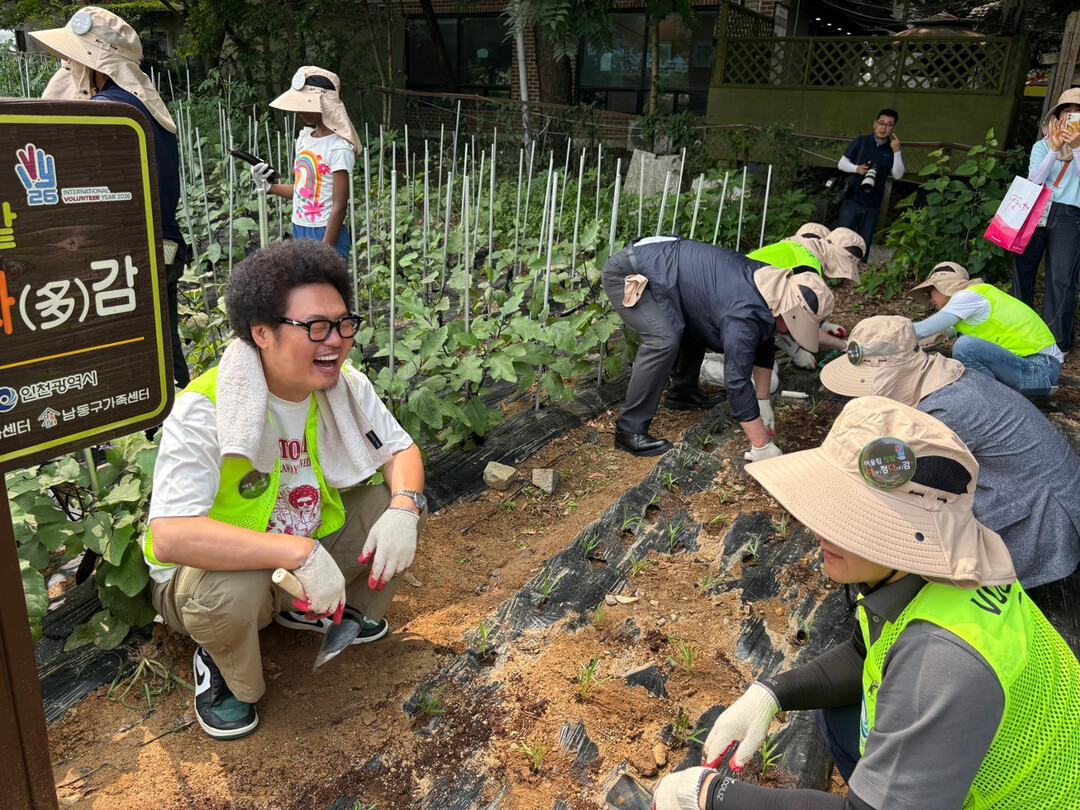
INCHEON, South Korea — On July 4, 2026, the Soraesan weekend farm in Namdong-gu, Incheon, was filled with the sounds of laughter and the shared purpose of community building. Amidst the sweltering heat, a group of approximately 50 people—comprising multicultural families, immigrant women, local residents, and volunteers—gathered to plant kongsimchae (water spinach), a staple green in Southeast Asian cuisine.
This lively scene marked the opening of the "Dajeong-Dagam" (meaning "warm and friendly") Community Garden. The event, held in celebration of the United Nations-designated "2026 International Year of Volunteers," was the final destination of a nationwide relay program organized by the Ministry of the Interior and Safety (MOIS), Incheon City, and the Incheon Volunteer Center.
A Catalyst for Social Integration
The "Dajeong-Dagam" project is more than just an agricultural endeavor. It is a participatory volunteer program designed to foster social cohesion and assist in the stable settlement of migrants within their local communities. As the number of multicultural households continues to rise, the city aims to use the garden as a neutral ground where cultural and generational divides can be bridged through the simple, shared act of working the soil.
"By working together in the garden and sharing the harvest, we hope to create a lasting spirit of community," said a representative from the Incheon City Volunteer Center. Participants are encouraged to share their unique agricultural knowledge and food cultures, with plans to use the harvested produce to prepare meals for neighbors in need.
The Power of Urban Community Gardens
The initiative aligns with global movements recognizing the transformative power of urban community gardens. Beyond producing fresh, healthy food, these green spaces serve as critical hubs for social interaction. According to urban studies, shared gardening projects are uniquely effective in reducing social isolation, particularly for immigrant populations, by providing a tactile and meaningful connection to their new environment.
"The garden is a space where diverse cultures and generations can mingle and communicate," stated Shin Seung-yeol, Incheon’s Head of Planning and Coordination. "We hope the spirit of community and the value of sharing that sprouted in this soil will spread beyond Incheon to the rest of the country."
A National Commitment to Volunteerism
The "Dajeong-Dagam" garden was the tenth and final stop of the MOIS’s "10-Theme Volunteer Relay" program, which began in Jeonbuk last April. Kim Min-jae, Vice Minister of the Interior and Safety, attended the opening ceremony and expressed the government's steadfast support for such grassroots efforts. "The relay has planted seeds of sharing across the nation," Kim noted. "The government will continue to act as a reliable partner to ensure that volunteers in the field can pursue their activities with pride."
As participants, including children from multicultural families, carefully tended to tomato vines and harvested eggplants, the garden stood as a testament to the fact that cultural barriers are not insurmountable. In a society that is rapidly becoming more diverse, the "Dajeong-Dagam" garden offers a model for a more inclusive future—one where integration is cultivated, quite literally, from the ground up.
[Copyright (c) Global Economic Times. All Rights Reserved.]