• 2026.11.23 (Mon)
  • All articles
  • LOGIN
  • JOIN
Global Economic Times
한인동포뉴스(상단)
  • Synthesis
  • World
  • Business
  • Industry
  • ICT
  • Distribution Economy
  • Well+Being
    • Pet Life
    • Halal Horizon
  • Travel
  • Eco-News
  • Education
  • Korean Wave News
  • Opinion
  • Arts&Culture
  • Sports
  • People & Life
    • International Student Report
    • With Ambassador
  • Column
    • Cho Kijo Column
    • Cherry Garden Story
    • Ko Yong-chul Column
    • Kim Bong-seon's Photo Column
    • Kim Seul-Ong Column
    • Lee Yeon-sil Column
    • Professor Lee Soo-young’s Life Essays
  • Photo News
  • New Book Guide
MENU
 
Home > World

Tokyo Weighs Nuclear Submarine Option Amid Shifting Indo-Pacific Security Dynamics

KO YONG-CHUL Reporter / Updated : 2026-11-23 14:48:28
  • -
  • +
  • Print

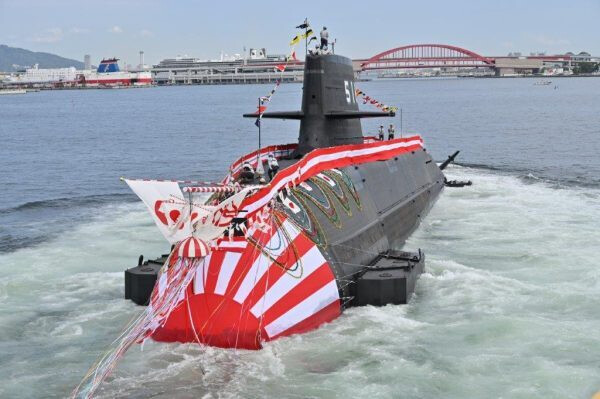
TOKYO — Long-standing taboos in Japanese defense policy are facing unprecedented scrutiny as lawmakers within Tokyo’s ruling coalition openly debate acquiring nuclear-powered submarines and softening the nation's historic anti-nuclear stance.

The debate comes ahead of the government's scheduled revision of its three key national security documents later this year. Both the ruling Liberal Democratic Party (LDP) and its coalition partner, the Japan Innovation Party, have seen growing internal momentum to include feasibility studies for nuclear-propelled submarines in the updated defense framework.

Rethinking the Three Non-Nuclear Principles

At the heart of the controversy is Japan’s decades-old "Three Non-Nuclear Principles"—a foundational policy pledging not to possess, produce, or permit the introduction of nuclear weapons onto Japanese territory. While the Japan Innovation Party has explicitly called for re-evaluating these principles alongside submarine acquisition, key figures in the typically more cautious LDP are now signaling openness to change.

During a recent NHK broadcast, Keitaro Ono, a senior official in the LDP’s security research panel, floated the idea of codifying emergency exceptions to the non-nuclear policy. Referencing a 2010 parliamentary statement by former Foreign Minister Katsuya Okada regarding potential port calls by nuclear-armed U.S. vessels during severe crises, Ono suggested that formally stipulating such exceptions should be on the table. Defense analysts view this not only as a measure to reinforce crisis-time deterrence with Washington, but also as a necessary legal step toward eventually operating nuclear-powered vessels.

The Underwater Balance of Power

Japan's strategic pivot is largely driven by rapid naval modernization across the region and the operational limits of its current fleet:

China’s Expanding Fleet: According to the International Institute for Strategic Studies (IISS), Beijing currently fields 61 submarines, including 15 nuclear-powered vessels. U.S. naval intelligence estimates suggest China's fleet could expand to 80 submarines by 2035, roughly half of which will be nuclear-propelled. Reports of Russian technical assistance improving the acoustic stealth of Chinese submarines have further heightened Tokyo's alarm.
Technological Disadvantage: The Japan Maritime Self-Defense Force relies exclusively on conventional diesel-electric submarines. Capped at underwater speeds of roughly 20 knots (37 km/h), these vessels struggle to track high-speed nuclear submarines capable of sustaining 30 knots (55.6 km/h) as they transit into the Western Pacific.
Regional Peer Pressure: With both Australia and South Korea advancing their own plans to field nuclear-powered submarines in the 2030s, Japanese policymakers face mounting pressure to avoid falling behind in undersea capabilities.

Fears of U.S. Retrenchment 

Compounding these regional military shifts is growing anxiety in Tokyo over the durability of the U.S. security umbrella. The persistence of an "America First" foreign policy—often characterized by critics as a neo-isolationist "Donroe Doctrine"—has raised concerns that Washington may steadily scale back its direct military footprint in Asia. Consequently, proponents in Tokyo argue that Japan must develop more autonomous deterrence capabilities.

Should Japan formally incorporate nuclear submarine evaluations or relax its non-nuclear restrictions later this year, the move is expected to trigger sharp diplomatic pushback from Beijing and Seoul, potentially accelerating an undersea arms race across Northeast Asia.

[Copyright (c) Global Economic Times. All Rights Reserved.]
  • #Cherry Garden
  • #HalalFood
  • #Halal
  • #Petlife
  • #Halalhorizone
  • #Hormuz Impasse
  • #Joseon
  • #globaleconomictimes
  • #micore
KO YONG-CHUL Reporter
Reporter Page

Popular articles

  • Culinary Mashups and Nostalgia with a Twist: South Korea’s F&B Giants Vie for Consumer Attention

  • Japanese Hotel Prices Surge Nearly 9% Amid Booming Korean Tourism

  • AI Health and Wellness: How Generations Differ in Their Use of Artificial Intelligence

I like it
Share
  • Facebook
  • X
  • Kakaotalk
  • LINE
  • BAND
  • NAVER
  • https://globaleconomictimes.kr/article/1065592031079118 Copy URL copied.
Comments >

Comments 0

Weekly Hot Issue

  • Kuching to Host First-Ever Halal Heritage Food Festival Celebrating Sarawak’s Cultural Diversity
  • Vietnam and Indonesia Deepen Ties with Push for Halal Pact as Investment Surges
  • Local Nonprofit Distributes Free Pet Food to Over 300 Animals Ahead of Thanksgiving
  • National Audit Ensures Fair Weight and Accurate Labeling for Australian Pet Owners and Farmers
  • Bracing for Super El Niño: Essential Summer Safety Guide to Protect Your Pets from Extreme Heat
  • Putri Ariani, a world-famous female singer 

Most Viewed

1
South Korea and Ethiopia Sign Trilateral MOU to Introduce Liquid-Based Cytology (LBC) Technology for Cervical Cancer Diagnosis
2
South Korean Burger Chain Lotteria Expands Singapore Footprint with Halal Certification and New Teriyaki Lineup
3
AI Semiconductor Stocks Plummet: Philadelphia Index Drops 5.28% and Micron Plunges 7.59% Amid Executive Shakeup and Export Restrictions
4
"Stay Out, Get Paid, or Have Police Stay With You": Shenzhen Imposes Strict Security Ahead of APEC Summit
5
AI Music Tops Melon Chart: Is the K-Pop Production Formula Changing?
체리가든 스토리
nutri huevos
로타리
동포저널

Hot Issue

US-China Trade Truce Teeters as Tech and Telecom Crackdowns Escalate

AI Bots Scrape 140,000 Articles in an Hour, Threatening Journalism’s Survival

Surge in Chinese-Built EVs Pushes South Korea’s Auto Trade Deficit with China to Record $4.23 Billion

Fashion Runway Show 2026

Let’s recycle the old blankets in Jeju Island’s closet instead of incinerating them.

Global Economic Times
korocamia@naver.com
CEO : LEE YEON-SIL
Publisher & Editor : KO YONG-CHUL
Registration number : Seoul, A55681
Registration Date : 2024-10-24
Youth Protection Manager: KO YONG-CHUL
Singapore Headquarters
5A Woodlands Road #11-34 The Tennery. S'677728
Korean Branch
Phone : +82(0)10 4724 5264
#304, 6 Nonhyeon-ro 111-gil, Gangnam-gu, Seoul
Copyright © Global Economic Times All Rights Reserved
  • News K
  • 반달곰 프로젝트
  • 광고문의
Search
Category
  • All articles
  • Synthesis
  • World
  • Business
  • Industry
  • ICT
  • Distribution Economy
  • Well+Being 
    • 전체
    • Pet Life
    • Halal Horizon
  • Travel
  • Eco-News
  • Education
  • Korean Wave News
  • Opinion
  • Arts&Culture
  • Sports
  • People & Life 
    • 전체
    • International Student Report
    • With Ambassador
  • Column 
    • 전체
    • Cho Kijo Column
    • Cherry Garden Story
    • Ko Yong-chul Column
    • Kim Bong-seon's Photo Column
    • Kim Seul-Ong Column
    • Lee Yeon-sil Column
    • Professor Lee Soo-young’s Life Essays
  • Photo News
  • New Book Guide
  • Overseas Koreans
  • Multicultural News