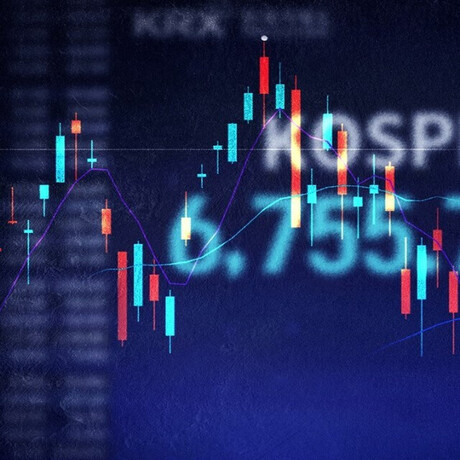
Amid a continuing semiconductor boom and rising exports, coupled with the government's expanded fiscal spending, an analysis has emerged that upward pressure on demand-side inflation could intensify.
Chang Min, a senior research fellow at the Korea Institute of Finance, made this diagnosis on the 24th in a report titled "Inspection of Recent Inflation Conditions in South Korea and Implications."
The report analyzed that recent domestic inflation has been primarily driven by supply factors rather than demand.
It explained that a weaker Korean won raised the import prices of raw materials such as crude oil, natural gas, and grains, while geopolitical instability in the Middle East also pushed up international oil prices and transportation costs.
Because inflation driven by supply factors was prominent, the report noted that there were limitations in suppressing inflation by dampening demand through past interest rate hikes.
However, the report forecasted that demand-side inflation pressures will gradually grow going forward.
It suggests that the semiconductor boom and export growth could lead to improved corporate earnings and expanded facility investment, which in turn can stimulate household consumption and corporate investment through improvements in employment and income.
Expanded fiscal spending could also lead to rising inflation.
This is because government consumption, public investment, increased household transfer payments, and expanded support for vulnerable groups and small business owners can boost regional consumption and service demand.
However, it added that if the employment-creating effect of the semiconductor industry remains limited and fiscal spending concentrates on R&D and infrastructure investment, the short-term inflationary impact might not be significant.
The report forecasted that because inflation caused by demand factors is highly persistent and can stimulate inflation expectations, the monetary authorities' need for monetary tightening may grow.
At the same time, it pointed out that while high-interest-rate policies can contribute to long-term price stability, they could, in the short term, increase the principal and interest repayment burdens of households and businesses, leading to economic contraction and the spread of financial instability.
It then suggested that households, businesses, and financial institutions need to keep in mind the possibility that high-interest-rate conditions may persist for a considerable period and pay close attention to debt restructuring and soundness management.
[Copyright (c) Global Economic Times. All Rights Reserved.]