![[등록] 2026-09-01 15:48:31](/support/_updata/banner2/tl181982910_6749.png)


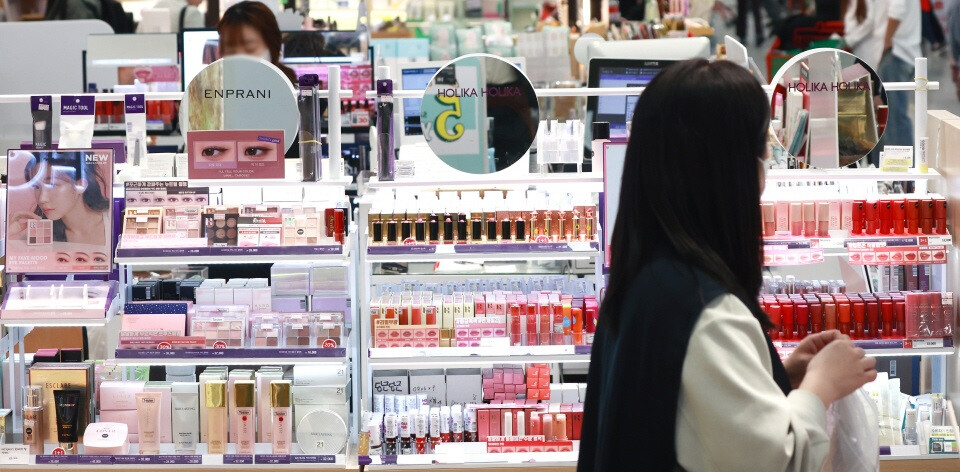
Seoul, South Korea – The allure of K-Beauty continues its powerful global expansion, evidenced by the latest trade figures released by the South Korean Ministry of Trade, Industry and Energy. April witnessed a remarkable 20.8% year-on-year surge in cosmetics exports, reaching a substantial $1.03 billion. This impressive performance marks the third consecutive month of double-digit growth, underscoring the enduring international appetite for South Korean beauty products. This figure also represents the second-highest monthly export value on record, just trailing the $1.033 billion achieved in September 2024. The cumulative cosmetics exports for the first four months of the year now stand at a healthy $3.63 billion, a 15.6% increase compared to the same period last year.
The Korea Cosmetic Industry Institute's data for the cumulative figures up to March reveals the traditional hierarchy of export destinations, with China leading, followed by the United States, Japan, Hong Kong, and Vietnam. However, a significant shift is underway. While exports to China, a historically dominant market for K-Beauty, experienced a 12.3% contraction, exports to the United States surged by an impressive 20%. This divergence has dramatically narrowed the gap in market share, with China now accounting for 19.9% of total K-Beauty exports and the US close behind at 16.9% – the narrowest margin ever recorded. This trend strongly suggests that the United States is poised to potentially overtake China as the top destination for Korean cosmetics exports by the end of 2025, a notable shift from 2024 when China held a 24.5% share compared to the US's 18.6%.
Beyond the US, Japan also demonstrates robust growth, with exports increasing by 14% and its market share exceeding 10%. Notably, several other markets within the top 20 have witnessed explosive growth rates. Hong Kong saw an 81.5% increase, Russia 76%, Poland a staggering 306%, the United Arab Emirates 301%, Canada 61%, and France an impressive 233%. The significant growth in markets like Poland, the UAE, and France, often discussed in the context of geopolitical factors such as potential tariffs or defense industry ties, highlights the diversifying appeal of K-Beauty across various regions.
A key characteristic of this recent export surge is the unusual prominence of North American, European, and Middle Eastern markets, which have collectively outpaced the traditionally strong ASEAN countries in the top export rankings. This signifies a successful diversification of K-Beauty's export portfolio and underscores its increasingly universal appeal in both developed and emerging economies. This broad-based popularity is a testament to the quality, innovation, and cultural resonance of Korean beauty products on a global scale.
The US market is currently the focal point for the Korean cosmetics industry. While the 90-day reprieve from mutual tariffs (extending until July 9th) has provided a temporary respite, the underlying demand for K-Beauty in the US remains strong. Reports indicate a surge in exports of Korean sunscreens, driven by proactive stockpiling in anticipation of potential tariffs. This robust demand is further corroborated by the Korea Trade-Investment Promotion Agency (KOTRA) New York Trade Center's assessment that K-Beauty is experiencing a "second golden age" in the United States. This resurgence comes roughly a decade after the initial popularity of products like BB creams and snail creams and is highlighted by the significant milestone of South Korea surpassing France to become the leading source of cosmetics imports into the US in 2024, with import values of $1.7 billion and $1.26 billion, respectively, followed by Canada at $1.0 billion.
Several factors contribute to this remarkable success in the US market. A key element is the strategic and effective utilization of the Amazon platform by K-Beauty brands to reach American consumers. The online channel for beauty and personal care products in the US has witnessed substantial growth, reaching 29% of total sales in 2023. Korean brands like COSRX and Beauty of Joseon have achieved significant traction on Amazon, establishing a strong foundation for expanding their distribution networks and bolstering brand recognition across the country. Beyond Amazon, direct-to-consumer platforms such as Olive Young Global and YesStyle, specialized K-Beauty online retailers like Ohlolly and Skin Cupid, and major US retailers including Costco and Target are all actively selling Korean cosmetics through their online platforms, further increasing accessibility for American consumers.
Another crucial factor is the emergence and popularity of innovative products from K-indie beauty brands. These brands often introduce novel formulations and address specific skincare concerns, catering to the evolving needs and preferences of American consumers. K-Beauty skincare, in general, is highly regarded for its emphasis on cutting-edge technology, functional ingredients, and gentle formulations, earning high praise and commanding a strong position in the US market.
Social media plays an indispensable role in K-Beauty's success story. Platforms like TikTok, Instagram, and Reddit are rife with discussions and reviews of Korean cosmetic products. Authentic user experiences and word-of-mouth marketing on these platforms have proven to be powerful drivers of purchasing decisions. This phenomenon aligns with the burgeoning trend of "social shopping" in the US, where social media platforms integrate shopping functionalities, further amplifying the reach and influence of K-Beauty.
Despite the current positive trajectory, the potential reimposition of mutual tariffs on July 9th remains a significant point of concern for the industry. The outcome of ongoing negotiations, particularly those stemming from the ROK-US 2+2 Ministerial Meeting held on April 24th, is being closely monitored by Korean cosmetics exporters.
In response to these uncertainties, Minister Ahn Duk-geun of the Ministry of Trade, Industry and Energy has reiterated the government's commitment to supporting Korean businesses. "Under the uncertainty of the export environment, such as the US tariff measures, the government will concentrate all available resources to minimize the damage to our companies and maintain export competitiveness," he stated.
The government's strategy to mitigate potential negative impacts includes sustained diplomatic efforts to secure tariff exemptions from the US, the diligent implementation of previously announced emergency export measures and item-specific countermeasures for key industries, and the expansion of financial support mechanisms such as trade finance and 'tariff response vouchers' to meet the needs of exporting companies. Furthermore, the government is actively engaging with export industries through meetings and site visits to address on-the-ground challenges and is planning initiatives such as the 'Korea Excellent Products Exhibition' and a trade mission in conjunction with Korea Day at the Osaka Expo in May, aimed at fostering business opportunities for Korean exporters.
The remarkable growth and diversification of K-Beauty exports underscore its enduring global appeal and its ability to adapt to evolving market dynamics. While potential trade headwinds remain a concern, the underlying strength of K-Beauty's innovation, quality, and effective market penetration strategies position it for continued success in the international arena, with the United States poised to become its most significant single market.
[Copyright (c) Global Economic Times. All Rights Reserved.]