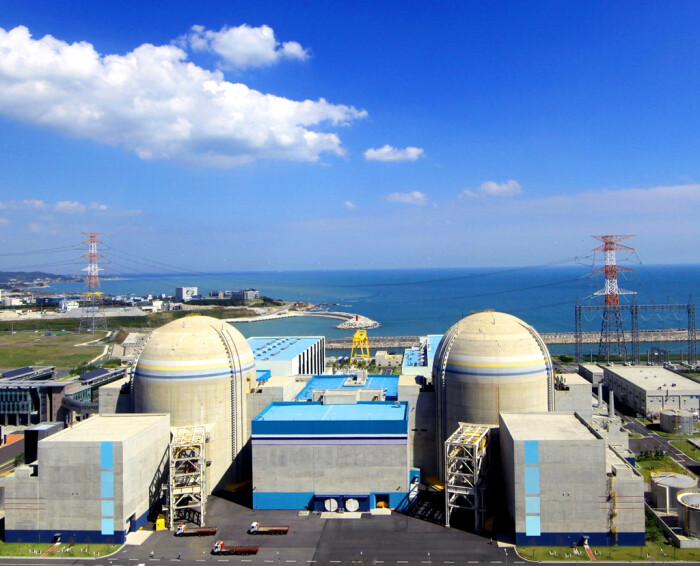
SEOUL — As the Lee Jae-myung administration aggressively pursues three mega-projects—semiconductor fabrication plants, AI data centers, and physical AI—the South Korean government has launched a public deliberation process to expand nuclear power generation. However, energy experts and civic organizations are pushing back, warning that the three-month review risks becoming a rubber stamp for a predetermined policy shift.
In October 2026, the Ministry of Climate, Energy and Environment established the Nuclear Power Public Deliberation Committee to inform the upcoming Basic Plan for Long-Term Electricity Supply and Demand. Following a three-day deliberative debate among 300 citizen panelists in mid-December, the committee is slated to submit its final recommendations by the end of the year.
Unlike the 2017 public deliberation under the Moon Jae-in administration, which focused on a single binary question—whether to resume construction on two specific reactors—the 2026 agenda tackles the broad and complex question of nuclear energy’s future role and share in the national grid. Critics argue that a three-month window is far too brief for citizens to adequately weigh such intricate variables, especially after remarks from Climate Minister Kim Sung-hwan in July 2026 hinted at available land for four additional reactors at the Hanbit and Ulju sites.
In response, more than 30 prominent scholars and researchers—including heads of energy think tanks and former climate and engineering professors—launched the "Alternative Questions Forum" in November 2026. The group argues that public deliberation must not take nuclear power’s economic viability and safety for granted, spotlighting three critical blind spots that require answers before any expansion is approved.
1. Inflated Power Demand and ‘Phantom’ Projects
The government's preliminary projections for 2040 estimate peak electricity demand reaching up to 165 gigawatts (GW)—an increase over 2025 levels equivalent to the output of 41 to 46 large nuclear reactors. This surge is heavily driven by sharp upward revisions in projected demand for advanced industries and data centers, which jumped sixfold and threefold, respectively, within just four months of earlier estimates.
Experts warn that building expensive baseload infrastructure based on speculative forecasts could leave South Korea with costly stranded assets. According to a report by the energy policy group NEXT, only about 13 percent (2.5 GW) of South Korea’s planned 20 GW AI data center capacity through 2035 has secured financing, anchor clients, or clear end-users. Similar trends have been observed in the United States, where energy consultancy Wood Mackenzie found that over 70 percent of data center grid connection requests are either duplicate filings or unlikely to materialize.
Questions also surround the semiconductor sector. The government’s forecast assumes the equivalent of 16 cutting-edge fabrication plants operating by 2040, factoring in an accelerated timeline for Samsung Electronics’ Yongin cluster. Energy specialists contend that because South Korea updates its electricity master plan every two years, capacity should be expanded incrementally based on verified demand rather than unbuilt facilities.
2. Hidden Subsidies Behind ‘Cheap’ Nuclear Power
While utility settlement data from 2025 shows nuclear electricity costing 79 won per kilowatt-hour—substantially lower than renewables (125 won), coal (138 won), or liquefied natural gas (158 won)—experts point out that this price reflects state-backed financial advantages rather than true production costs, which remain undisclosed.
Nuclear construction requires trillions of won over decade-long timelines, making financing costs roughly two-thirds of total generation expenses. Because state-run Korea Hydro & Nuclear Power (KHNP) benefits from implicit government backing, its weighted average cost of capital (WACC) sits at around 4 percent, compared to an average of 9 percent for private developers overseas. In effect, taxpayers and ratepayers absorb the underlying financial risk.
Furthermore, South Korea’s legal liability cap for nuclear operators is set at roughly 1.6 trillion won per accident, with mandatory financial reserves capped at around 540 billion won per site regardless of how many reactors operate there—a fraction of the $16 billion required in the United States or the unlimited liability enforced in Japan and Germany. Meanwhile, recent domestic reactor projects have suffered construction delays of three to six years, driving total project costs up by more than 50 percent alongside stricter safety regulations and labor laws.
3. Unresolved Waste and Warming Seas
Safety concerns extend beyond reactor operations to long-term waste management and climate change. Although special legislation sets targets for an interim spent-fuel storage facility by 2050 and a permanent geological repository by 2060, the government has yet to secure a site or local community consent. Experts warn that expanding nuclear capacity without a permanent disposal pathway turns temporary on-site cooling pools—which hold densely packed radioactive fuel—into de facto long-term storage sites vulnerable to extreme events.
Simultaneously, accelerating ocean warming threatens reactor cooling systems. Korean nuclear plants are designed to shut down if seawater temperatures exceed safety thresholds ranging from 31°C to 36.1°C. During the summer of 2026, ocean temperatures off the Hanul 4 reactor reached 30.4°C, leaving a safety margin of just 1.1°C. Across South Korea’s 23 pressurized water reactors, eight came within 2°C of their thermal design limits. Updated assessments in 2026 slashed the estimated timeline for Hanul Units 3 and 4 to reach their maximum seawater temperature threshold from 28 years down to just 13 years.
As the December citizen panel approaches, the Alternative Questions Forum insists that policymakers provide transparent accounting on decommissioning costs, waste disposal, and climate-resilient safety protocols—arguing that a credible energy transition depends on asking the right questions before locking in multi-decade commitments.
[Copyright (c) Global Economic Times. All Rights Reserved.]