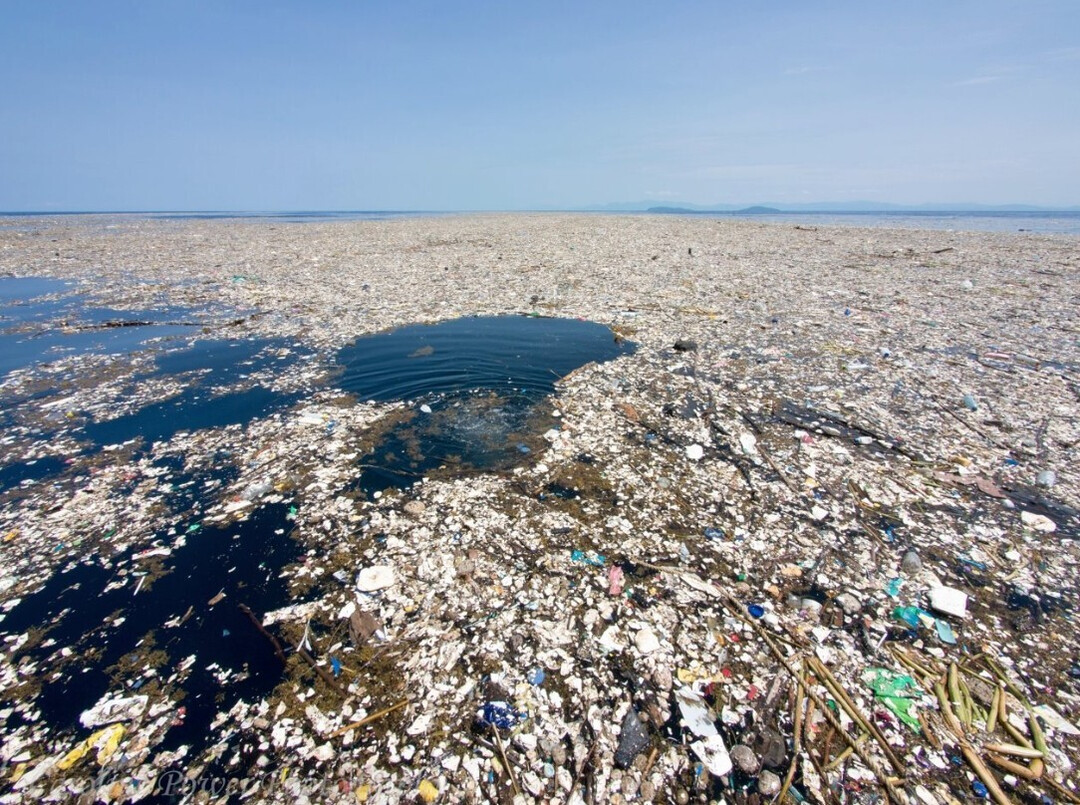
SCIENCEMAG NEWS — Over the past two decades, researchers have tracked a striking environmental shift across the vast expanse of the North Pacific Ocean. Satellite records spanning from 2002 to 2022 reveal a noticeable intensification of turquoise hues in the waters situated between Hawaii and California—a phenomenon that scientists now link to the accumulation of microplastic debris.
A team of marine scientists at the University of Bergen recently published findings indicating that these vivid color transformations are concentrated within the notorious North Pacific Subtropical Gyre, commonly referred to as the Great Pacific Garbage Patch. Rather than a solid mass of floating trash, this region consists of countless microscopic and macroscopic plastic fragments suspended over thousands of square miles, driven together by converging oceanic currents.
To investigate this trend, the Norwegian research group examined three distinct decades of satellite imagery capturing ocean color dynamics. Their data revealed a distinct surge in blue and green spectral bands reflecting from waters within and around the debris zone compared to baseline ocean conditions.
Ordinarily, aquatic shades are dictated by biological factors, most notably phytoplankton blooms which impart a rich green tint. However, laboratory experiments demonstrated that pulverized plastic particles possess unique optical properties, scattering solar radiation in multiple directions. When these physical behaviors were integrated into advanced computer models, simulations successfully replicated the specific optical signatures detected by satellites in the North Pacific.
While natural elements alone could not fully account for the anomaly, introducing microplastics into the simulation closely matched real-world observations. The scattering effect magnified both blue and green wavelengths, driving the shift toward a brilliant turquoise shade.
Environmental experts note that this novel remote-sensing approach could offer a breakthrough in tracking invisible ocean pollution. With an estimated 13 million metric tons of plastic entering marine environments annually, quantifying subsurface contamination remains a monumental challenge because tiny fragments evade standard sampling methods.
Despite the promising correlation, independent specialists urge caution. Dr. Richard Thompson, a prominent marine biologist at the University of Plymouth, noted that distinguishing synthetic particles from organic matter like phytoplankton via satellite imaging remains exceedingly difficult. To definitively confirm the causal link, the research team intends to conduct direct water sampling campaigns in the affected zones, pairing field measurements with orbital data to validate the study's conclusions.
[Copyright (c) Global Economic Times. All Rights Reserved.]