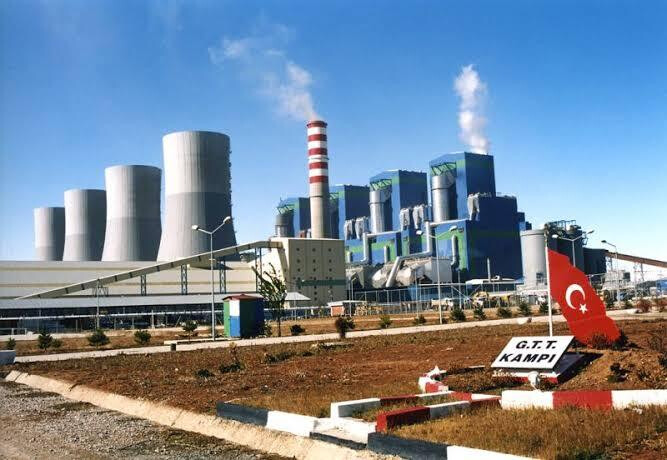
ANTALYA — As Turkey prepares to host the United Nations Climate Change Conference (COP31) next week, the nation faces mounting international pressure regarding its domestic energy policies. Recent government data highlights a stark contrast between the country's climate diplomacy and its domestic reliance on fossil fuels, with coal remaining the primary source of electricity.
According to figures released by the Turkish Ministry of Energy, coal-fired power accounted for 33.3% of the nation's total electricity production last year. By comparison, solar energy contributed 11.9% and wind power added 10.8%, meaning the combined output of both major renewable sources (22.7%) remains significantly lower than coal. Despite Ankara's official target of achieving net-zero emissions by 2053, the government has yet to outline a definitive timeline for phasing out coal power generation.
Turkey has made visible strides in green infrastructure. In central Konya province, the Kalyon Karapınar Solar Power Plant spans the equivalent of 2,600 football pitches and deploys over three million photovoltaic panels. Launched in 2023, it stands as one of Europe’s largest solar installations, though it currently meets roughly 0.7% of the nation's annual electricity needs.
Independent climate analysts, however, point out that clean energy growth has failed to displace fossil fuels. Research by the Climate Action Tracker (CAT) indicates that surging electricity demand across Turkey has absorbed the capacity of newly installed wind and solar farms, leaving existing coal and gas plants running at high levels. Consequently, power sector emissions reached historic highs last year.
Contradictory policy signals further complicate the landscape. While a Turkish court blocked an environmental assessment for a controversial coal plant expansion in the southeastern Afşin-Elbistan district last July, proposals have since emerged to expand another coal facility in northwestern Çanakkale.
CAT currently rates Turkey's climate policies as "critically insufficient," projecting that greenhouse gas emissions could climb 7% to 25% above 2018 levels by 2035 under current trajectories—a path incompatible with the Paris Agreement goal of limiting global warming to 1.5°C.
From November 9 to 20, Antalya will serve as the venue for COP31, where Turkey assumes the COP presidency while Australia steers negotiations. The summit will center on translating national climate pledges into action and mobilizing financial and technical aid for developing nations.
Turkish Minister of Environment, Urbanization and Climate Change Murat Kurum recently signaled that the presidency’s priority will be execution over ambition—introducing a "Climate Implementation Bridge" to help bridge gaps in finance and technology. Yet, as global delegates gather in Antalya, observers note that Turkey's ultimate credibility may depend on how decisively it addresses its own coal addiction at home.
[Copyright (c) Global Economic Times. All Rights Reserved.]