• 2026.03.06 (Fri)
  • All articles
  • LOGIN
  • JOIN
Global Economic Times
fashionrunwayshow2026
  • Synthesis
  • World
  • Business
  • Industry
  • ICT
  • Distribution Economy
  • Well+Being
  • Travel
  • Eco-News
  • Education
  • Korean Wave News
  • Opinion
  • Arts&Culture
  • Sports
  • People & Life
    • International Student Report
    • With Ambassador
  • Column
    • Cho Kijo Column
    • Cherry Garden Story
    • Ko Yong-chul Column
    • Kim Seul-Ong Column
    • Lee Yeon-sil Column
  • Photo News
  • New Book Guide
MENU
 
Home > Synthesis

Seoul's "River Bus" Project Sinks Amidst Public Apathy 

KO YONG-CHUL Reporter / Updated : 2025-09-19 13:43:17
  • -
  • +
  • Print


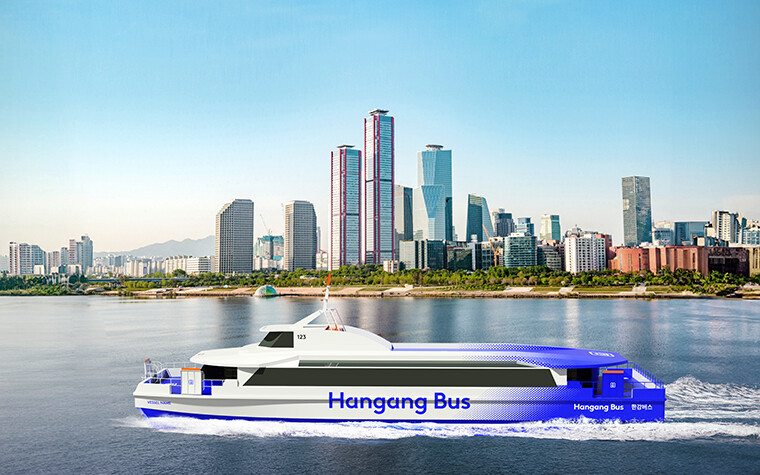
SEOUL, SOUTH KOREA — A high-profile urban transport project meant to revolutionize commuting in Seoul is facing an uncertain future as it grapples with low ridership and widespread public criticism. The Hangang River Bus, once lauded as a visionary solution to the city's notorious traffic congestion, is now being widely dismissed as a costly failure, bogged down by inconvenient routes and sluggish travel times. Despite a significant investment from the Seoul Metropolitan Government, the project has failed to gain traction with the very citizens it was designed to serve, prompting a growing debate over its utility and financial prudence.

Launched with much fanfare, the Hangang River Bus was conceived as a new backbone for Seoul's public transit network, offering a serene, water-based alternative to the packed subway and bus lines. The plan was simple yet elegant: use the Hangang River to connect key transport hubs, from the western Ara Hangang floodgate in Gimpo to the bustling districts of Yeouido and Jamsil. Proponents argued it would not only ease traffic but also offer a scenic commute, blending urban efficiency with natural beauty. However, the reality of the service has proven to be far from the initial vision.

The project's Achilles' heel is its fundamental lack of speed. While Seoul’s subway system can whisk commuters from Yeouido to Jamsil in a mere 30 minutes, the river bus takes nearly an hour for the same journey. When factoring in the additional time required to travel to the remote docking stations and navigate the boarding process, the "river bus" quickly loses its appeal for time-conscious commuters. It's a stark contrast to the city's established public transport, which prioritizes speed and efficiency above all else.

Furthermore, accessibility remains a significant hurdle. Many of the docks are inconveniently located, disconnected from existing subway and bus lines. They sit in isolated areas on the riverbanks, feeling more like forgotten parking lots than integrated transit hubs. This forces potential riders to either walk long distances or rely on private cars, which defeats the very purpose of a public transport system. The lack of last-mile connectivity has become a major deterrent, turning a potential scenic journey into a logistical nightmare.

As a result, the project is now at the center of a heated public debate over the "waste of taxpayer money." Critics argue that a project with such a low adoption rate and immense cost is a clear example of fiscal mismanagement. The city poured billions into acquiring state-of-the-art vessels and renovating docks, but without the riders to justify the expense, the service remains largely a novelty. The Seoul government is now under pressure to address these glaring issues. To salvage the project, it must fundamentally re-evaluate its strategy. Improving travel times, enhancing last-mile connectivity through shuttle services or improved pedestrian links, and creating a more attractive transfer system are all critical steps. For the Hangang River Bus to become more than just a "showpiece" and transform into a genuine public transport solution, it must finally cater to the needs of the very people it was built to serve.

[Copyright (c) Global Economic Times. All Rights Reserved.]

  • #globaleconomictimes
  • #micorea
  • #mykorea
  • #Lifeplaza
  • #nammidonganews
  • #singaporenewsk
  • #Samsung
  • #Daewoo
  • #Hyosung
  • #A
KO YONG-CHUL Reporter
Reporter Page

Popular articles

  • Revised and Expanded Edition of ‘Failure of Negotiations with North Korea: Truth and Solutions’ Published

  • Commissioner of Overseas Koreans Agency Visits Koryo-in Community in Incheon to Discuss Support for Settlement

  • Two Falls and a Miracle Run: Choi Ga-on Becomes First Korean to Win Winter Olympic Gold on Snow

I like it
Share
  • Facebook
  • X
  • Kakaotalk
  • LINE
  • BAND
  • NAVER
  • https://globaleconomictimes.kr/article/1065588137416710 Copy URL copied.
Comments >

Comments 0

Weekly Hot Issue

  • The Illusion of a "Stress-Relieving" Smoke: Study Finds Smokers More Prone to Depression
  • From Table to Space: Japan Unveils Edible Spoons Made of Cookies
  • Luckin Coffee Shakes Up Global Market with Blue Bottle Acquisition
  • U.S. Private Sector Hiring Hits 7-Month High in February, ADP Reports
  • Self-Employed Loan Delinquency Rates Double in a Decade Amid Economic Headwinds
  • Multi-Homeowner Loan Balance Hits 103 Trillion Won; Half Concentrated in Seoul and Gyeonggi

Most Viewed

1
Adwa’s Echo in Korea: A Shared Story of Dignity and Freedom
2
2026, The Grand Year of Hangeul Celebration — The River of History Where Five Streams Converge
3
A New Milestone for Ukraine’s Post-War Reconstruction: The Birth of ISVP
4
Mexican currency and the powerful history behind its designs
5
Revised and Expanded Edition of ‘Failure of Negotiations with North Korea: Truth and Solutions’ Published
광고문의
임시1
임시3
임시2

Hot Issue

South Korean Markets Shaken by "Iran Shock": KOSPI Suffers Historic Rout Amid Soaring Oil and FX Rates

Self-Employed Loan Delinquency Rates Double in a Decade Amid Economic Headwinds

U.S. Private Sector Hiring Hits 7-Month High in February, ADP Reports

Industrial Output Dips in January Amid Semiconductor Adjustments; Middle East Tensions Loom as Wild Card

Let’s recycle the old blankets in Jeju Island’s closet instead of incinerating them.

Global Economic Times
korocamia@naver.com
CEO : LEE YEON-SIL
Publisher : KO YONG-CHUL
Registration number : Seoul, A55681
Registration Date : 2024-10-24
Youth Protection Manager: KO YONG-CHUL
Singapore Headquarters
5A Woodlands Road #11-34 The Tennery. S'677728
Korean Branch
Phone : +82(0)10 4724 5264
#304, 6 Nonhyeon-ro 111-gil, Gangnam-gu, Seoul
Copyright © Global Economic Times All Rights Reserved
  • 에이펙2025
  • APEC2025가이드북TV
  • 독도는우리땅
Search
Category
  • All articles
  • Synthesis
  • World
  • Business
  • Industry
  • ICT
  • Distribution Economy
  • Well+Being
  • Travel
  • Eco-News
  • Education
  • Korean Wave News
  • Opinion
  • Arts&Culture
  • Sports
  • People & Life 
    • 전체
    • International Student Report
    • With Ambassador
  • Column 
    • 전체
    • Cho Kijo Column
    • Cherry Garden Story
    • Ko Yong-chul Column
    • Kim Seul-Ong Column
    • Lee Yeon-sil Column
  • Photo News
  • New Book Guide
  • Multicultural News
  • Jobs & Workers