![[등록] 2026-09-01 15:48:31](/support/_updata/banner2/tl181982910_6749.png)


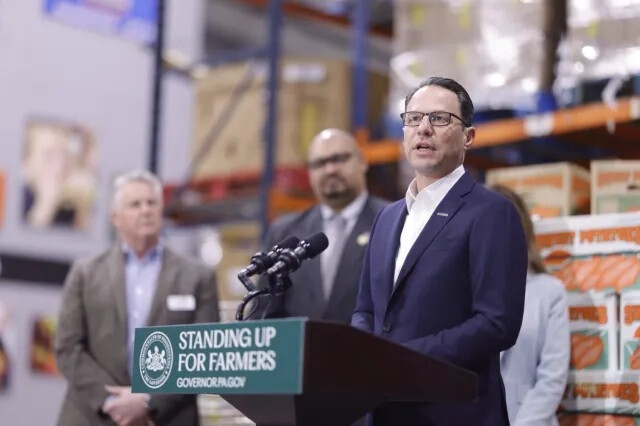
A contentious dispute has erupted between the federal government and the state of Pennsylvania concerning the funding of crucial food bank programs. The U.S. Secretary of Agriculture, Brooke Rollins, has publicly accused the Shapiro administration of engaging in political maneuvering that jeopardizes vital resources for food banks and local farmers. In response, Pennsylvania’s Agriculture Secretary, Russell Redding, has vehemently refuted these claims, asserting that the federal official’s understanding of the situation is factually incorrect.
The escalating tension centers on the U.S. Department of Agriculture’s (USDA) recent termination of a $13 million contract that enabled Pennsylvania food banks to purchase food directly from local farmers. This program has been instrumental in not only providing nutritious food to individuals and families facing food insecurity but also in bolstering the local agricultural economy.
Secretary Rollins initiated the week with a tour of Pennsylvania’s agricultural heartland, but her visit was quickly overshadowed by pointed remarks directed at Governor Josh Shapiro’s administration. “Listen, Governor [Josh] Shapiro, who I actually respect, is playing some games here,” Rollins stated, referencing a recent press conference where Governor Shapiro criticized the USDA’s decision to terminate the funding. Rollins argued that the Shapiro administration was either misinformed or deliberately attempting to politicize the issue.
“Shapiro or the state leaders here in Pennsylvania know they don’t have their facts right or they’re playing games,” Rollins insisted. “They’re trying to make this a political issue.” She further claimed that substantial USDA funds earmarked for Pennsylvania food banks were currently “sitting in the Pennsylvania state accounts.”
Secretary Redding swiftly countered these assertions. “I was surprised to hear that, hey, we’re holding all millions of dollars,” Redding said. “That’s not the case.” Following Rollins’ comments, Redding penned a formal letter aimed at “clear[ing] up misconceptions.” In his letter, Redding emphasized that the state does not possess dormant reserves of USDA funds intended for food banks. He acknowledged the existence of the now-terminated contract, highlighting that it was a signed agreement initiated during the final days of the previous Biden administration.
“You may not like the guy who signed it and initiated, but the deal’s the deal,” Redding asserted, urging the federal government to honor the existing agreement or engage in constructive dialogue to modify it moving forward. He expressed bewilderment at the USDA’s rationale for termination, particularly the statement in their letter claiming that the program no longer aligned with the agency’s priorities. “What is strikingly odd is that in their termination letter, they said this program no longer effectuates the agency’s priorities,” Redding noted. “What’s more of a priority than helping farmers and feeding people?”
While Redding’s letter refrained from explicitly addressing the partisan undertones of Rollins’ remarks, sources close to the Secretary indicated his disappointment with the injection of political rhetoric into a matter concerning food security. Rollins had stated, “I think the Democrats are playing games,” further fueling the perception of a politically motivated dispute.
Redding, who enjoys bipartisan respect within Pennsylvania’s political landscape, underscored the non-partisan nature of hunger and the critical role of the food bank program. “Hunger knows no boundaries,” Redding emphasized. “It does not know politics. This is about farms who are doing the right things. Feeding people is as noble a cause as you can find.”
The Importance of Farm-to-Food Bank Programs
Farm-to-food bank programs have gained increasing recognition nationwide for their multifaceted benefits. These initiatives not only provide a reliable market for local farmers, enabling them to sustain their operations, but also ensure that food banks receive fresh, nutritious produce and other agricultural products. This is particularly crucial for addressing the nutritional needs of food-insecure populations, who may disproportionately rely on less healthy, shelf-stable options.
The terminated Pennsylvania program, funded at $13 million, represented a significant investment in this model. By directly connecting food banks with local farmers, it streamlined the procurement process, reduced transportation costs, and fostered stronger relationships between the agricultural community and those working to combat hunger. The abrupt termination of this funding stream has raised concerns among food bank operators and agricultural advocates alike, who fear a potential disruption in the supply of fresh food and an economic blow to participating farmers.
Federal Priorities and Potential Repercussions
The USDA’s assertion that the farm-to-food bank program no longer aligns with its priorities has prompted questions about the agency’s evolving focus in addressing food insecurity. While the USDA has numerous programs aimed at combating hunger, the specific rationale for discontinuing this particular initiative remains unclear. It is possible that the agency intends to redirect funds towards other strategies it deems more effective or aligned with current policy objectives. However, the lack of transparency surrounding this decision has fueled speculation and criticism.
The termination of the Pennsylvania contract could have significant repercussions for both food banks and local farmers. Food banks may face challenges in securing adequate supplies of fresh, locally sourced food, potentially impacting the nutritional quality of the assistance they provide. Farmers who relied on this program as a consistent revenue stream may experience financial strain and market uncertainty.
Awaiting Federal Response and Seeking Solutions
As of the latest reports, the U.S. Department of Agriculture has not yet responded to requests for further clarification regarding the termination of the contract or indicated whether it will reconsider its decision. The silence from the federal agency has amplified concerns among Pennsylvania stakeholders, who are urging for a swift and positive resolution to the funding dispute.
Governor Shapiro’s administration is reportedly exploring alternative funding avenues and engaging in discussions with federal officials to advocate for the reinstatement of the program or the identification of comparable resources. The bipartisan support for Secretary Redding’s stance underscores the widespread recognition of the program’s value and the potential negative consequences of its termination.
The unfolding situation in Pennsylvania highlights the complex interplay between federal and state efforts to address food insecurity and support local agriculture. The outcome of this funding fight will have tangible impacts on the ability of food banks to serve vulnerable populations and the economic viability of Pennsylvania’s farming communities. As the debate continues, the focus remains on ensuring that politics do not impede the crucial work of feeding those in need and sustaining the livelihoods of the farmers who help make that possible. The residents of Pennsylvania, and indeed the nation, await a resolution that prioritizes the well-being of both its food-insecure citizens and its agricultural backbone.
[Copyright (c) Global Economic Times. All Rights Reserved.]