• 2026.03.06 (Fri)
  • All articles
  • LOGIN
  • JOIN
Global Economic Times
fashionrunwayshow2026
  • Synthesis
  • World
  • Business
  • Industry
  • ICT
  • Distribution Economy
  • Well+Being
  • Travel
  • Eco-News
  • Education
  • Korean Wave News
  • Opinion
  • Arts&Culture
  • Sports
  • People & Life
    • International Student Report
    • With Ambassador
  • Column
    • Cho Kijo Column
    • Cherry Garden Story
    • Ko Yong-chul Column
    • Kim Seul-Ong Column
    • Lee Yeon-sil Column
  • Photo News
  • New Book Guide
MENU
 
Home > Industry

Qatar Embarks on Construction of World's Largest 3D-Printed School

Graciela Maria Reporter / Updated : 2025-07-20 13:02:36
  • -
  • +
  • Print


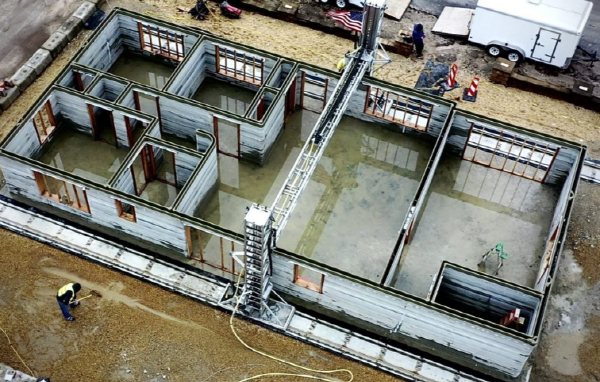
The Middle Eastern nation of Qatar is set to house the world's largest 3D-printed building, spanning the size of six football fields. Qatar's Public Works Authority (Ashghal), local construction company UCC Holding, and Danish 3D construction specialist COBOD have announced that two public schools will be built using 3D printing in the middle of the Qatari desert. This project is part of a larger plan to construct 14 schools in total.

Each school will have a built area of 20,000 square meters, bringing the total area for both schools to an impressive 40,000 square meters. This is an overwhelming scale, approximately 43 times larger than the current world's largest 3D-printed building, which measures 929 square meters in Florida, USA. Completion is scheduled for the end of this year.

For this construction, two customized BODXL printers from COBOD, measuring 50m long, 30m wide, and 15m high, will be deployed. These are the world's largest construction 3D printers and utilize a material extrusion method, building walls by layering a viscous mixture similar to cement. Notably, printing is being conducted during nighttime hours to avoid high temperatures and optimize material performance.

3D printing in construction offers environmental, economic, and aesthetic advantages. It minimizes concrete usage, reducing carbon emissions, and facilitates the creation of curved walls inspired by the desert landscape. Furthermore, it can shorten construction periods compared to traditional methods. The COBOD team conducted over 100 full-scale tests to develop concrete mixtures and customized nozzles suitable for the local climate conditions.

These two-story school buildings, each to be built on a 100m x 100m plot, are expected to set a precedent for future educational infrastructure in Qatar and the wider Middle East region.

[Copyright (c) Global Economic Times. All Rights Reserved.]

  • #globaleconomictimes
  • #micorea
  • #mykorea
  • #Lifeplaza
  • #nammidonganews
  • #singaporenewsk
  • #Taiwanpost
  • #Samsung
  • #Doosa
Graciela Maria Reporter

Popular articles

  • Trump Administration Halts Minnesota Immigration Crackdown Amid Public Outcry

  • Wayvis Swings to Profit as Defense Semiconductor Exports Surge

  • EU Commission Chief Vows to Honor €90 billion Ukraine Loan Despite Hungarian Veto

I like it
Share
  • Facebook
  • X
  • Kakaotalk
  • LINE
  • BAND
  • NAVER
  • https://globaleconomictimes.kr/article/1065585715244835 Copy URL copied.
Comments >

Comments 0

Weekly Hot Issue

  • The Illusion of a "Stress-Relieving" Smoke: Study Finds Smokers More Prone to Depression
  • From Table to Space: Japan Unveils Edible Spoons Made of Cookies
  • Luckin Coffee Shakes Up Global Market with Blue Bottle Acquisition
  • U.S. Private Sector Hiring Hits 7-Month High in February, ADP Reports
  • Self-Employed Loan Delinquency Rates Double in a Decade Amid Economic Headwinds
  • Multi-Homeowner Loan Balance Hits 103 Trillion Won; Half Concentrated in Seoul and Gyeonggi

Most Viewed

1
Adwa’s Echo in Korea: A Shared Story of Dignity and Freedom
2
2026, The Grand Year of Hangeul Celebration — The River of History Where Five Streams Converge
3
A New Milestone for Ukraine’s Post-War Reconstruction: The Birth of ISVP
4
Mexican currency and the powerful history behind its designs
5
Revised and Expanded Edition of ‘Failure of Negotiations with North Korea: Truth and Solutions’ Published
광고문의
임시1
임시3
임시2

Hot Issue

South Korean Markets Shaken by "Iran Shock": KOSPI Suffers Historic Rout Amid Soaring Oil and FX Rates

Self-Employed Loan Delinquency Rates Double in a Decade Amid Economic Headwinds

U.S. Private Sector Hiring Hits 7-Month High in February, ADP Reports

Industrial Output Dips in January Amid Semiconductor Adjustments; Middle East Tensions Loom as Wild Card

Let’s recycle the old blankets in Jeju Island’s closet instead of incinerating them.

Global Economic Times
korocamia@naver.com
CEO : LEE YEON-SIL
Publisher : KO YONG-CHUL
Registration number : Seoul, A55681
Registration Date : 2024-10-24
Youth Protection Manager: KO YONG-CHUL
Singapore Headquarters
5A Woodlands Road #11-34 The Tennery. S'677728
Korean Branch
Phone : +82(0)10 4724 5264
#304, 6 Nonhyeon-ro 111-gil, Gangnam-gu, Seoul
Copyright © Global Economic Times All Rights Reserved
  • 에이펙2025
  • APEC2025가이드북TV
  • 독도는우리땅
Search
Category
  • All articles
  • Synthesis
  • World
  • Business
  • Industry
  • ICT
  • Distribution Economy
  • Well+Being
  • Travel
  • Eco-News
  • Education
  • Korean Wave News
  • Opinion
  • Arts&Culture
  • Sports
  • People & Life 
    • 전체
    • International Student Report
    • With Ambassador
  • Column 
    • 전체
    • Cho Kijo Column
    • Cherry Garden Story
    • Ko Yong-chul Column
    • Kim Seul-Ong Column
    • Lee Yeon-sil Column
  • Photo News
  • New Book Guide
  • Multicultural News
  • Jobs & Workers