• 2026.03.10 (Tue)
  • All articles
  • LOGIN
  • JOIN
Global Economic Times
fashionrunwayshow2026
  • Synthesis
  • World
  • Business
  • Industry
  • ICT
  • Distribution Economy
  • Well+Being
  • Travel
  • Eco-News
  • Education
  • Korean Wave News
  • Opinion
  • Arts&Culture
  • Sports
  • People & Life
    • International Student Report
    • With Ambassador
  • Column
    • Cho Kijo Column
    • Cherry Garden Story
    • Ko Yong-chul Column
    • Kim Seul-Ong Column
    • Lee Yeon-sil Column
  • Photo News
  • New Book Guide
MENU
 
Home > World

Shifting Perceptions in Japan: Majority Believes Apologies for Wartime Actions Sufficient

Eugenio Rodolfo Sanabria Reporter / Updated : 2025-04-28 12:57:00
  • -
  • +
  • Print

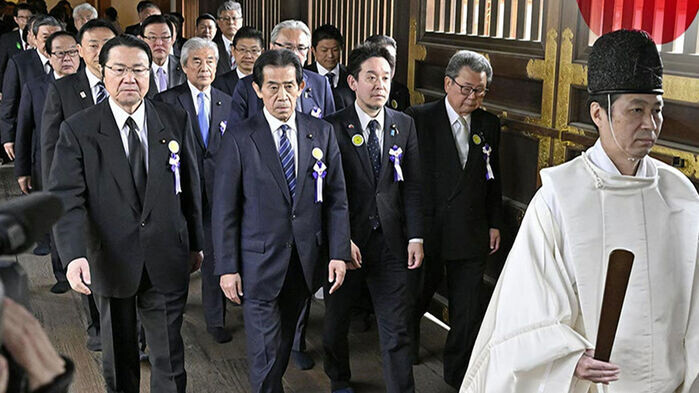
Tokyo, Japan – A recent nationwide survey conducted by the Asahi Shimbun reveals a notable shift in Japanese public opinion regarding the nation's past wartime actions. The poll, released on the 80th anniversary of Japan's defeat in the Pacific War, indicates that a majority of Japanese citizens believe the government has already sufficiently apologized and provided compensation for its wars of aggression and colonial rule.

The survey found that 58% of respondents feel Japan has done enough in terms of apologies and reparations, marking a slight increase from a similar poll conducted a decade ago, where 57% held the same view. Conversely, the percentage of those who believe Japan's efforts have been insufficient has risen from 24% to 29% over the past ten years.

This evolving perspective extends to the need for ongoing apologies from Japanese politicians. The survey showed a reversal in opinion on this matter. Currently, 47% believe there is no need for continued apology messages to victimized countries, while 44% think they should continue. This contrasts with a 2015 survey where a larger percentage (46%) felt such messages should continue, compared to 42% who disagreed.

Furthermore, the historical understanding of the Pacific War appears to be undergoing a subtle transformation within Japan. The survey indicated a slight decrease in the percentage of people who unequivocally view the conflict as a "war of aggression" by Japan, falling from previous levels to 28%. Meanwhile, a significant 42% now see the war as having "both aspects of a war of aggression and a war of self-defense," and 8% consider it solely a "war of self-defense."

Analysts suggest that this shift in public sentiment may be linked to the recent approach of the Japanese government towards its wartime history. While Japan's 1995 Murayama Statement, issued by then Prime Minister Tomiichi Murayama, offered a clear expression of "deep remorse" and "sincere apologies" for the suffering caused by colonial rule and aggression, subsequent government statements have adopted a more nuanced tone.

Notably, in his 70th anniversary statement in 2015, Prime Minister Shinzo Abe affirmed the upholding of the Murayama Statement but offered only indirect references to apologies and remorse. Abe also argued that future generations should not be perpetually burdened with the responsibility of apologizing for the actions of the past. Adding to this trend, recent reports indicate that current Prime Minister Shigeru Ishiba has no plans to issue a statement marking the 80th anniversary of the end of the war.

The findings of this survey highlight a potentially widening gap between the views held by a significant portion of the Japanese public and the expectations of countries that were victims of Japan's wartime actions. As the 80th anniversary of the end of World War II approaches, these evolving perceptions within Japan are likely to fuel further discussions and potentially strain diplomatic relations with neighboring nations that continue to seek a more unequivocal reckoning with the past. The survey underscores the enduring complexity and sensitivity surrounding the historical legacy of World War II in East Asia.

[Copyright (c) Global Economic Times. All Rights Reserved.]

  • #NATO
  • #OTAN
  • #OECD
  • #G20
  • #globaleconomictimes
  • #Korea
  • #UNPEACEKOR
  • #micorea
  • #mykorea
  • #newsk
  • #UN
  • #UNESCO
  • #nammidongane
Eugenio Rodolfo Sanabria Reporter

Popular articles

  • Japan Seizes Chinese Fishing Vessel off Nagasaki for the First Time in 4 Years

  • Florida Legislature Passes Bill to Rename Palm Beach Airport After Donald J. Trump

  • The Secret Behind the 'Modern Kim Seon-dal': How Coway Became Malaysia’s National Brand

I like it
Share
  • Facebook
  • X
  • Kakaotalk
  • LINE
  • BAND
  • NAVER
  • https://globaleconomictimes.kr/article/1065585392681764 Copy URL copied.
Comments >

Comments 0

Weekly Hot Issue

  • Japan Approves World's First iPSC-Derived Therapies: A New Era for Regenerative Medicine
  • South Korean Steelmakers on the Brink: Scrambling for Survival Amid Rising Nighttime Electricity Rates
  • Doosan Robotics to Supply 100+ Robot Solutions to Kwangjin Group, Accelerating Global Manufacturing Innovation
  • KOSPI Plummets Over 8%, Triggering Circuit Breaker for the 8th Time in History
  • "AI Era Security: Data Lifecycle Management Over Perimeter Defense"
  • KASA Selects 9 Partners Including LG and SK Hynix for Space Verification Satellite No. 3

Most Viewed

1
Adwa’s Echo in Korea: A Shared Story of Dignity and Freedom
2
2026, The Grand Year of Hangeul Celebration — The River of History Where Five Streams Converge
3
A New Milestone for Ukraine’s Post-War Reconstruction: The Birth of ISVP
4
Mexican currency and the powerful history behind its designs
5
About mexican food 
광고문의
임시1
임시3
임시2

Hot Issue

KASA Selects 9 Partners Including LG and SK Hynix for Space Verification Satellite No. 3

Apple's Next Leap: Will the 'MacBook Ultra' with OLED and Touch Support Redefine the Premium Laptop Market?

KEXIM Ignites 'K-Finance' with 450 Billion Won Support for Taihan Cable’s Submarine Plant

Doosan Robotics to Supply 100+ Robot Solutions to Kwangjin Group, Accelerating Global Manufacturing Innovation

Let’s recycle the old blankets in Jeju Island’s closet instead of incinerating them.

Global Economic Times
korocamia@naver.com
CEO : LEE YEON-SIL
Publisher : KO YONG-CHUL
Registration number : Seoul, A55681
Registration Date : 2024-10-24
Youth Protection Manager: KO YONG-CHUL
Singapore Headquarters
5A Woodlands Road #11-34 The Tennery. S'677728
Korean Branch
Phone : +82(0)10 4724 5264
#304, 6 Nonhyeon-ro 111-gil, Gangnam-gu, Seoul
Copyright © Global Economic Times All Rights Reserved
  • 에이펙2025
  • APEC2025가이드북TV
  • 독도는우리땅
Search
Category
  • All articles
  • Synthesis
  • World
  • Business
  • Industry
  • ICT
  • Distribution Economy
  • Well+Being
  • Travel
  • Eco-News
  • Education
  • Korean Wave News
  • Opinion
  • Arts&Culture
  • Sports
  • People & Life 
    • 전체
    • International Student Report
    • With Ambassador
  • Column 
    • 전체
    • Cho Kijo Column
    • Cherry Garden Story
    • Ko Yong-chul Column
    • Kim Seul-Ong Column
    • Lee Yeon-sil Column
  • Photo News
  • New Book Guide
  • Multicultural News
  • Jobs & Workers