![[등록] 2026-09-01 15:48:31](/support/_updata/banner2/tl181982910_6749.png)


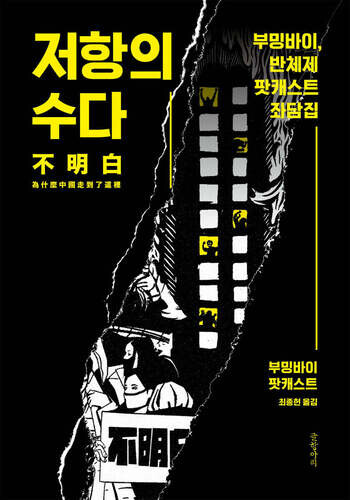
SEOUL, South Korea — A profound literary and journalistic document has emerged from the shadows of China's strict information control: the publication of "The Whispers of Resistance" (저항의 수다), an anthology drawn from the illicitly popular Chinese podcast, "Bù Míng Bái" (不明白, meaning "I don't understand"). This record stands as a vital testament to the deep-seated societal struggles and acts of quiet defiance that unfolded during the zenith of the country's draconian 'Zero-COVID' policies.
A Beacon of Dialogue in a Controlled Environment
The podcast, launched by New York Times columnist Yuan Li using only a mobile phone, first aired in 2022 when the Shanghai lockdown had physically confined millions and severely restricted online speech. At a moment when public discourse had virtually evaporated under omnipresent state surveillance, "Bù Míng Bái" became a secret, high-traffic conversation room—a space where citizens could hear the forbidden truth about their reality.
The podcast’s title, "Bù Míng Bái," itself embodies a subtle form of resistance, suggesting a collective perplexity and doubt toward the opaque, often irrational government mandates. It dared to host a diverse range of voices—from political scientists and migrant workers to small business owners—who shared their candid experiences and analytical perspectives on the crisis.
The Book: Compiling Forbidden Testimonies
The recently translated book, published by Geulhangari in Korea, compiles 25 essential interviews from the podcast's two-year run, which has exceeded 100 episodes. It sharply critiques the structural issues laid bare by the pandemic, including the political rationale behind Zero-COVID, the oppressive health code surveillance system, and the devastating survival crises faced by ordinary citizens under prolonged lockdowns.
The anthology features the incisive analysis of noted political scholars like Cai Xia and Peimin Xin, alongside the painful testimonies of migrant workers (nóngmínggōng, 农民工). These "forbidden words," which were only fleetingly heard via digital streams, are now vividly preserved on paper.
A significant cultural detail highlighted in the book is the unique way Chinese youth consumed the content. When censorship successfully blocked access to the podcast audio, young listeners turned to reading the transcribed excerpts and summaries, a phenomenon that underscores the intense hunger for uncensored information and the persistent ingenuity of information sharing within China’s highly controlled ecosystem.
More Than Policy Failure: The Spirit of Questioning
"The Whispers of Resistance" is far more than a mere chronicle of policy failures. It documents the critical process through which Chinese citizens have begun to reclaim their ability to question and to forge a language of resistance amidst intense control and repression.
The voices captured—including participants in the "White Paper movement" (白纸运动), journalists searching for loopholes in state media, and young people advocating for democratic ideals—serve as powerful evidence that a spirit of change remains vibrant within Chinese society. For any international reader seeking an authentic, unvarnished view of contemporary China, this book offers the most immediate and compelling narrative of the present moment. It is a necessary lens for understanding the complex dynamics between state power and individual resilience in the world's most populous nation.
[Copyright (c) Global Economic Times. All Rights Reserved.]