• 2025.12.06 (Sat)
  • All articles
  • LOGIN
  • JOIN
Global Economic Times
APEC2025KOREA가이드북
  • Synthesis
  • World
  • Business
  • Industry
  • ICT
  • Distribution Economy
  • Well+Being
  • Travel
  • Eco-News
  • Education
  • Korean Wave News
  • Opinion
  • Arts&Culture
  • Sports
  • People & Life
  • Column
    • Cho Kijo Column
    • Lee Yeon-sil Column
    • Ko Yong-chul Column
    • Cherry Garden Story
  • Photo News
  • New Book Guide
MENU
 
Home > Industry

South Korea's Youth Unemployment Crisis: A Looming Time Bomb By James Smith

ONLINE TEAM / Updated : 2025-02-02 10:48:29
  • -
  • +
  • Print

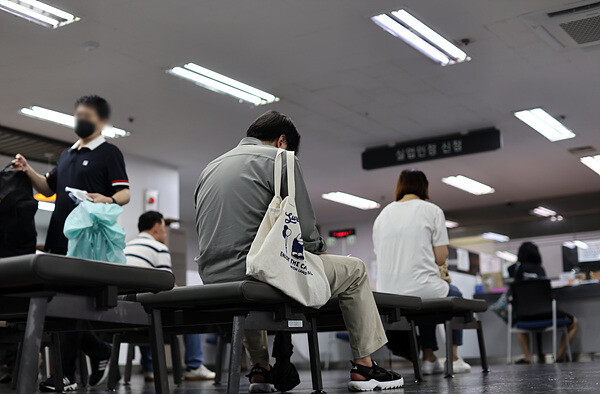
SEOUL – South Korea is facing a growing crisis of youth unemployment, with young people increasingly struggling to find stable jobs and build a secure future. The situation has been exacerbated by the recent economic downturn, which has hit young people particularly hard.

A recent survey by Statistics Korea found that the youth unemployment rate (ages 15-29) stood at 46.1% in 2024, down 0.4% from the previous year. This is in stark contrast to the overall employment rate for those aged 15-64, which rose by 0.3% over the same period.

The survey also found that the number of young people who have given up looking for work altogether has increased by 12.3% in the past year. This suggests that many young people are simply giving up on their job search, which could have long-term consequences for the economy.

One of the main reasons for the high youth unemployment rate is the lack of quality jobs available. Many young people are forced to take low-paying, temporary jobs that offer little in the way of career prospects. This is especially true for those who have not graduated from college.

Another factor contributing to the problem is the rising cost of living in South Korea. Young people are finding it increasingly difficult to afford housing, transportation, and other basic necessities. This makes it even harder for them to find and keep jobs.

The government has taken some steps to address the problem, but they have not been enough to make a significant difference. In 2023, the government launched a program called the "Youth Guarantee," which aims to provide young people with the training and support they need to find jobs. However, the program has been criticized for being too small and for not reaching enough young people.

The youth unemployment crisis is a serious problem that could have long-term consequences for South Korea. If young people are unable to find stable jobs and build a secure future, they may become discouraged and give up on their dreams. This could lead to social unrest and economic stagnation.

The government needs to take more aggressive action to address the problem. This includes creating more quality jobs, making it easier for young people to afford to live, and providing them with the training and support they need to succeed.

[Copyright (c) Global Economic Times. All Rights Reserved.]

ONLINE TEAM
ONLINE TEAM
Reporter Page

Popular articles

  • The Unemployment Paradox: South Korea's Falling Jobless Rate Masks Deeper Economic Woes

  • Seoul Prosecution Joint Investigation Team Clears 'Drug Probe External Pressure' Allegations, Sparking Fierce Backlash from Police Superintendent

I like it
Share
  • Facebook
  • X
  • Kakaotalk
  • LINE
  • BAND
  • NAVER
  • https://globaleconomictimes.kr/article/1065577642882482 Copy URL copied.
Comments >

Comments 0

Weekly Hot Issue

  • JAPAN’S RISING PREDICAMENT: RECORD BEAR ATTACKS STRIKE FEAR ACROSS NATION
  • Trump NSS Declares Europe Faces 'Civilizational Erasure,' Vows to Aid Anti-Immigration Right-Wing Parties
  • Meta's Strategic U-Turn: The AI Race Re-Elevates Real-Time News
  • Gapyeong's Petit France and Italian Village Illuminate Winter with 'Starlight Festival'
  • Grand Opening: Gwangju Museum's Ceramics Culture Center Offers Comprehensive Look at Ceramic History
  • Choi Bun-do, Chairman of PTV Group, Assumes Presidency of the Korean Chamber of Commerce and Industry in South Central Vietnam

Most Viewed

1
Korean War Ally, Reborn as an 'Economic Alliance' Across 70 Years: Chuncheon's 'Path of Reciprocity,' a Strategic
2
A Garden Where the City's Rhythm Stops: Dongdaemun's 'Cherry Garden', Cooking Consideration and Diversity
3
The Sudden Halt of Ayumi Hamasaki's Shanghai Concert: Unpacking the Rising Sino-Japanese Tensions
4
Farewell to a Legend: South Korea Mourns the Passing of Esteemed Actor Lee Soon-jae
5
China’s Anti-Starlink Strategy: Simulation Suggests 2,000 Drones Needed for Taiwan Disruption
광고문의
임시1
임시3
임시2

Hot Issue

EU Unveils €90 Billion Ukraine Aid Plan Backed by Frozen Russian Assets

Seoul's 'Insane Rent' Warning: Why $30,000 Monthly Rent is a Looming Threat Residential Crisis Deepens as Tourist Housing Conversion Hits Supply

Seo Min-kyu Wins Gold at Junior Grand Prix Final... First Korean Since Kim Yuna 20 Years Ago

2026 Overseas Koreans Agency Budget Confirmed at 112.7 Billion Won... 5.3% Increase Year-on-Year

Let’s recycle the old blankets in Jeju Island’s closet instead of incinerating them.

Global Economic Times
korocamia@naver.com
CEO : LEE YEON-SIL
Publisher : KO YONG-CHUL
Registration number : Seoul, A55681
Registration Date : 2024-10-24
Youth Protection Manager: KO YONG-CHUL
Singapore Headquarters
5A Woodlands Road #11-34 The Tennery. S'677728
Korean Branch
Phone : +82(0)10 4724 5264
#304, 6 Nonhyeon-ro 111-gil, Gangnam-gu, Seoul
Copyright © Global Economic Times All Rights Reserved
  • 에이펙2025
  • APEC2025가이드북TV
  • 세종시
Search
Category
  • All articles
  • Synthesis
  • World
  • Business
  • Industry
  • ICT
  • Distribution Economy
  • Well+Being
  • Travel
  • Eco-News
  • Education
  • Korean Wave News
  • Opinion
  • Arts&Culture
  • Sports
  • People & Life
  • Column 
    • 전체
    • Cho Kijo Column
    • Lee Yeon-sil Column
    • Ko Yong-chul Column
    • Cherry Garden Story
  • Photo News
  • New Book Guide
  • Multicultural News
  • Jobs & Workers