![[등록] 2026-09-01 15:48:31](/support/_updata/banner2/tl181982910_6749.png)


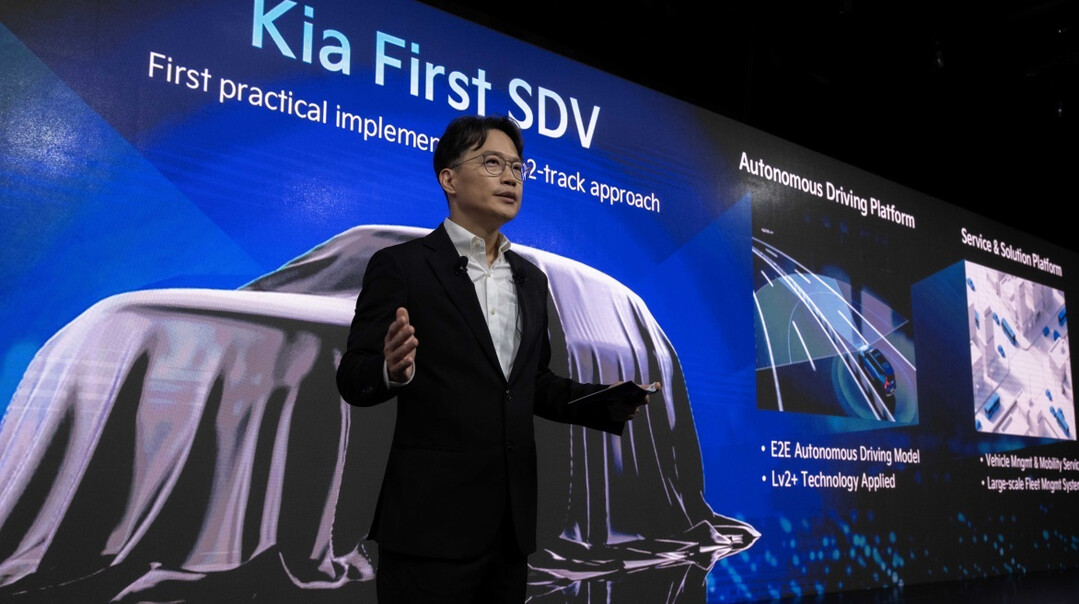
At the 2026 Busan Mobility Show held on June 26, Kia Corporation unveiled a comprehensive future mobility strategy centered on three core pillars: Software-Defined Vehicles (SDV), Purpose-Built Vehicles (PBV), and Extended-Range Electric Vehicles (EREV). During the press day, Kia President Song Ho-sung articulated the company’s commitment to lead the paradigm shift in the global automotive industry by evolving into a personalized mobility platform provider.
Advancing the Software-Defined Vehicle (SDV) Era
Kia aims to achieve a significant leap in its technological capabilities by 2027 with the introduction of its first dedicated SDV model, which will utilize a next-generation architecture. This platform will feature integrated data-processing capabilities and standardized sensors, enabling efficient data collection and continuous performance improvements. By 2029, the company intends to implement Level 2+ autonomous driving functions suitable for urban environments. To support these ambitions, Kia is deepening its partnership with NVIDIA to integrate advanced AI and high-performance computing, ensuring a scalable autonomous driving ecosystem that ranges from driver assistance systems to sophisticated robotics.
PBVs as a Personalized Mobility Solution
Kia has identified PBVs as a critical driver of its long-term growth. Following the launch of the PV5, the company plans to introduce the PV7 and PV9 models to complete a versatile lineup. These vehicles are designed to offer more than 40 distinct body configurations, catering to diverse commercial and personal requirements such as logistics, shuttle services, and leisure. President Song emphasized that Kia is transcending the role of a vehicle manufacturer to become a mobility platform provider, offering integrated solutions that include specialized fleet management tools and dedicated charging services.
Diversifying Electrification and U.S. Market Expansion
In response to fluctuating global demand for battery electric vehicles, Kia is diversifying its powertrain strategy by incorporating EREV technology. Designed to alleviate range anxiety, EREVs use a smaller engine as a generator to charge the battery, providing the benefits of electric driving with greater convenience. Kia is prioritizing the North American market for this rollout, particularly for larger vehicle segments.
Kia’s performance in the United States remains robust, with the brand successfully expanding its market share through a balanced portfolio of internal combustion, hybrid, and electric models. The successful local production of the Sportage Hybrid at the Hyundai Motor Group Metaplant America (HMGMA) in Georgia marks a milestone in the company’s efforts to strengthen its supply chain and meet regional demand. Moving forward, Kia expects that its strong sales momentum, coupled with the introduction of new hybrid variants and future EREV offerings, will allow it to capture a larger share of the global automotive market.
[Copyright (c) Global Economic Times. All Rights Reserved.]