![[등록] 2026-09-01 15:48:31](/support/_updata/banner2/tl181982910_6749.png)


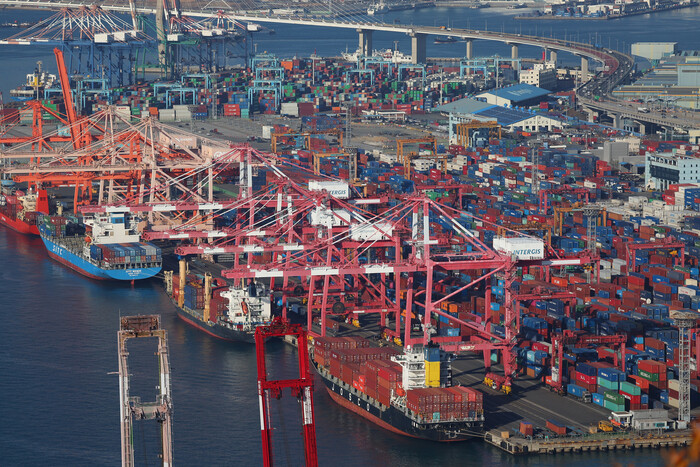
Concerns surrounding the trajectory of the South Korean economy continue to mount as another prominent international organization has delivered a sobering growth forecast for the current year. The ASEAN+3 Macroeconomic Research Office (AMRO), a multilateral institution established by the Association of Southeast Asian Nations (ASEAN), South Korea, China, and Japan, has projected a modest 1.6% expansion for the South Korean economy in 2025, a figure that underscores the increasingly cautious sentiment prevalent among global economic observers. This forecast, reiterated from AMRO's previous month's assessment, places South Korea's growth prospects as the third lowest within the ASEAN+3 bloc, surpassing only the significantly challenged economies of Myanmar (1.0%) and a struggling Japan (1.3%). AMRO's outlook for the subsequent year offers little respite, with a projected growth rate of just 1.9%.
The AMRO report meticulously outlined a confluence of both external and internal headwinds that pose significant downside risks to South Korea's economic vitality. The escalating protectionist trade policies championed by the United States were highlighted as a major source of external uncertainty, potentially disrupting South Korea's export-driven growth model. Furthermore, the tightening of global financial conditions, a consequence of persistent inflationary pressures and the subsequent monetary policy responses from major central banks, is expected to constrain investment and consumption. The anticipated slowdown in the growth of key global economies, which serve as crucial export markets for South Korean goods, further compounds these external vulnerabilities. Finally, the volatile surge in raw material prices, exacerbated by geopolitical tensions and supply chain disruptions, is projected to exert upward pressure on production costs and dampen overall economic activity in the short term.
Adding to the chorus of cautious voices, the Bank of Korea (BOK), the nation's central bank, also maintains a guarded stance on the near-term economic outlook, acknowledging the persistent downside risks that could further erode growth momentum. This cautious assessment has even led some economic analysts to contemplate the unsettling possibility of sub-1% or even near-zero growth for the South Korean economy in the current year, a scenario that would represent a significant deceleration from previous trends and forecasts.
A particularly concerning factor weighing on the economic sentiment is the elevated level of political uncertainty that continues to plague the nation even in the aftermath of the impeachment of former President Yoon Suk-yeol. Data furnished by the BOK to the office of Democratic Party of Korea Congressman Lim Gwang-hyun reveals a 'Political Uncertainty Index' standing at a concerning 2.5 as of April 13th. This index, meticulously constructed by the BOK through the analysis of news articles containing the keywords 'politics' and 'uncertainty,' serves as a barometer of the perceived level of political instability relative to historical norms. A higher index reading signifies a more pronounced deviation from the average, indicating heightened political volatility.
The trajectory of this index provides a stark illustration of the recent political turbulence. In early December of the preceding year, the Political Uncertainty Index registered a benign 0.4-0.5, reflecting a period of relative political stability. However, the declaration of a state of emergency following the impeachment proceedings triggered a dramatic surge in the index, catapulting it to an unprecedented peak of 12.8, indicative of extreme political turmoil. While the index subsequently retreated to a more stable level of 1.4 by the end of February, the period leading up to the Constitutional Court's final ruling on the impeachment has witnessed a renewed uptick in political uncertainty, with the index currently lingering at an elevated level of 2.5. This persistent political instability is widely perceived as a significant impediment to economic recovery and growth, potentially deterring both domestic and foreign investment and undermining consumer confidence.
The confluence of tepid global demand, persistent inflationary pressures, supply chain vulnerabilities, and the lingering specter of domestic political uncertainty paints a challenging picture for the South Korean economy in the year ahead. The repeated downward revisions of growth forecasts by international organizations underscore the growing apprehension surrounding the nation's economic prospects. While the underlying fundamentals of the South Korean economy, including its robust manufacturing sector and technological prowess, remain strong, the prevailing headwinds necessitate prudent policy responses and a concerted effort to mitigate both external shocks and internal fragilities. The ability of the newly formed government to foster political stability, implement effective economic policies, and navigate the complex global landscape will be crucial in determining whether South Korea can weather the current economic storm and return to a path of sustainable growth. The international community will be closely monitoring these developments, as the fate of the South Korean economy holds significant implications for the broader regional and global economic outlook.
[Copyright (c) Global Economic Times. All Rights Reserved.]