• 2026.03.07 (Sat)
  • All articles
  • LOGIN
  • JOIN
Global Economic Times
fashionrunwayshow2026
  • Synthesis
  • World
  • Business
  • Industry
  • ICT
  • Distribution Economy
  • Well+Being
  • Travel
  • Eco-News
  • Education
  • Korean Wave News
  • Opinion
  • Arts&Culture
  • Sports
  • People & Life
    • International Student Report
    • With Ambassador
  • Column
    • Cho Kijo Column
    • Cherry Garden Story
    • Ko Yong-chul Column
    • Kim Seul-Ong Column
    • Lee Yeon-sil Column
  • Photo News
  • New Book Guide
MENU
 
Home > Industry

South Korea's Property Tax Burden to Rise Amidst Government Policy Changes

Hwang Sujin Reporter / Updated : 2024-11-16 10:22:50
  • -
  • +
  • Print


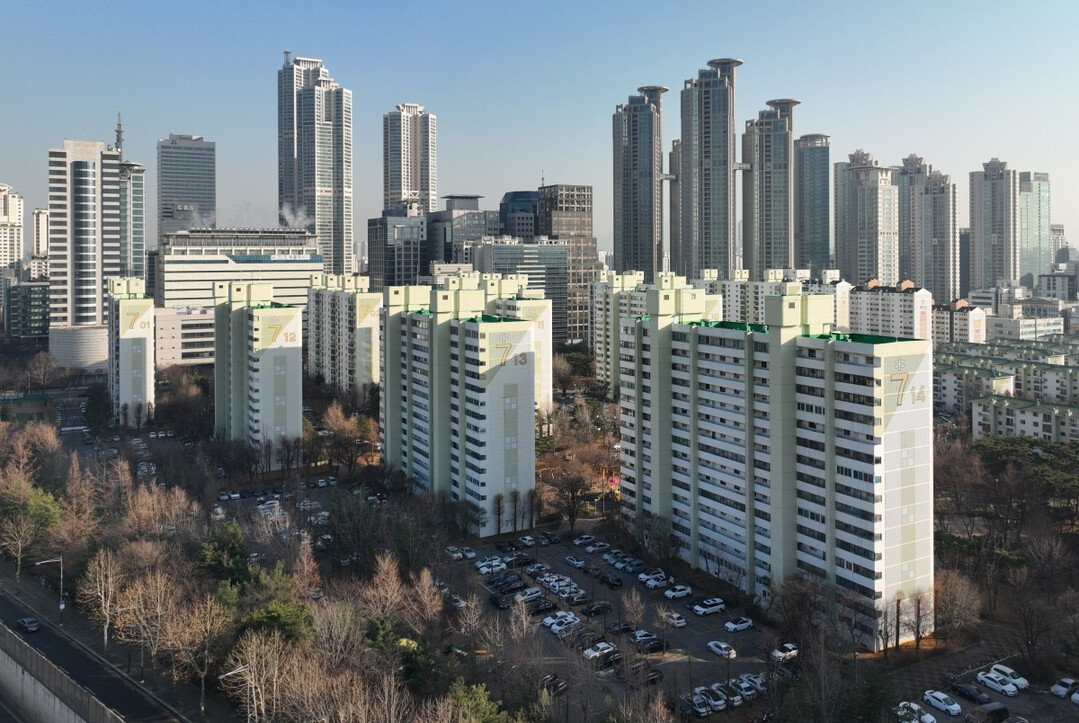
Seoul, South Korea – The South Korean government's decision to adjust property assessment values based solely on market fluctuations in the coming year is set to increase property tax burdens for homeowners, particularly in prime districts like Gangnam, Seocho, and Songpa.

The property assessment value, a key factor in determining property taxes, is calculated by multiplying the market value by a reflection rate. Even if the reflection rate remains constant, a surge in market prices will lead to higher taxes.

A recent analysis by the Maeil Business Newspaper, commissioned by Woo Byung-tak, a real estate expert at Shinhan Bank's Premier Pathfinder, estimates that property taxes for major Seoul apartments could rise by 10% to 30% next year.

For instance, the estimated property tax for an 84 square meter unit at the prestigious Acro River Park complex in Banpo, an area that experienced significant price increases this year, is projected to be 14.079 million won in 2025, a 21.3% increase from the 11.608 million won paid this year. Similarly, the neighboring complex, Raemian Persiage, could see its property tax for an 84 square meter unit jump by 38.8% to 13.311 million won from 9.588 million won.

The government's plan to base property assessments solely on market fluctuations is a departure from the previous administration's policy of gradually increasing the reflection rate to 90% by 2035. However, the rapid rise in property prices and subsequent tax increases have prompted the current government to reconsider this approach.

While the government aims to simplify the property assessment process, the proposed changes have faced opposition from the Democratic Party, which argues that the move could undermine tax fairness and disproportionately burden homeowners in high-priced areas.

As a result, the government is considering a temporary measure to freeze the reflection rate for 2025, pending the passage of legislation. However, experts believe that even with a frozen reflection rate, property taxes are likely to increase due to the continued rise in market prices.

The final property assessment values for 2025 will be announced in March next year. The government is closely monitoring the property market and may adjust its policies accordingly.

[Copyright (c) Global Economic Times. All Rights Reserved.]

Hwang Sujin Reporter

Popular articles

  • Jinju’s ‘Worasan Woodland’ Honored as Top-Tier National Forest Education Hub by Korea Forest Service

  • Tzuyang Reveals Massive Expenses: $33,000 Annual Delivery Bill and "Luxury Car" Monthly Income

  • Court Rules Sequence of Medical Procedures is a Matter of Physician Judgment, Not Patient Choice

I like it
Share
  • Facebook
  • X
  • Kakaotalk
  • LINE
  • BAND
  • NAVER
  • https://globaleconomictimes.kr/article/1065576086728902 Copy URL copied.
Comments >

Comments 0

Weekly Hot Issue

  • ‘The Man Who Lives with the King’ Surpasses 10 Million Viewers, Reviving the Korean Film Market
  • Hanwha Aerospace Solidifies Baltic Stronghold with $330M Defense Investment in Estonia
  • The "Hormuz Nightmare": Global Economy Trembles as Oil Approaches $150
  • U.S. Labor Market Faces Cold Snap: Payrolls Plummet by 92,000 as Unemployment Edges Up to 4.4%
  • White House Forecasts Victory in Iran Within 6 Weeks; Trump Demands "Unconditional Surrender"
  • Global Energy Crisis Ignites as Hormuz Blockade Pushes Oil Past $90; Experts Warn of $150 Peak

Most Viewed

1
Adwa’s Echo in Korea: A Shared Story of Dignity and Freedom
2
2026, The Grand Year of Hangeul Celebration — The River of History Where Five Streams Converge
3
A New Milestone for Ukraine’s Post-War Reconstruction: The Birth of ISVP
4
Mexican currency and the powerful history behind its designs
5
Revised and Expanded Edition of ‘Failure of Negotiations with North Korea: Truth and Solutions’ Published
광고문의
임시1
임시3
임시2

Hot Issue

Hanwha Aerospace Solidifies Baltic Stronghold with $330M Defense Investment in Estonia

From $20 to $400: The Explosive "Vintage Digicam" Craze Gripping Korea’s Gen Z and Millennials

Yujin Robot Evolves Industrial Automation: Integrating Autonomous Mobility and Collaborative Robotics

SK On Slashes 37% of US Workforce Amid Global EV Slowdown

Let’s recycle the old blankets in Jeju Island’s closet instead of incinerating them.

Global Economic Times
korocamia@naver.com
CEO : LEE YEON-SIL
Publisher : KO YONG-CHUL
Registration number : Seoul, A55681
Registration Date : 2024-10-24
Youth Protection Manager: KO YONG-CHUL
Singapore Headquarters
5A Woodlands Road #11-34 The Tennery. S'677728
Korean Branch
Phone : +82(0)10 4724 5264
#304, 6 Nonhyeon-ro 111-gil, Gangnam-gu, Seoul
Copyright © Global Economic Times All Rights Reserved
  • 에이펙2025
  • APEC2025가이드북TV
  • 독도는우리땅
Search
Category
  • All articles
  • Synthesis
  • World
  • Business
  • Industry
  • ICT
  • Distribution Economy
  • Well+Being
  • Travel
  • Eco-News
  • Education
  • Korean Wave News
  • Opinion
  • Arts&Culture
  • Sports
  • People & Life 
    • 전체
    • International Student Report
    • With Ambassador
  • Column 
    • 전체
    • Cho Kijo Column
    • Cherry Garden Story
    • Ko Yong-chul Column
    • Kim Seul-Ong Column
    • Lee Yeon-sil Column
  • Photo News
  • New Book Guide
  • Multicultural News
  • Jobs & Workers