SHANGHAI — Facing a deepening slump in domestic equities amid a broader global market rout, Chinese financial regulators introduced a comprehensive three-point stimulus package on the 22nd aimed at injecting liquidity and reviving battered investor confidence.
The coordinated intervention by the Shanghai, Shenzhen, and Beijing stock exchanges—ranging from looser margin rules to sweeping fee waivers—could theoretically unlock up to 400 billion yuan (roughly $55 billion) in fresh buying power, according to market estimates.
1. Easing Leverage Restrictions
Effective on the 30th, China’s three major bourses will lower the minimum margin financing ratio from 100% back down to 80%. The move reverses a tightening policy implemented in January, when regulators hiked the ratio to curb speculative leverage. With margin trading activity severely contracted and systemic leverage sitting at manageable levels, officials are pivoting back toward supporting market liquidity. Under the revised rule, an investor with 1 million yuan in collateral can now borrow up to 1.25 million yuan to buy shares.
2. Boosting Liquidity on ChiNext
To stabilize its hardest-hit tech sector, the Shenzhen Stock Exchange released draft guidelines to introduce a formal market-maker system for the ChiNext board, opening the proposal to public consultation. By requiring designated brokerages to continuously provide two-way buy and sell quotes, regulators aim to deepen order books and dampen extreme price swings on the startup-heavy index.
3. Multi-Year Trading and Issuance Fee Cuts
In a bid to lower transaction costs across the board, the Shanghai and Shenzhen exchanges rolled out new waivers covering trading unit and database usage fees—a move projected to save market participants more than 4.6 billion yuan annually combined. Existing waivers on listing and bond trading fees will also be extended through 2028. Additionally, the China Securities Depository and Clearing Corporation (CSDC) confirmed it will waive issuer service and settlement fees for green, sci-tech innovation, and private-sector corporate bonds from 2027 through the end of 2028, though convertible bonds remain excluded.
Market Context and Outlook
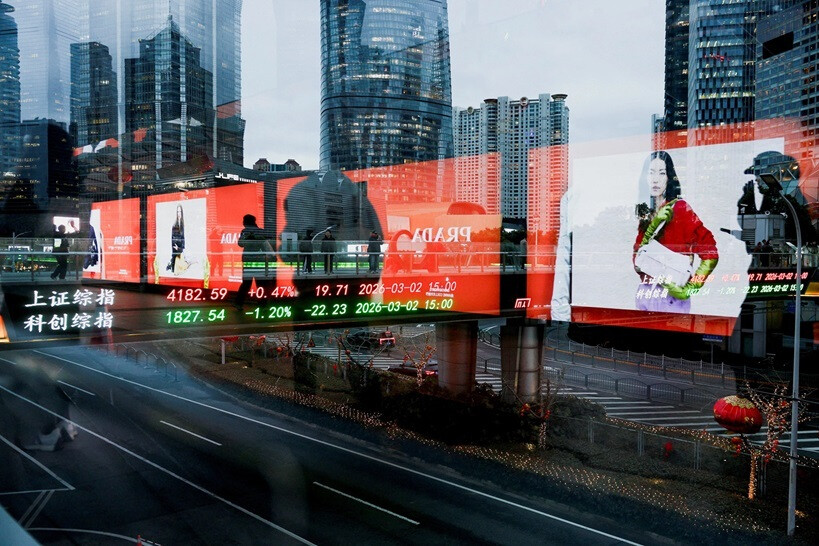
The aggressive policy pivot follows a bruising week for Chinese stocks. While the benchmark Shanghai Composite shed 2.77% and the Shenzhen Component lost 6.49%, the tech-centric ChiNext Index tumbled 8.82%—extending its cumulative decline to over 49% from its late-June peak.
While the dual approach of lowering trading friction and expanding credit capacity underscores Beijing’s urgency to put a floor under falling prices, market analysts caution that a sustained recovery will ultimately hinge on broader macroeconomic sentiment and stabilizing global headwinds.
[Copyright (c) Global Economic Times. All Rights Reserved.]