• 2025.12.08 (Mon)
  • All articles
  • LOGIN
  • JOIN
Global Economic Times
APEC2025KOREA가이드북
  • Synthesis
  • World
  • Business
  • Industry
  • ICT
  • Distribution Economy
  • Well+Being
  • Travel
  • Eco-News
  • Education
  • Korean Wave News
  • Opinion
  • Arts&Culture
  • Sports
  • People & Life
  • Column
    • Cho Kijo Column
    • Lee Yeon-sil Column
    • Ko Yong-chul Column
    • Cherry Garden Story
  • Photo News
  • New Book Guide
MENU
 
Home > Industry

Paraguay Beef Production: 66% Relies on Extensive System, Raising Concerns about Output Decrease

Eugenio Rodolfo Sanabria Reporter / Updated : 2025-05-21 10:07:51
  • -
  • +
  • Print

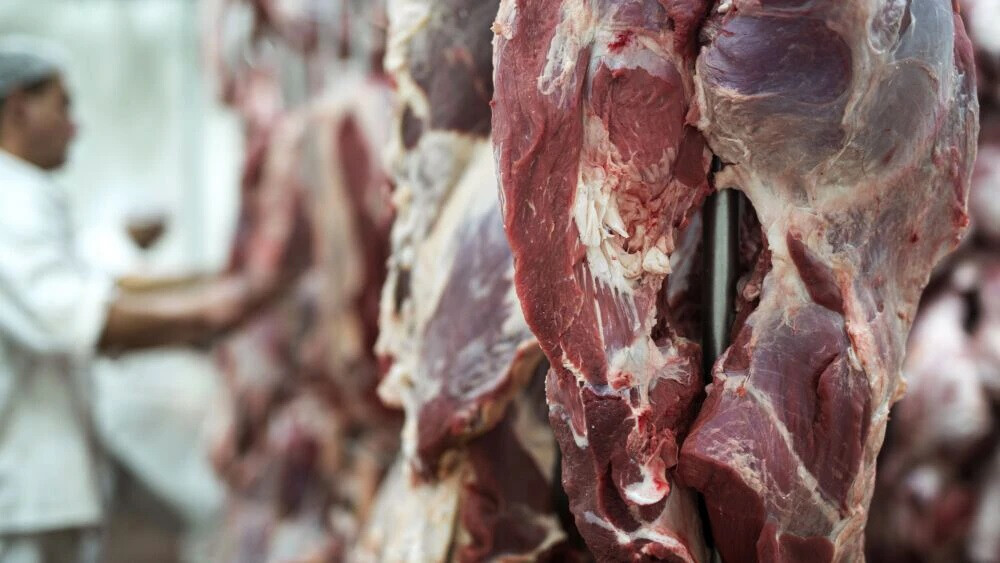
Paraguayan beef production predominantly relies on an extensive system, accounting for 66% of the total output. According to data from the Paraguayan Association of Meat Producers and Exporters (APPEC), while this method, which utilizes vast pastures, enables low production costs, it suffers from a significant disadvantage: its productivity is heavily dependent on climate change and soil quality.

Current Status of Diverse Production Systems

Paraguay's beef production systems are broadly categorized into three types:

Extensive System (66%): This method involves grazing cattle on large natural pastures with minimal technological intervention. While highly cost-efficient due to abundant land, it is sensitive to climatic conditions, which can lead to fluctuations in production volume.
Semi-Intensive System (29%): This approach combines open pasture grazing with supplementary feed provision and incorporates modern hygiene management and technologies. It offers higher and more stable productivity than the extensive system, with greater control over environmental factors.
Intensive System (5%): In this system, cattle are raised in corrals under controlled environments with balanced feed. While it promises rapid growth and high productivity, it demands substantial investment costs and strict environmental management. Although this method offers the highest production efficiency, its adoption rate in Paraguay remains very low.

Declining Cattle Numbers and the Importance of Export Markets

The Paraguayan livestock industry is a crucial driver of the national economy, with meat exports, in particular, consistently growing in the international market and contributing significantly to the economy. However, in 2025, the total cattle population decreased by 3.23% compared to the previous year, with approximately 430,000 fewer cattle. This information was shared by José Carlos Martin, president of the National Animal Health and Quality Service (Senacsa), after the conclusion of the first round of foot-and-mouth disease vaccinations.

The decrease in cattle numbers could impact future beef production, raising concerns about a potential weakening of the competitiveness of Paraguayan beef, a key export commodity. Currently, Paraguay has begun its second period of vaccination against foot-and-mouth disease and bovine brucellosis, which is scheduled to run until June 20. These vaccination efforts are essential for maintaining the international credibility of Paraguayan beef and stabilizing its export markets.

 
Challenges for Sustainable Livestock Farming

Paraguay's livestock industry needs to leverage the advantages of its extensive system, based on abundant natural resources, while also making efforts to prepare for productivity fluctuations due to climate change and to meet the demands of the international market. This requires a policy approach that encourages the transition to semi-intensive and intensive systems, supports technology adoption, and strengthens the capacity of livestock farmers. Furthermore, an in-depth analysis of the declining cattle numbers and the urgent formulation of long-term measures for creating a sustainable livestock environment are critical.

[Copyright (c) Global Economic Times. All Rights Reserved.]

  • #NATO
  • #OTAN
  • #OECD
  • #G20
  • #globaleconomictimes
  • #Korea
  • #UNPEACEKOR
  • #micorea
  • #mykorea
  • #newsk
  • #UN
  • #UNESCO
  • #nammidongane
Eugenio Rodolfo Sanabria Reporter

Popular articles

  • The $30 Mug That Brewed Chaos: Starbucks’ Bearista Cold Cup Sparks Fights and Resale Frenzy

  • Poll Reveals Mixed Japanese Reaction to PM Takaichi’s Taiwan Intervention Remarks

  • Firefly Aerospace Stock Soars on Surprise Q3 Beat and Raised Guidance 

I like it
Share
  • Facebook
  • X
  • Kakaotalk
  • LINE
  • BAND
  • NAVER
  • https://globaleconomictimes.kr/article/1065575207456341 Copy URL copied.
Comments >

Comments 0

Weekly Hot Issue

  • JAPAN’S RISING PREDICAMENT: RECORD BEAR ATTACKS STRIKE FEAR ACROSS NATION
  • Trump NSS Declares Europe Faces 'Civilizational Erasure,' Vows to Aid Anti-Immigration Right-Wing Parties
  • Meta's Strategic U-Turn: The AI Race Re-Elevates Real-Time News
  • Gapyeong's Petit France and Italian Village Illuminate Winter with 'Starlight Festival'
  • Grand Opening: Gwangju Museum's Ceramics Culture Center Offers Comprehensive Look at Ceramic History
  • Choi Bun-do, Chairman of PTV Group, Assumes Presidency of the Korean Chamber of Commerce and Industry in South Central Vietnam

Most Viewed

1
Korean War Ally, Reborn as an 'Economic Alliance' Across 70 Years: Chuncheon's 'Path of Reciprocity,' a Strategic
2
A Garden Where the City's Rhythm Stops: Dongdaemun's 'Cherry Garden', Cooking Consideration and Diversity
3
The Sudden Halt of Ayumi Hamasaki's Shanghai Concert: Unpacking the Rising Sino-Japanese Tensions
4
Farewell to a Legend: South Korea Mourns the Passing of Esteemed Actor Lee Soon-jae
5
Poll Reveals Mixed Japanese Reaction to PM Takaichi’s Taiwan Intervention Remarks
광고문의
임시1
임시3
임시2

Hot Issue

EU Unveils €90 Billion Ukraine Aid Plan Backed by Frozen Russian Assets

Seoul's 'Insane Rent' Warning: Why $30,000 Monthly Rent is a Looming Threat Residential Crisis Deepens as Tourist Housing Conversion Hits Supply

Seo Min-kyu Wins Gold at Junior Grand Prix Final... First Korean Since Kim Yuna 20 Years Ago

2026 Overseas Koreans Agency Budget Confirmed at 112.7 Billion Won... 5.3% Increase Year-on-Year

Let’s recycle the old blankets in Jeju Island’s closet instead of incinerating them.

Global Economic Times
korocamia@naver.com
CEO : LEE YEON-SIL
Publisher : KO YONG-CHUL
Registration number : Seoul, A55681
Registration Date : 2024-10-24
Youth Protection Manager: KO YONG-CHUL
Singapore Headquarters
5A Woodlands Road #11-34 The Tennery. S'677728
Korean Branch
Phone : +82(0)10 4724 5264
#304, 6 Nonhyeon-ro 111-gil, Gangnam-gu, Seoul
Copyright © Global Economic Times All Rights Reserved
  • 에이펙2025
  • APEC2025가이드북TV
  • 세종시
Search
Category
  • All articles
  • Synthesis
  • World
  • Business
  • Industry
  • ICT
  • Distribution Economy
  • Well+Being
  • Travel
  • Eco-News
  • Education
  • Korean Wave News
  • Opinion
  • Arts&Culture
  • Sports
  • People & Life
  • Column 
    • 전체
    • Cho Kijo Column
    • Lee Yeon-sil Column
    • Ko Yong-chul Column
    • Cherry Garden Story
  • Photo News
  • New Book Guide
  • Multicultural News
  • Jobs & Workers