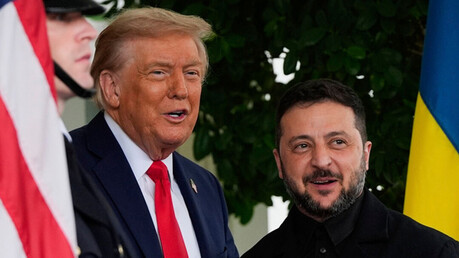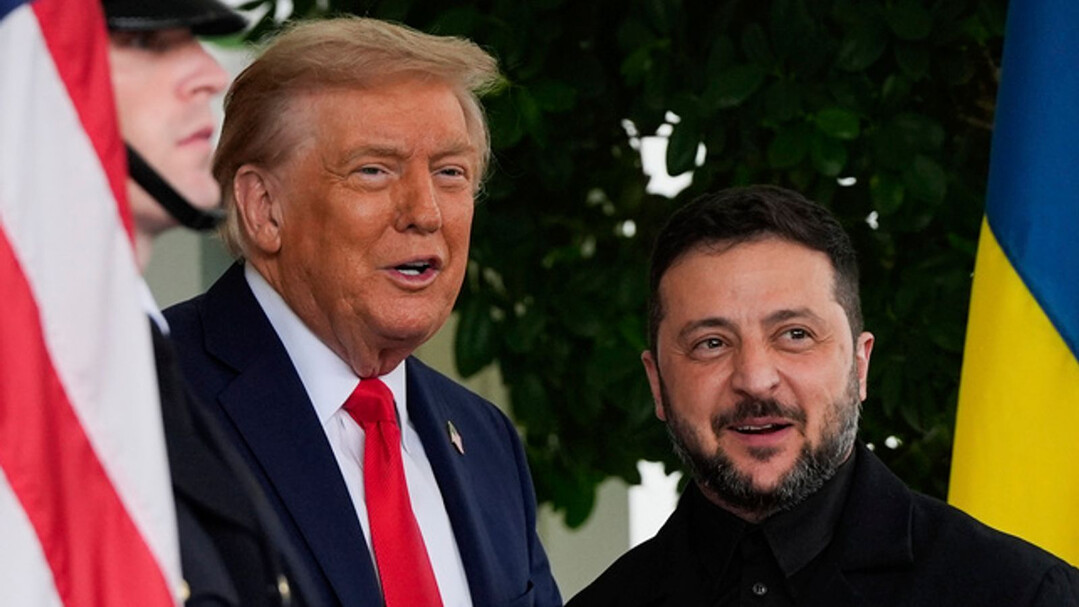
The United States has reportedly probed Ukraine regarding whether it would withdraw troops from the eastern Donbas region in exchange for NATO membership.
While Ukrainian President Volodymyr Zelenskyy rejected the idea of an immediate pullout, he indicated that any final peace deal involving territorial concessions could be put to a national referendum, provided sufficient security guarantees and reconstruction aid are secured.
Meanwhile, Russia has escalated its demands, pressing not only for total Ukrainian withdrawal from Donbas but also for NATO to pull its military forces back to 1997 levels and restrict the nuclear deterrent capabilities of the UK and France.
The United States has floated a controversial proposal to Ukrainian leadership, exploring whether Kyiv would be willing to surrender the eastern Donbas region in exchange for eventual membership in the North Atlantic Treaty Organization (NATO).
According to Ukrainian President Volodymyr Zelenskyy, U.S. negotiators recently raised the possibility during high-stakes diplomatic contacts, marking the first time Washington has directly linked territorial concessions in Donbas to NATO security guarantees.
Speaking to reporters, Zelenskyy revealed that American envoys asked him: "What if Ukraine joins NATO? Would you be willing to withdraw from Donbas in return?"
While dismissing an unconditional retreat, Zelenskyy stated that any comprehensive peace agreement could potentially be submitted to the Ukrainian public via a national referendum—if and only if Western allies deliver ironclad security guarantees, ongoing military support, and robust reconstruction financing.
"I do not have the unilateral authority to bypass this procedure," Zelenskyy emphasized, noting that any such decision must ultimately rest with the Ukrainian people.
Moscow’s Demands Reach Beyond Donbas
While Washington attempts to engineer a land-for-security trade-off, Moscow has introduced sweeping counter-demands that complicate potential diplomatic breakthroughs.
According to reports from the New York Times, Russian representatives at recent trilateral talks in Abu Dhabi demanded that NATO roll back its military footprint and infrastructure to 1997 deployment levels. This includes pulling troops out of eastern European member states such as Poland and the Baltic nations, while permanently halting any further alliance expansion.
Furthermore, Moscow has resurrected hardline demands originally formulated ahead of its 2022 invasion—prohibiting Western arms supplies to Ukraine and restricting the defensive nuclear capabilities of the United Kingdom and France. Russia has also insisted that Ukraine’s prospective accession to the European Union be permitted only under conditions that exclude Kyiv from participating in the EU's common defense policy.
Obstacles to a Breakthrough
Political analysts note that the U.S. proposal faces steep structural barriers. For Ukraine, abandoning the heavily fortified western portions of the Donetsk region would hand Russia vital strategic territory. For Kyiv to accept NATO protection in return, all 30-plus member states would need to unanimously approve Ukraine’s accession—a steep political hurdle given current geopolitical divisions.
At the same time, Russian President Vladimir Putin remains vehemently opposed to Ukrainian integration into Western security architectures. As diplomats struggle to narrow the gap between maximum demands and battlefield realities, attention is turning toward upcoming high-level international summits, where world leaders are expected to continue addressing the complex security crisis in Eastern Europe.
[Copyright (c) Global Economic Times. All Rights Reserved.]