• 2026.11.15 (Sun)
  • All articles
  • LOGIN
  • JOIN
Global Economic Times
한인동포뉴스(상단)
  • Synthesis
  • World
  • Business
  • Industry
  • ICT
  • Distribution Economy
  • Well+Being
    • Pet Life
    • Halal Horizon
  • Travel
  • Eco-News
  • Education
  • Korean Wave News
  • Opinion
  • Arts&Culture
  • Sports
  • People & Life
    • International Student Report
    • With Ambassador
  • Column
    • Cho Kijo Column
    • Cherry Garden Story
    • Ko Yong-chul Column
    • Kim Bong-seon's Photo Column
    • Kim Seul-Ong Column
    • Lee Yeon-sil Column
    • Professor Lee Soo-young’s Life Essays
  • Photo News
  • New Book Guide
MENU
 
Home > Distribution Economy

South Korea’s Semiconductor "Debt-Driven" Investments Nearing 7 Trillion Won Spark Market Volatility Concerns

Desk / Updated : 2026-11-15 09:49:10
  • -
  • +
  • Print


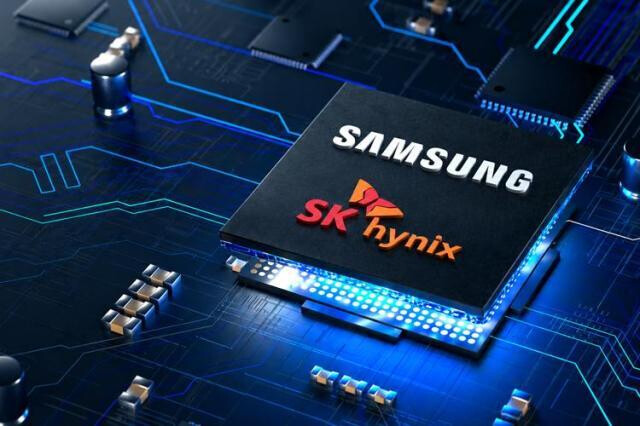
Borrowing to invest in South Korea’s stock market has become heavily concentrated in tech heavyweights Samsung Electronics and SK Hynix, raising alarms over potential cascading effects during market downturns.

According to financial data provider FnGuide on November 15, the margin loan balance for Samsung Electronics stood at 3.6358 trillion won ($2.6 billion) as of November 12, while SK Hynix recorded 3.3311 trillion won ($2.4 billion). Combined, the debt tied to these two semiconductor giants reaches nearly 6.97 trillion won, accounting for roughly 27.2% of the total margin loan balance across the country’s main bourse and secondary market. Within the main KOSPI market alone, their share surges to 36.5%.

Margin trading involves investors borrowing capital from brokerage firms to purchase shares. Historically, such leveraged funds flowed into speculative theme stocks or small-to-mid-cap equities prone to sharp short-term price swings. However, market experts note an unprecedented shift where two of the nation's premier flagship chipmakers dominate the margin pool.

This phenomenon represents a sharp departure from past trends. Between 2020 and 2023, the combined margin share of Samsung and SK Hynix hovered strictly in the single digits, dipping as low as 2.71% in 2023 and staying under 7% through last year. The tide began to turn late last year, breaking into the double digits before crossing the 20% threshold in May. By August 12, their combined share spiked to 33.6%. Although down from that summer peak, the current ratio remains remarkably high compared to historical averages.

The surge in margin demand was initially fueled by growing optimism surrounding artificial intelligence (AI) growth cycles. Earlier this year, soaring enthusiasm for the semiconductor boom propelled the two tech giants far ahead of broader market indexes. However, as uncertainties regarding AI supply chain profitability and the liquidation of single-stock leverage exchange-traded funds (ETFs) triggered wild price fluctuations, outstanding margin balances ballooned.

Market data illustrates this volatile roller coaster. Prior to hitting a peak on June 22, the KOSPI index rallied 116.3%, while Samsung Electronics and SK Hynix skyrocketed 194.8% and 348.4%, respectively. Yet, during the subsequent pullback through November 13, the KOSPI dropped 42% from its high, while Samsung and SK Hynix suffered steep declines of 41.7% and 58.3%, respectively—underperforming the broader index on the way down.

Financial analysts warn that such heavy concentration of leveraged debt acts as a double-edged sword. While it amplifies upward momentum during bull runs, it dramatically increases the risk of forced liquidation (margin calls) when prices correct. Because these two chipmakers carry heavy weight in the benchmark index, sudden selling pressures stemming from forced liquidations could easily trigger a ripple effect across the entire domestic stock market.

While total national margin loans have recently retreated to the 25 trillion won range—marking their lowest levels this year—investor sentiment toward chip stocks remains fragile amid lingering debates over AI profitability and growing management uncertainties surrounding Nvidia.

In response, regulatory authorities have stepped in to mitigate immediate risks while keeping a tight rein on debt expansion. Since November 9, financial regulators have temporarily waived the strict mandate requiring brokerages to maintain a 140% collateral-to-loan ratio, granting institutions breathing room to delay forced sell-offs through January 31 of next year. Concurrently, the Financial Supervisory Service (FSS) urged nine major comprehensive financial investment business operators during a meeting on November 12 to maintain rigorous self-regulatory limits on stock- and borrower-specific loans to prevent the regulatory relief from triggering a reckless resurgence in leveraged trading.

[Copyright (c) Global Economic Times. All Rights Reserved.]

  • #Cherry Garden
  • #HalalFood
  • #Halal
  • #Petlife
  • #Halalhorizone
  • #Hormuz Impasse
  • #Joseon
  • #globaleconomictimes
  • #micore
Desk
Desk

Popular articles

  • North Korea Test-Fires Cruise Missiles Capable of Carrying Nuclear Warheads from 3,000-Ton Submarine for the First Time

  • DS Securities: "European Defense Stocks Shift Trend, Raising Potential for Korean Defense Sector Gains"

  • Beijing Demands Washington Deliver on Tariff Cuts to Unlock U.S. Farm Exports

I like it
Share
  • Facebook
  • X
  • Kakaotalk
  • LINE
  • BAND
  • NAVER
  • https://globaleconomictimes.kr/article/1065574095370689 Copy URL copied.
Comments >

Comments 0

Weekly Hot Issue

  • US Explores 'Donbas for NATO' Proposal as Peace Talks Encounter Major Hurdles
  • Continuing U.S. Flight Disruption Crisis: 4,100 Flights Canceled on the 14th
  • Fixing the Flaws: Western Startups Clean Up Chinese AI for Global Corporate Use
  • Do Foreigners Who Migrated to Korea to Escape Civil War at Age 8 Have to Pay Health Insurance Premiums Upon Turning 19?
  • Landmark Court Ruling: 70-Year-Old Veteran Chef’s Fatal Cardiac Arrest Recognized as Occupational Hazard
  • SpaceX Marks Milestone as Starship Upper Stage Secured in Tower's Mechanical Arms

Most Viewed

1
South Korea and Ethiopia Sign Trilateral MOU to Introduce Liquid-Based Cytology (LBC) Technology for Cervical Cancer Diagnosis
2
US Army Conducts Rare Temporary Burial Drills to Prepare for Worst-Case Large-Scale War Scenarios
3
From Kim Whanki to Pokémon Cards... Seoul Auction Opens the Floodgates
4
Meeting Christmas Early!… Busan Dessert Sales Event "Daldal The Market" Held
5
World Citizens are Flying Directly to Busan... The Era of 4 Million Foreigners is Just Around the Corner
체리가든 스토리
nutri huevos
로타리
동포저널

Hot Issue

Continuing U.S. Flight Disruption Crisis: 4,100 Flights Canceled on the 14th

US Explores 'Donbas for NATO' Proposal as Peace Talks Encounter Major Hurdles

Fixing the Flaws: Western Startups Clean Up Chinese AI for Global Corporate Use

Fashion Runway Show 2026

Let’s recycle the old blankets in Jeju Island’s closet instead of incinerating them.

Global Economic Times
korocamia@naver.com
CEO : LEE YEON-SIL
Publisher : KO YONG-CHUL
Registration number : Seoul, A55681
Registration Date : 2024-10-24
Youth Protection Manager: KO YONG-CHUL
Singapore Headquarters
5A Woodlands Road #11-34 The Tennery. S'677728
Korean Branch
Phone : +82(0)10 4724 5264
#304, 6 Nonhyeon-ro 111-gil, Gangnam-gu, Seoul
Copyright © Global Economic Times All Rights Reserved
  • News K
  • 반달곰 프로젝트
  • 광고문의
Search
Category
  • All articles
  • Synthesis
  • World
  • Business
  • Industry
  • ICT
  • Distribution Economy
  • Well+Being 
    • 전체
    • Pet Life
    • Halal Horizon
  • Travel
  • Eco-News
  • Education
  • Korean Wave News
  • Opinion
  • Arts&Culture
  • Sports
  • People & Life 
    • 전체
    • International Student Report
    • With Ambassador
  • Column 
    • 전체
    • Cho Kijo Column
    • Cherry Garden Story
    • Ko Yong-chul Column
    • Kim Bong-seon's Photo Column
    • Kim Seul-Ong Column
    • Lee Yeon-sil Column
    • Professor Lee Soo-young’s Life Essays
  • Photo News
  • New Book Guide
  • Overseas Koreans
  • Multicultural News