• 2026.06.20 (Sat)
  • All articles
  • LOGIN
  • JOIN
Global Economic Times
fashionrunwayshow2026
  • Synthesis
  • World
  • Business
  • Industry
  • ICT
  • Distribution Economy
  • Well+Being
  • Travel
  • Eco-News
  • Education
  • Korean Wave News
  • Opinion
  • Arts&Culture
  • Sports
  • People & Life
    • International Student Report
    • With Ambassador
  • Column
    • Cho Kijo Column
    • Cherry Garden Story
    • Ko Yong-chul Column
    • Kim Seul-Ong Column
    • Lee Yeon-sil Column
  • Photo News
  • New Book Guide
MENU
 
Home > Distribution Economy

Why Gas Prices in South Korea Remain Above 2,000 Won Despite U.S.-Iran Cease-fire

Global Economic Times Reporter / Updated : 2026-06-20 09:45:07
  • -
  • +
  • Print


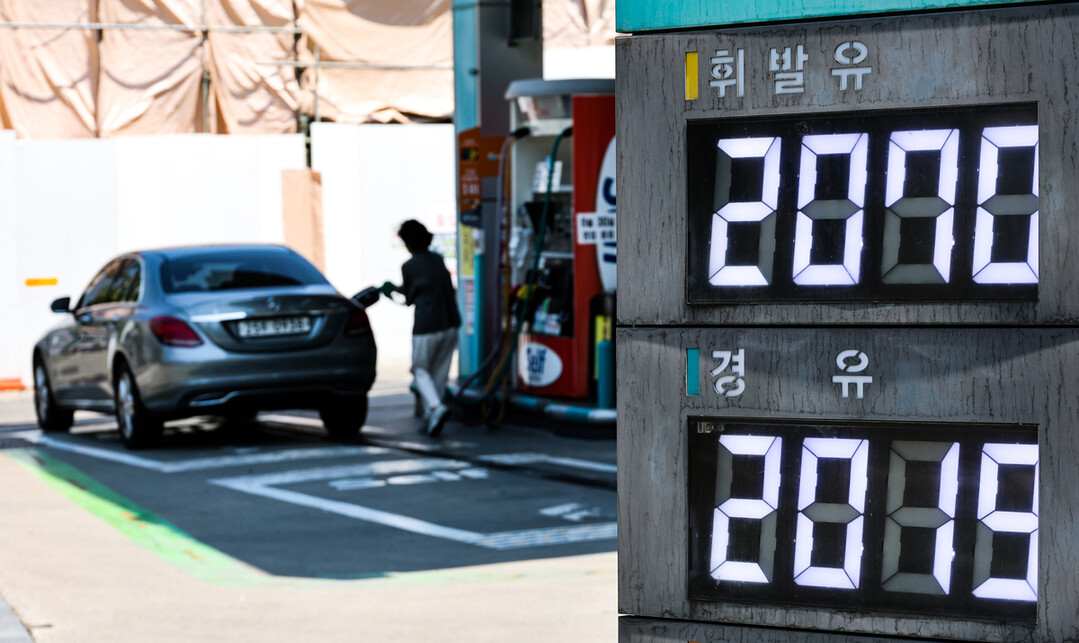
Despite the recent breakthrough in the U.S.-Iran conflict and a subsequent drop in international oil prices, South Korean motorists are yet to see significant relief at the pump. As of the third week of June, the national average gasoline price in South Korea stands at 2,009.2 won per liter, remaining above the 2,000-won threshold for five consecutive weeks. 

The Lag in Market Reflection
The primary reason for this persistence is the "supply lag." It typically takes two to three weeks for crude oil purchased at international market prices to be transported, refined, and distributed to local gas stations. Currently, gas stations are still selling fuel supplies that were purchased at higher costs during the peak of the recent tensions. 

Furthermore, the strength of the U.S. dollar against the Korean won has blunted the positive impact of falling global oil prices. Because crude oil is traded in dollars, the high exchange rate—hovering above 1,500 won—offsets the benefits of cheaper oil imports. 

Government Price Caps and Economic Uncertainty
Adding another layer of complexity is the South Korean government’s fuel price ceiling system. On June 18, the government extended the sixth round of its price cap, maintaining maximum wholesale prices at 1,934 won for gasoline and 1,923 won for diesel.

While this policy was designed to shield consumers from extreme volatility, it has created a "dilemma" for the government. Prolonged price controls have strained the national budget, with estimated compensation costs to refiners exceeding 3 trillion won, and have led to a surge in closures for independently owned gas stations struggling with razor-thin margins. 

The Ministry of Trade, Industry and Energy remains cautious about lifting these caps. Although a Memorandum of Understanding (MoU) between the U.S. and Iran was signed on June 17, aimed at ending military operations and reopening the Strait of Hormuz, officials argue that the supply chain has not yet fully normalized. The government plans to monitor the stability of the Strait—which handles roughly 20% of the world’s petroleum—before deciding on the seventh round of price adjustments or a total phase-out of the policy. 

When Will Prices Fall?
Industry experts suggest that for domestic pump prices to consistently drop below the 2,000-won mark, international crude oil needs to stabilize further, ideally around the $70-per-barrel range. While the recent MoU is a positive sign, the lingering effects of the war, the need to replenish strategic reserves, and the necessity of clearing existing high-cost inventories mean that a return to pre-war price levels will likely be a gradual process. 

For now, the government continues to prioritize stability over a swift return to market-driven pricing, keeping a watchful eye on the fragile peace in the Middle East.

[Copyright (c) Global Economic Times. All Rights Reserved.]

  • #Hormuz Impasse
  • #globaleconomictimes
  • #micorea
  • #mykorea
  • #nammidonganews
  • #singaporenewsk
  • #Samsung
  • #Daewoo
  • #Hyos
Global Economic Times Reporter
Reporter Page

Popular articles

  • [Interview] From Radiant Actor to Warm Companion… Actor Han Ji-il’s Great Second Act of Life

  • U.S. Holds Off on Immediate Comprehensive Semiconductor Tariffs, but Pressure Mounts for Samsung and SK Hynix to Accelerate Domestic Investments

  • [Interview] "Halal is Not a Religious Regulation, but a 'Trust Infrastructure'… Creating a Premium 'K-Halal' Centered on Data and Platforms"

I like it
Share
  • Facebook
  • X
  • Kakaotalk
  • LINE
  • BAND
  • NAVER
  • https://globaleconomictimes.kr/article/1065573832065277 Copy URL copied.
Comments >

Comments 0

Weekly Hot Issue

  • Beyond the Propaganda: North Korea’s "Luxury" Food Display and the Reality of Growing Inequality
  • Navigating Genetic Testing: Understanding Your Hereditary Cancer Risk
  • The Hidden Price of Conflict: The $132 Billion Economic Toll of the Iran-U.S. War on American Households
  • Embassy of Pakistan in Seoul Hosts Commemorative Event for the 150th Birth Anniversary of Muhammad Ali Jinnah
  • Tragedy in LA: Police Shoot and Kill Pet Dog Mistaking Celebration for Distress Call
  • Weight-Loss Drugs Like Wegovy Show Promise in Treating Male Infertility

Most Viewed

1
[In-depth Report] The Islamic ‘Halal Barrier’ Just Around the Corner… The Silent Screams of K-Beauty SMEs
2
[Interview] From Radiant Actor to Warm Companion… Actor Han Ji-il’s Great Second Act of Life
3
SK Telecom Ramps Up AI Drive with New Investment in Anthropic
4
'Hong Se-jin Medicine' Unveiled: Comprehensive Practical Guide on Bloodletting Therapy Published
5
Asking about the Future of ‘Hangeul City Ulsan’… Special Lecture by Novelist Kim Jin-myung to be Held
광고문의
임시1
임시3
임시2

Hot Issue

The "BTS Effect": How a K-Pop Mega-Event Transformed Busan’s Economy

President Lee Calls for Constitutional Reform of Election Commission Amid Controversy

S. Korean Auto Industry Faces 'Triple Decline' in May, Despite Robust Growth in Eco-friendly Vehicles

Tragedy in LA: Police Shoot and Kill Pet Dog Mistaking Celebration for Distress Call

Fashion Runway Show 2026

Global Economic Times
korocamia@naver.com
CEO : LEE YEON-SIL
Publisher : KO YONG-CHUL
Registration number : Seoul, A55681
Registration Date : 2024-10-24
Youth Protection Manager: KO YONG-CHUL
Singapore Headquarters
5A Woodlands Road #11-34 The Tennery. S'677728
Korean Branch
Phone : +82(0)10 4724 5264
#304, 6 Nonhyeon-ro 111-gil, Gangnam-gu, Seoul
Copyright © Global Economic Times All Rights Reserved
  • 향기네무료급식
  • BCB부천방송
  • 반달곰 프로젝트
Search
Category
  • All articles
  • Synthesis
  • World
  • Business
  • Industry
  • ICT
  • Distribution Economy
  • Well+Being
  • Travel
  • Eco-News
  • Education
  • Korean Wave News
  • Opinion
  • Arts&Culture
  • Sports
  • People & Life 
    • 전체
    • International Student Report
    • With Ambassador
  • Column 
    • 전체
    • Cho Kijo Column
    • Cherry Garden Story
    • Ko Yong-chul Column
    • Kim Seul-Ong Column
    • Lee Yeon-sil Column
  • Photo News
  • New Book Guide
  • Multicultural News
  • Jobs & Workers