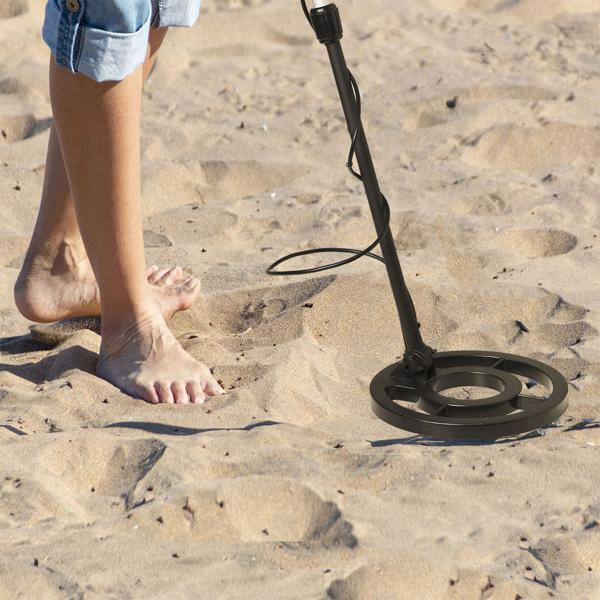
LONDON — Exhausted by the relentless pace of artificial intelligence and endless social media feeds, a growing wave of Britons—including younger generations—is logging off and heading into the countryside with metal detectors in hand.
Once stereotyped as a niche pastime reserved for retired men, metal detecting is experiencing a major demographic shift. According to Alan Tamblyn, General Secretary of the National Council for Metal Detecting (NCMD), participation across the UK has more than doubled over the past five years, surging from roughly 20,000 to 50,000 enthusiasts, with women and families increasingly joining the ranks.
An Antidote to Digital Burnout
For many newcomers, the appeal lies less in striking it rich and more in mindfulness. Scanning open fields requires patience, forcing practitioners to slow down and anchor themselves in the physical world.
Lucilla Gray, 34, and Eleanor Bruce, 27, from Lincolnshire, picked up the hobby during the pandemic and have spent the last six years unearthing pieces of history, ranging from Roman brooch fragments to Victorian needle cases. Speaking to the BBC, Gray noted that the rhythmic, focused nature of the search quiets an overactive mind and offers a much-needed mental break during stressful periods. Bruce echoed that sentiment, observing that rapid advancements in AI and digital tech are driving people back toward tactile, nostalgic activities.
Beyond the thrill of the hunt, NCMD’s Tamblyn emphasized that simply stepping into quiet, open landscapes to breathe fresh air and listen to wildlife provides a rare sense of restoration in modern life.
Unearthing History and New Passions
While most outings yield modest finds, occasional discoveries carry genuine historical weight. In May 2024, Lincolnshire resident Rafal Wesolowski, 50, uncovered an early medieval silver ring bearing runic inscriptions while detecting in a Dutch field—a find later hailed by local archaeologists as historically significant.
For Wesolowski, who has always favored active outdoor pursuits, the hobby serves as both a grounding exercise and an intellectual gateway. Discovering centuries-old coins and relics has inspired him to dive into history books to research the origins of his finds, while weekend detecting rallies—complete with tent camping and early morning coffee overlooking forests and fields—offer a profound connection to the outdoors.
As digital fatigue continues to mount, sweeping the soil for forgotten relics is proving to be an unexpected cure for the modern mind.
[Copyright (c) Global Economic Times. All Rights Reserved.]