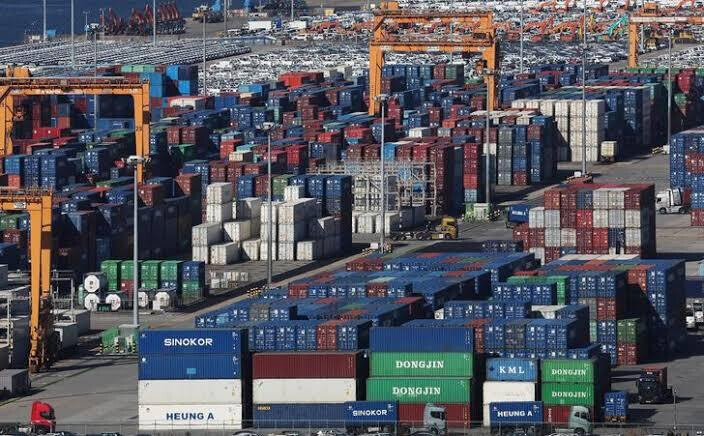
South Korea's import costs experienced a downward correction last month, influenced by a stronger local currency and softening global crude oil markets, according to central bank data released Friday.
The Bank of Korea (BOK) reported that the October import price index dropped 1.8% month-on-month to 156.86. This follows a brief 1.9% rebound in September, breaking a three-month slide that lasted from June through August. On an annual basis, however, the index remains 13.5% higher than a year ago.
The primary driver behind the monthly decrease was the appreciation of the Korean won against the greenback alongside falling petroleum costs. The monthly average exchange rate retreated 1.6% to 1,337.66 won per dollar, while Dubai crude prices slipped 2.6% to average 110.73 dollars per barrel. Measured by contract currencies—stripping out currency fluctuations—import prices saw a minor decline of just 0.2%, indicating that the stronger won accounted for the bulk of the domestic price relief.
Raw material costs led the sectoral declines, shrinking 3.0% due to cheaper mineral products and crude oil. Intermediate goods also dropped 1.0%, offsetting gains in coal and petroleum items with lower prices in primary metals and electrical equipment. Capital and consumer goods retreated by 1.8% and 1.4%, respectively.
Conversely, the nation's trade engine roared ahead, with export volumes achieving an unprecedented milestone. The October export volume index skyrocketed 43.9% compared to the same month last year, hitting 169.44—the highest growth rate ever recorded since data collection began. This momentum was propelled by robust global demand for semiconductors, optical electronics, and machinery tied to artificial intelligence infrastructure. Total export value similarly surged by 107.6% to 276.25.
Import volumes also expanded by 14.9% year-on-year to 134.10, led by inbound shipments of tech components and machinery.
Meanwhile, trade terms presented a mixed picture. The net terms of trade index rose 21.3% from a year earlier to 117.12, though the growth pace tapered down compared to August and September. Analysts attribute this moderation to a slight cooling in semiconductor export price gains combined with lingering effects of higher energy import costs. Despite this, the income terms of trade index climbed 74.6% to 198.45, setting a new all-time record for the third straight month thanks to the combination of favorable trade terms and explosive export volume growth.
[Copyright (c) Global Economic Times. All Rights Reserved.]