• 2026.03.06 (Fri)
  • All articles
  • LOGIN
  • JOIN
Global Economic Times
fashionrunwayshow2026
  • Synthesis
  • World
  • Business
  • Industry
  • ICT
  • Distribution Economy
  • Well+Being
  • Travel
  • Eco-News
  • Education
  • Korean Wave News
  • Opinion
  • Arts&Culture
  • Sports
  • People & Life
    • International Student Report
    • With Ambassador
  • Column
    • Cho Kijo Column
    • Cherry Garden Story
    • Ko Yong-chul Column
    • Kim Seul-Ong Column
    • Lee Yeon-sil Column
  • Photo News
  • New Book Guide
MENU
 
Home > Industry

Paraguay Postpones Implementation of New Technical Specifications for Petroleum-Derived Liquid Fuels, Announces Strict Government Control

Eugenio Rodolfo Sanabria Reporter / Updated : 2025-04-25 08:17:22
  • -
  • +
  • Print
Government Aims to Improve Fuel Quality and Protect the Environment… Intensifies Technical Support and Inspections for Gas Station Operators

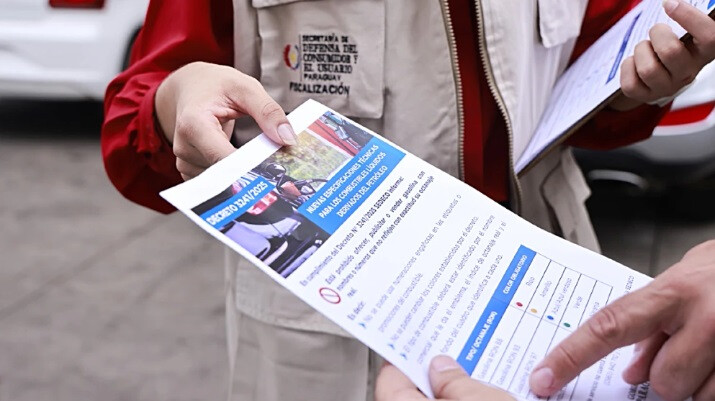
The Paraguayan government has announced the postponement of the enforcement date for Decree 3241/25, which stipulates new technical specifications for petroleum-derived liquid fuels, and will implement strict quality control starting in June. Marcelo Benítez, Director of Fuels at the Ministry of Industry and Commerce (MIC), stated in an interview with local media outlet Última Hora (ÚH) that the decree's implementation date was delayed from early May to June at the request of the gas station industry.

Director Benítez added that a series of inspections will be conducted during the postponement period to manage fuel quality. The primary goal of the inspections, which began on the 24th, is to raise awareness among gas station operators nationwide regarding proper practices for fuel handling and management, and to provide technical recommendations.

In particular, the current inspections will focus on the biofuel blending ratios for gasoline and diesel sold at all gas stations. Gasoline must be sold in a form blended with 30% ethanol, and Type 3 diesel (regular diesel) must be blended with 5% biodiesel. This is in accordance with the government's mandatory biofuel blending policy. Paraguay has been implementing the mandatory blending of biofuels with petroleum fuels since July 2023, and these inspections are seen as a measure to verify the implementation status of this policy and strengthen regulatory oversight.

One of the key provisions of the new decree is the reclassification of commercial gasoline. Instead of the existing octane rating system, new names and color codes will be introduced to make it easier for consumers to identify fuel types. Specifically, RON (Research Octane Number) 88 will be renamed 'Rojo (Red)', 93 as 'Amarillo (Yellow)', 97 as 'Azul (Blue)', and 98 as 'Verde (Green)'. This change is expected to provide consumers with clearer information for fuel selection and prevent confusion.

Director Benítez emphasized, "This new decree fundamentally aims to improve fuel quality," and explained, "For example, it will bring noticeable improvements in terms of environmental aspects and fuel storage." He added that the mandatory biofuel blending will have a positive impact on environmental protection, and the new fuel classification system will enhance consumer convenience.

Meanwhile, the Ministry of Industry and Commerce, in cooperation with the National Institute of Technology and Standardization (INTN) and the Consumer Protection Agency (Sedeco), has already begun surveillance activities on the quality level of liquid fuels. These surveillance activities target the overall fuel quality, including the blending ratios of ethanol and biodiesel. The government plans to establish fuel quality standards, eradicate illegal fuel distribution, protect consumer rights, and reduce environmental pollution through these measures.

Experts predict that this government action will have a positive long-term impact on Paraguay's fuel market. Improved fuel quality can lead to better vehicle performance and reduced emissions, contributing to environmental protection, and transparent fuel information can help consumers make rational choices. However, they also point out that the successful implementation of the new regulations requires continuous government supervision and active cooperation from the gas station industry.

The government stated that it will continue to conduct surveillance and inspection activities on fuel quality and will make additional policy efforts as necessary to ensure a stable supply of high-quality fuel to consumers.

[Copyright (c) Global Economic Times. All Rights Reserved.]

  • #NATO
  • #OTAN
  • #OECD
  • #G20
  • #globaleconomictimes
  • #Korea
  • #UNPEACEKOR
  • #micorea
  • #mykorea
  • #newsk
  • #UN
  • #UNESCO
  • #nammidongane
Eugenio Rodolfo Sanabria Reporter

Popular articles

  • Japan Seizes Chinese Fishing Vessel off Nagasaki for the First Time in 4 Years

  • Florida Legislature Passes Bill to Rename Palm Beach Airport After Donald J. Trump

  • The Secret Behind the 'Modern Kim Seon-dal': How Coway Became Malaysia’s National Brand

I like it
Share
  • Facebook
  • X
  • Kakaotalk
  • LINE
  • BAND
  • NAVER
  • https://globaleconomictimes.kr/article/1065568597226834 Copy URL copied.
Comments >

Comments 0

Weekly Hot Issue

  • The Illusion of a "Stress-Relieving" Smoke: Study Finds Smokers More Prone to Depression
  • From Table to Space: Japan Unveils Edible Spoons Made of Cookies
  • Luckin Coffee Shakes Up Global Market with Blue Bottle Acquisition
  • U.S. Private Sector Hiring Hits 7-Month High in February, ADP Reports
  • Self-Employed Loan Delinquency Rates Double in a Decade Amid Economic Headwinds
  • Multi-Homeowner Loan Balance Hits 103 Trillion Won; Half Concentrated in Seoul and Gyeonggi

Most Viewed

1
Adwa’s Echo in Korea: A Shared Story of Dignity and Freedom
2
2026, The Grand Year of Hangeul Celebration — The River of History Where Five Streams Converge
3
A New Milestone for Ukraine’s Post-War Reconstruction: The Birth of ISVP
4
Mexican currency and the powerful history behind its designs
5
Revised and Expanded Edition of ‘Failure of Negotiations with North Korea: Truth and Solutions’ Published
광고문의
임시1
임시3
임시2

Hot Issue

South Korean Markets Shaken by "Iran Shock": KOSPI Suffers Historic Rout Amid Soaring Oil and FX Rates

Self-Employed Loan Delinquency Rates Double in a Decade Amid Economic Headwinds

U.S. Private Sector Hiring Hits 7-Month High in February, ADP Reports

Industrial Output Dips in January Amid Semiconductor Adjustments; Middle East Tensions Loom as Wild Card

Let’s recycle the old blankets in Jeju Island’s closet instead of incinerating them.

Global Economic Times
korocamia@naver.com
CEO : LEE YEON-SIL
Publisher : KO YONG-CHUL
Registration number : Seoul, A55681
Registration Date : 2024-10-24
Youth Protection Manager: KO YONG-CHUL
Singapore Headquarters
5A Woodlands Road #11-34 The Tennery. S'677728
Korean Branch
Phone : +82(0)10 4724 5264
#304, 6 Nonhyeon-ro 111-gil, Gangnam-gu, Seoul
Copyright © Global Economic Times All Rights Reserved
  • 에이펙2025
  • APEC2025가이드북TV
  • 독도는우리땅
Search
Category
  • All articles
  • Synthesis
  • World
  • Business
  • Industry
  • ICT
  • Distribution Economy
  • Well+Being
  • Travel
  • Eco-News
  • Education
  • Korean Wave News
  • Opinion
  • Arts&Culture
  • Sports
  • People & Life 
    • 전체
    • International Student Report
    • With Ambassador
  • Column 
    • 전체
    • Cho Kijo Column
    • Cherry Garden Story
    • Ko Yong-chul Column
    • Kim Seul-Ong Column
    • Lee Yeon-sil Column
  • Photo News
  • New Book Guide
  • Multicultural News
  • Jobs & Workers