![[등록] 2026-09-01 15:48:31](/support/_updata/banner2/tl181982910_6749.png)


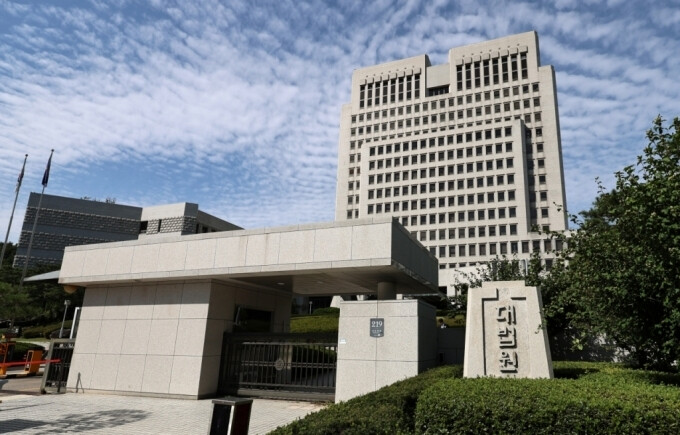
The Supreme Court has ruled that if a landlord refuses a tenant's request for a lease renewal on the grounds of actual residence and later wishes to lease the property to a new tenant, they must prove that there were unavoidable, unforeseeable circumstances at the time of the renewal refusal. According to the legal community on the 12th, the Supreme Court's Second Division (Presiding Justice Kwon Young-joon) finalized an appellate court ruling in favor of the plaintiff last month in a damages lawsuit filed by tenant A against landlord B.
In July 2020, tenant A leased an apartment in Seodaemun-gu, Seoul, from landlord B for two years from September 2020 to September 2022, with a deposit of 660 million won. As the lease was nearing its expiration in May 2022, A requested a renewal, but B refused, stating that B would actually reside in the property. B filed a change of residence notice in September 2022, entered the country in February of the following year, and actually resided there until April 2024. However, in February 2024, B signed a contract to lease the apartment to a third party, a new tenant, with a deposit of 820 million won (lease period from April 2024 to April 2026). In response, A filed a lawsuit seeking damages under the Housing Lease Protection Act, arguing that B had entered into a new lease agreement before the expiration of the two-year period that would have been renewed had the renewal request not been refused.
Article 6-3, Paragraph 5 of the Housing Lease Protection Act stipulates that if a landlord refuses renewal on the grounds of actual residence and then leases the housing to a third party without "justifiable grounds" before the expiration of the renewal period, the landlord must compensate the tenant for damages incurred. The core issue of this lawsuit was whether "justifiable grounds" could be recognized for B. During the trial process, B argued that tenants of six units in a multi-family housing property shared with B's spouse simultaneously demanded the return of their deposits, resulting in a total deposit refund burden of 690 million won, creating severe financial pressure. B claimed that because of having no income, making loans impossible, and facing capital gains tax of about 300 million won even if the house were sold, B had no choice but to lease it to a third party. The first-instance court viewed B's situation as an "unforeseeable circumstance" and ruled in favor of the landlord. It held that the simultaneous demand for deposit refunds by multi-family tenants, as lease risk emerged socially due to the jeonse fraud issue at the end of 2022, corresponded to a circumstance B could not have foreseen at the time of refusing A's renewal request. However, the second-instance court overturned this and ruled that B must compensate A for damages. It reasoned that B's multi-family deposit refund obligation already existed at the time of the renewal refusal, and the fact that the lease period would end in February 2024 requiring the fulfillment of the refund obligation was also foreseeable. Furthermore, the court judged that B merely chose one option among several to secure deposits for the multi-family property, and it could not be seen that there were unavoidable circumstances necessitating a lease to a third party. The second-instance court recognized 38 million won—claimed by A within the scope of the two-year difference (44 million won) between the converted monthly rent from the new tenant and the converted monthly rent at the time of the renewal refusal—as the amount of damages.
The Supreme Court's judgment was identical to that of the second instance. For the "justifiable grounds" under Article 6-3, Paragraph 5 of the Housing Lease Protection Act to be recognized, the Supreme Court ruled for the first time on two conditions: "Due to circumstances that the landlord could not foresee at the time of the renewal refusal, leasing to a third party must have been unavoidable."
[Copyright (c) Global Economic Times. All Rights Reserved.]