![[등록] 2026-09-01 15:48:31](/support/_updata/banner2/tl181982910_6749.png)


(C) SAMSUNG SDI
SEOUL, South Korea – Samsung SDI, a leading South Korean battery manufacturer, announced on December 10, 2025, that its Americas subsidiary (SDIA) has secured a significant, multi-year contract to supply Lithium Iron Phosphate (LFP) batteries for Energy Storage Systems (ESS) to a major US energy infrastructure developer and operator. This landmark deal, valued at over 2 trillion Korean won (approx. $1.36 billion), signals Samsung SDI's decisive pivot into the rapidly expanding LFP battery segment and the lucrative US ESS market.
The contract covers a supply period of approximately three years, starting from 2027. The scale of the deal is substantial, accounting for over 15% of Samsung SDI's estimated annual revenue for this year, which is around 13 trillion won.
LFP Strategy and US Production
This agreement marks a significant expansion of Samsung SDI's product portfolio, which has historically focused on high-performance Nickel-Cobalt-Aluminum (NCA) ternary batteries. The company is now strategically embracing LFP technology, recognized for its superior cost-efficiency and enhanced safety, making it increasingly favored in the ESS sector, especially in the US.
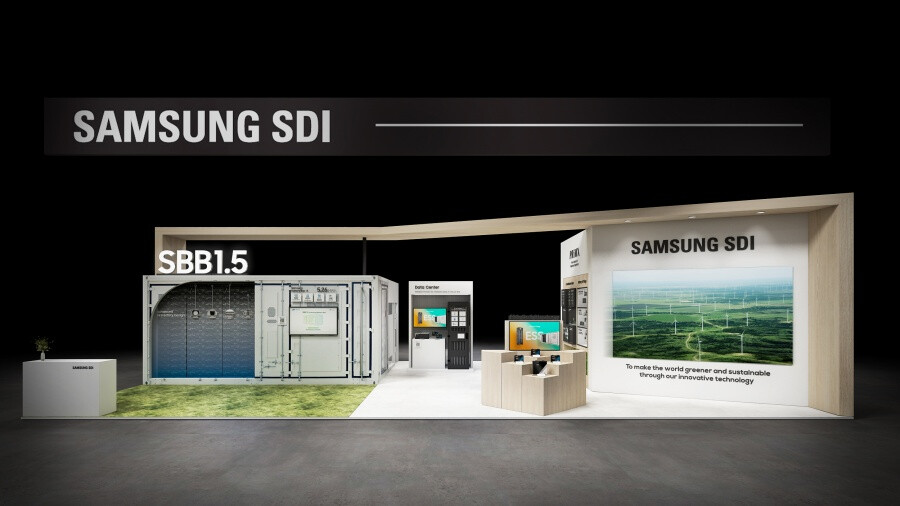
The LFP battery cells supplied under this contract will be a key component of Samsung SDI's all-in-one ESS solution, the Samsung Battery Box (SBB) 2.0. The SBB 2.0 is an integrated system that packages prismatic LFP batteries, along with advanced fire safety devices, inside a standard 20-foot container, allowing for simplified installation and direct connection to the power grid. It is the first SBB model to feature prismatic LFP cells.
To fulfill this massive contract and cater to local market demand, the company plans to produce the batteries by converting some of the production lines at its existing US-based electric vehicle (EV) battery plant. Samsung SDI is currently operating a prismatic EV battery joint venture with Stellantis in Indiana, and this strategic shift in production capacity highlights the company's agile response to evolving market dynamics, particularly amidst a perceived slowdown in EV demand.
Prismatic Advantage and Enhanced Safety
The batteries being supplied are based on a prismatic (rectangular) form factor, which is a key differentiator in the market. Samsung SDI's prismatic batteries are built with a robust aluminum can-type exterior structure, offering greater resistance to external shocks. Furthermore, the SBB 2.0 integrates advanced safety features, including the proprietary 'No Thermal Propagation (No TP)' technology. This innovation uses thermal insulation materials between battery cells and heat-propagation prediction programs to prevent a thermal event in one cell from spreading to adjacent cells, significantly enhancing overall system safety.
Industry analysts are taking note of Samsung SDI's competitive positioning. The company is currently recognized as the sole non-Chinese prismatic battery manufacturer operating in the US, which gives it a distinct advantage in a market increasingly prioritizing localized supply chains and safety, especially with US government policies like the Inflation Reduction Act (IRA) set to boost domestic battery production.
US ESS Market Boom
The deal is timed to capitalize on the explosive growth forecast for the US ESS market. According to market research firm SNE Research, US ESS demand is projected to more than double from 59 GWh in 2025 to 142 GWh by 2030. This growth is being driven by the expansion of renewable energy sources, the need for grid stability, and the soaring demand from the artificial intelligence (AI) industry for data center backup power.
This move positions Samsung SDI favorably against competitors. An SNE Research executive noted that rivals, such as LG Energy Solution and SK On, primarily focused on pouch-type batteries, now face the challenge of diversifying their form factor to meet the growing preference for the robust and cost-effective prismatic LFP solution in the ESS space.
Samsung SDI confirmed that this is just the beginning, as they are currently in discussions with multiple global customers for both LFP and NCA battery supplies, fueling expectations for further substantial contracts in the near future. The company aims to leverage its differentiated technology to secure a leadership position in the global ESS market.
[Copyright (c) Global Economic Times. All Rights Reserved.]